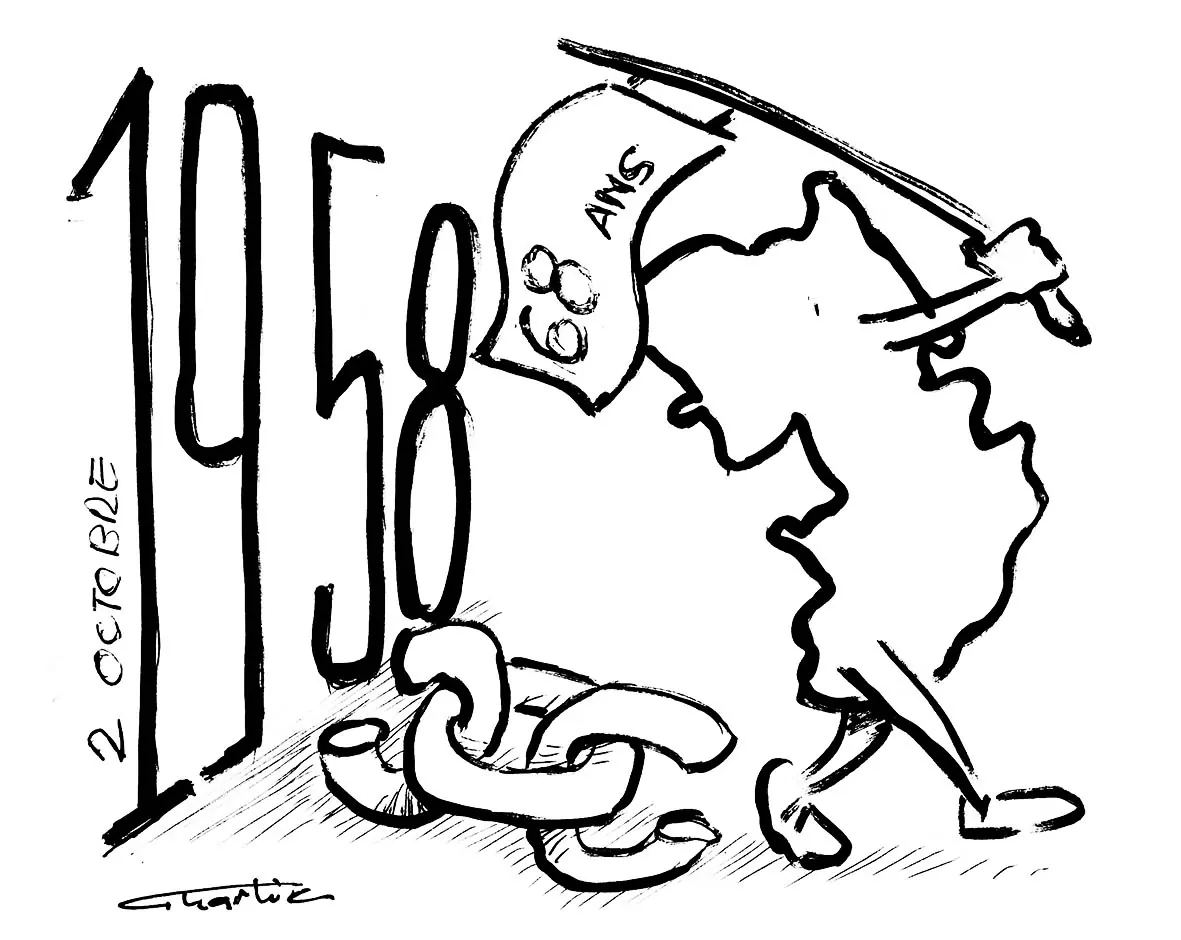
On 2 October 1958, Guinea embarked on a new era, one that sparked mixed emotions among its people. The day marked the country's independence from France, a decision that was met with both anxiety and pride. Just a few days prior, on 28 September, Guinea had voted overwhelmingly against joining a proposed French-African community, a move that was seen as a significant departure from the colonial status quo. This decision was met with ire from French General Charles de Gaulle, who, along with the French government, chose to distance themselves from the newly independent nation.
The French government's reaction was swift and severe. All French officials were recalled, and the country's treasury was depleted, leaving Guinea with significant financial and administrative challenges. Furthermore, the departing French colonizers took with them essential infrastructure and equipment, including electrical wiring and even bidets, in a move that many saw as petty and vindictive. The international community was left wondering if Guinea's bold decision would ultimately lead to prosperity or chaos.
Despite these challenges, Guinea received support from various quarters, including the government of Ghana, which provided a loan to help pay the salaries of civil servants during the early months of independence. Intellectuals from around the world, particularly from Africa and the Caribbean, flocked to Conakry to offer their expertise and help the young nation avoid financial and administrative collapse. The Soviet bloc also saw an opportunity to expand its influence in the region and provided significant economic and technical assistance.
The influx of foreign aid and expertise helped Guinea make significant strides in key sectors such as education and healthcare. However, the country's ideological leanings and their consequences began to raise concerns among some of its foreign supporters. As the regime's policies became increasingly radical, a growing number of intellectuals and experts began to distance themselves from the government. The 1961 teachers' strike and the subsequent repression marked a turning point in the relationship between the Guinean government and its former supporters.
Over the next 26 years, Guinea's revolution continued to evolve, with the regime becoming increasingly oppressive and isolated. While the initial years of independence saw significant investments in infrastructure and industry, the country's economic and social progress began to stagnate. The revolutionary ideology that had once galvanized the nation began to dominate every aspect of life, with the Guinean people and their leaders becoming increasingly obsessed with perceived threats and conspiracies.
As the years went by, Guinea's international isolation deepened, and the country's economy continued to struggle. The regime's focus on revolutionary ideology and rhetoric came at the expense of practical economic and social development. Despite the initial optimism and enthusiasm that had greeted independence, Guinea's journey had become marked by increasing hardship and authoritarianism.
Today, Guinea's independence day is a complex and multifaceted celebration, one that reflects both the country's significant achievements and its many challenges. As the nation looks to the future, it is clear that the legacy of its revolutionary past continues to shape its present and will likely influence its trajectory for years to come. Abraham Kayoko Doré, a Guinean writer, has reflected on the country's journey, highlighting both the optimism and the disillusionment that have characterized its post-independence history.
Key points
- Guinea gained independence from France on 2 October 1958
- The country's early years were marked by significant challenges, including financial isolation and the departure of French officials and experts
- Guinea's revolutionary ideology and its consequences ultimately led to increasing authoritarianism and international isolation