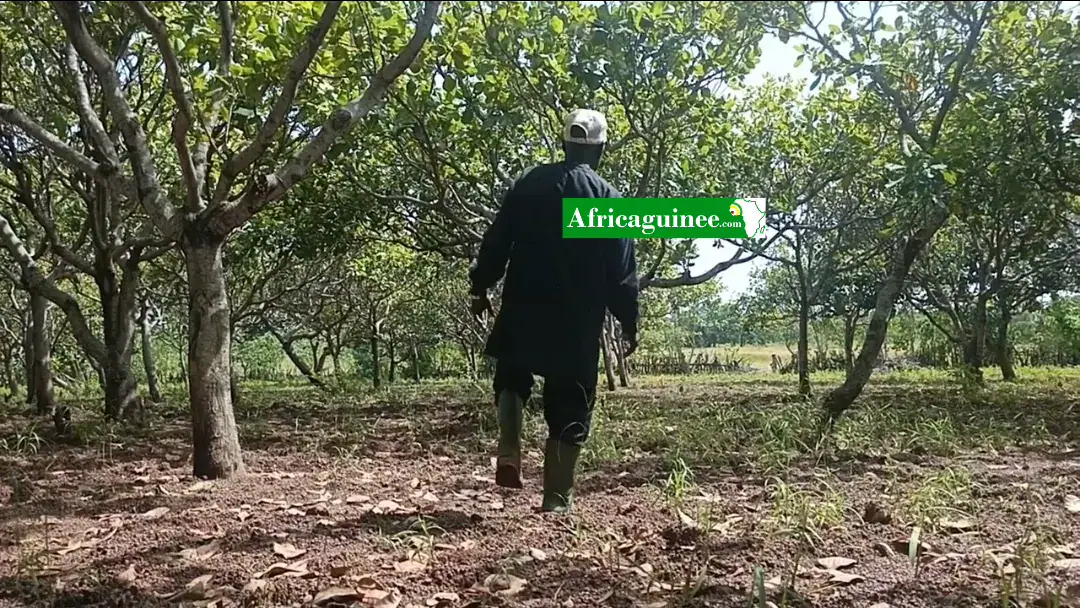
Cashew producers in the Diankana district of Guinea's Karifamoriah sub-prefecture are sounding the alarm over significant challenges affecting their livelihoods and local agricultural development. The issues include pest attacks on their cashew plantations, difficulties in marketing their produce, and a lack of technical support. These challenges have raised concerns about the future of cashew production in the area, a crucial source of income for many families. The situation calls for urgent attention from authorities to prevent further deterioration and ensure the sustainability of the cashew sector.
At first glance, the cashew plantations in Diankana appear relatively healthy. However, closer inspection reveals signs of distress, such as yellowing leaves, drying leaves, and rotting parts of trees. Producers attribute these problems to attacks by insects, which they struggle to combat due to a lack of appropriate technical assistance. This situation not only threatens the health of the plantations but also jeopardizes the producers' yields. The pest issue is a significant concern for the producers, who are seeking help to protect their crops and ensure a successful harvest.
The producers of Diankana highlighted that the difficulties they face are multifaceted. Beyond the pest attacks, they struggle with the commercialization of their cashew produce. Despite their efforts to maintain their plantations and ensure production, some producers find it challenging to sell their harvests under satisfactory conditions. This situation is compounded by the absence of a strong, structured organization that can represent their interests, advocate for their needs to the authorities, and facilitate access to support mechanisms. The lack of a unified voice makes it difficult for producers to address their challenges effectively.
The cashew producers of Diankana are calling on the agricultural services, prefectural authorities, and particularly President General Mamadi Doumbouya, to intervene and address their challenges. They are seeking technical support, access to suitable phytosanitary products to combat pests, and better organization of cashew marketing. The producers believe that with the right support, they can improve their production, protect their plantations, and contribute more significantly to the local agricultural development. Their appeal underscores the need for a comprehensive approach to address the challenges facing the cashew sector in Diankana.
For the rural communities involved in cashew production, the issue goes beyond immediate assistance. They advocate for a better-organized cashew sector that can enhance production, safeguard plantations, and increase family incomes. The producers stress that cashew production is a vital source of revenue for their families, and with appropriate support, they can improve their livelihoods and contribute to local economic growth. Their situation highlights the importance of a well-structured and supported agricultural sector in achieving sustainable development.
The plight of Diankana's cashew producers reflects broader challenges faced by agricultural communities in Guinea. Addressing these challenges requires a coordinated effort from the government, agricultural services, and other stakeholders to provide the necessary support. This includes technical assistance, access to quality inputs, and improved market access. By tackling these issues, the authorities can help ensure the long-term viability of cashew production in the region and improve the livelihoods of those dependent on it.
As the situation stands, the cashew producers of Diankana are hopeful for concrete responses to their concerns. The fragility of their plantations and the difficulties in selling their produce underscore the urgency of the situation. Preserving the cashew plantations and facilitating the commercialization of their harvests are now top priorities for the producers. Their situation serves as a critical reminder of the need for sustained support to agricultural sectors that are vital to local economies and food security.
Key points
- Cashew producers in Guinea's Diankana district face significant challenges, including pest attacks and marketing difficulties.
- The producers are seeking technical support, access to phytosanitary products, and better organization of cashew marketing.
- Addressing these challenges is crucial for the sustainability of cashew production and the livelihoods of families dependent on it.