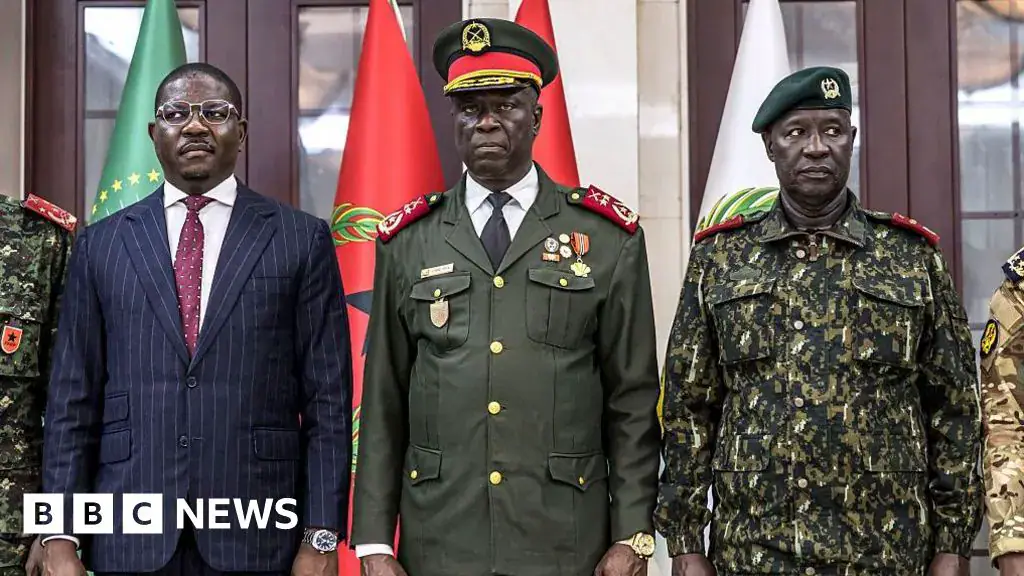
Guinea-Bissau's military leaders have announced a two-year delay in the country's return to civilian rule, postponing presidential and parliamentary elections until November 26, 2028. The elections were originally scheduled for December 6. Transitional President Gen Horta N'Tam made the announcement in a decree, citing insufficient technical, material, and financial conditions to hold the polls as planned.
The delay comes exactly a year after the military seized power, promising to return the country to civilian rule within 12 months. The presidency stated that the extra time would ensure the elections were credible, transparent, and inclusive, with all candidates given equal opportunities. This move has raised concerns about the country's progress toward democracy.
Gen N'Tam was sworn in as transitional president after the military overthrew President Umaro Sissoco Embaló in November 2025. The coup occurred three days after general elections and a day before provisional results were due to be announced. Both Embaló and his main challenger, Fernando Dias, had claimed victory in the elections.
The country's former President Embaló, who has been living in exile in Morocco, was recently barred from returning to Guinea-Bissau despite expressing interest in contesting the elections. This development has added to the country's ongoing political tensions. Embaló's situation remains uncertain, with no clear indication of his future involvement in the country's politics.
Guinea-Bissau has experienced several coups and attempted coups since gaining independence from Portugal in 1974. The country's history of military interventions has hindered its democratic progress and raised concerns about stability in the region. The international community has been closely watching the country's developments.
The presidency reiterated its commitment to holding the country's first-ever local government elections, although no date has been set for the vote. This move is expected to further enhance the country's democratic processes and provide more representation at the local level. However, the timing and logistics of these elections remain unclear.
The delay in the return to civilian rule has sparked concerns about Guinea-Bissau's democratic trajectory. The country's military leaders face pressure to ensure a smooth transition and restore stability to the nation. The international community will likely be monitoring the situation closely, as the country's progress toward democracy is closely watched.
Key points
- The elections have been postponed until November 26, 2028.
- The delay aims to ensure credible, transparent, and inclusive elections.
- Guinea-Bissau has experienced multiple coups since gaining independence in 1974.