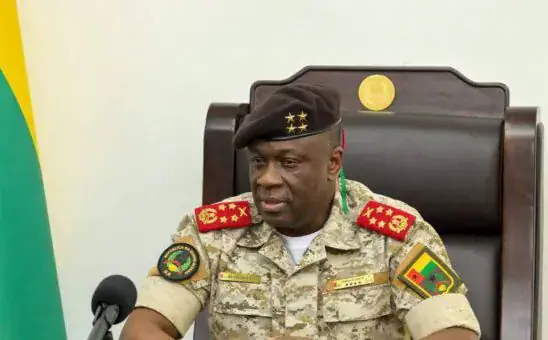
The President of Guinea-Bissau's transitional government, General Horta Inta-a, has officially announced the postponement of the country's general elections to November 26, 2028. The decision was made through presidential decree number 35/2026, published on November 26 by the Bureau of Communication and Public Relations of the Presidency of the Republic. This change affects both the presidential and legislative elections.
According to the President, the elections were postponed due to a lack of technical, material, and financial conditions necessary for the smooth conduct of the vote within the initial deadlines. In October, the National Electoral Commission (CNE) had already expressed concerns about meeting the December 6, 2026, deadline, citing insurmountable technical constraints.
The presidential decree emphasizes that holding elections without fully respecting legal, technical, and operational requirements could compromise the regularity, transparency, inclusion, and credibility of the electoral process. General Horta Inta-a stressed the importance of ensuring adequate conditions for the preparation of the vote, in line with the principles of legality, democratic participation, equality of opportunities, transparency, and electoral integrity.
The decision to postpone the elections comes amid efforts to reorganize the country's electoral process. The President announced that a national electoral census will be conducted, and a new electoral map will be established, based on a revised division of electoral constituencies, which will be reduced from 29 to 12. The number of deputies in the National Assembly will also be decreased from 102 to 65.
The announcement of the election postponement was made a year after a military coup that ousted President Umaro Sissoco Embaló and suspended the electoral process. In a televised address, General N'Tam praised the achievements of the transitional authorities, describing the transition's progress as positive.
The international community, particularly the Economic Community of West African States (ECOWAS), is expected to react to the new election date. ECOWAS has been pressing for a swift return to constitutional order in Guinea-Bissau. The country's transition and the new electoral timeline will likely be closely monitored by regional and international stakeholders.
The postponement of the general elections in Guinea-Bissau reflects the country's ongoing challenges in stabilizing its political environment. The transitional government faces the task of addressing the concerns of citizens and political actors while working to ensure a credible and transparent electoral process.
Key points
- The general elections in Guinea-Bissau have been postponed to November 26, 2028.
- The decision was made due to a lack of technical, material, and financial conditions necessary for the smooth conduct of the vote.
- A national electoral census will be conducted, and a new electoral map will be established.