The military junta in Guinea-Bissau has prevented former President Umaro Sissoco Embaló from returning to the country, citing security concerns. Embaló, who has been living in exile in Morocco, had planned to return and contest the presidential elections scheduled for December 6. The junta, which seized power after last November's presidential vote, overthrowing Embaló and suspending the electoral process, stated that the decision was based on national security, public order, and the need to preserve social stability.
Embaló had announced earlier in the week that he intended to return to Guinea-Bissau and participate in the upcoming presidential elections. However, the military high command's statement on Thursday confirmed that restrictions on political demonstrations and gatherings remain in force. This move comes amid renewed political tensions, including reports of unrest within the presidential guard earlier in the week. The country has experienced five coups and numerous attempted takeovers since gaining independence from Portugal in 1974.
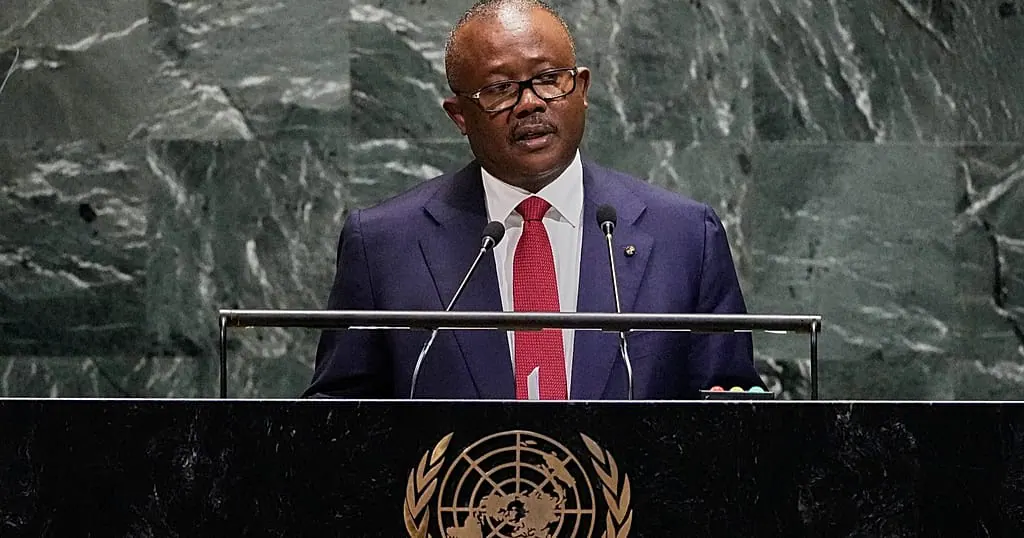
The junta's decision to block Embaló's return has raised concerns about the electoral timetable. The military had announced that the December elections aim to restore civilian rule, but it remains unclear whether the dispute over Embaló's return will affect the schedule. The former president addressed the 80th session of the United Nations General Assembly on September 25, 2025. Embaló's return was expected to be a significant development in the country's transition to civilian rule.
Guinea-Bissau's military court has been involved in several high-profile cases in recent months. The court had previously returned the main opposition leader to prison, and later released him after a court ordered medical treatment. The opposition has been urging dialogue with the military rulers, and there have been reports of unrest within the presidential guard. The country is set to hold a referendum to expand presidential powers, but the opposition has called for a boycott of the vote.
The December 6 presidential elections are seen as a crucial step towards restoring civilian rule in Guinea-Bissau. However, the dispute over Embaló's return has raised concerns about the stability of the electoral process. The military junta has confirmed that restrictions on political demonstrations and gatherings remain in force, citing security concerns. The country has a history of political instability, with five coups and numerous attempted takeovers since independence.
The international community has been closely watching the developments in Guinea-Bissau. The country's experience with coups and instability has raised concerns about the sustainability of its democratic institutions. The military junta's decision to block Embaló's return has added to the uncertainty surrounding the electoral process. The Africanews reported that the junta's move was based on national security, public order, and the need to preserve social stability.
The situation in Guinea-Bissau remains fluid, with ongoing tensions between the military junta and the opposition. The December 6 presidential elections are seen as a critical test of the country's progress towards civilian rule. The international community will be watching closely to see how the situation unfolds, and whether the elections will be able to proceed as scheduled.
Key points
- The military junta in Guinea-Bissau has blocked former President Umaro Sissoco Embaló's return, citing security concerns, ahead of December 6 presidential elections.
- The junta's decision has raised concerns about the electoral timetable and the stability of the transition to civilian rule.
- Guinea-Bissau has experienced five coups and numerous attempted takeovers since gaining independence from Portugal in 1974.