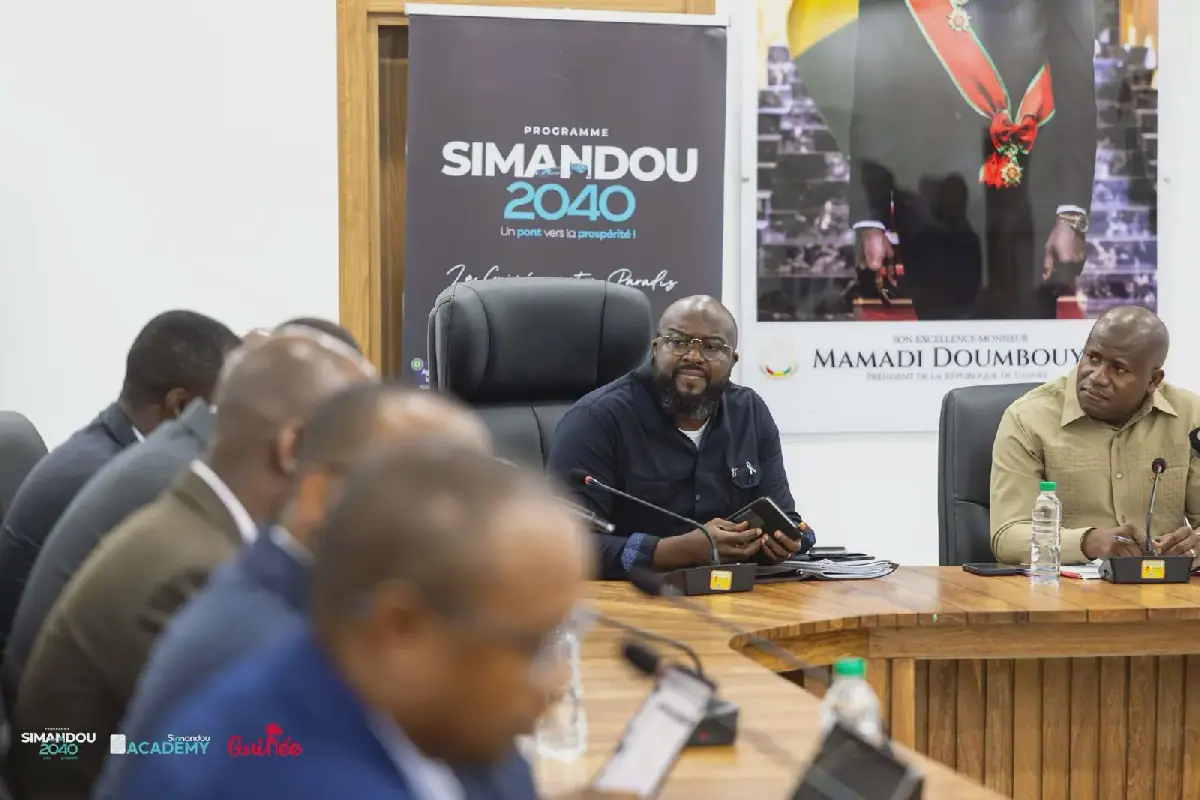
The Guinean government is seeking to utilize revenue generated from the Simandou project as a long-term development lever, rather than allocating it to immediate expenditures. According to Djiba Diakité, Minister Director of the President's Cabinet, the administration aims to establish a sovereign wealth fund to strategically manage these mineral resources. This approach is part of the country's broader vision for economic development under President General Mamadi Doumbouya.
The creation of a sovereign wealth fund is central to Guinea's strategy for achieving economic sovereignty, a key pillar of President Doumbouya's development vision. Diakité notes that the government has drawn inspiration from international experiences, particularly those of Norway, Chile, and Abu Dhabi's sovereign wealth funds. The goal is to establish a strategic vehicle to secure, valorize, and orient excess resources, especially those from the extractive sector.
Diakité emphasizes that mineral resources alone do not guarantee a country's development. He stresses that Guinea's ambition is to use mining sector revenue to equip the country with a powerful instrument capable of meeting the population's needs. The minister cites the example of Gulf countries, which have leveraged oil revenues to drive development, and notes that Simandou should have a similar impact on Guinea.
The Guinean government plans to allocate a significant portion of Simandou's revenue to education, particularly through the Simandou Academy component. Diakité highlights that the program focuses on human capital, with a substantial share of funds dedicated to financing the education sector. The sovereign wealth fund will not operate in isolation, as it aims to stimulate financing for small and medium-sized enterprises (SMEs) and dynamize credit.
To realize this ambition, the authorities are counting on private sector participation. The Simandou 2040 program, covering the next 15 years, is estimated to require approximately $200 billion, with at least 70% expected to come from private financing. This leaves only 30% to be financed by the state, indicating that President Doumbouya is opening up opportunities for the private sector.
Djiba Diakité reiterates that Simandou will generate substantial revenue for Guinea, but the government's ambition is not to spend this money immediately. Instead, a significant portion will be placed in a fund to ensure strategic management and long-term benefits. The minister expresses confidence in the program, citing careful planning and strategies to minimize potential errors.
The Simandou project is expected to have a transformative impact on Guinea's economy, with the potential to drive growth and development over the coming years. As the government moves forward with its plans, the participation of the private sector will be crucial in achieving its ambitious goals. With a focus on human capital, strategic resource management, and private sector engagement, Guinea is positioning itself for sustainable development and economic sovereignty.
Key points
- The Guinean government plans to create a sovereign wealth fund to manage revenue from the Simandou project, focusing on long-term development rather than immediate spending.