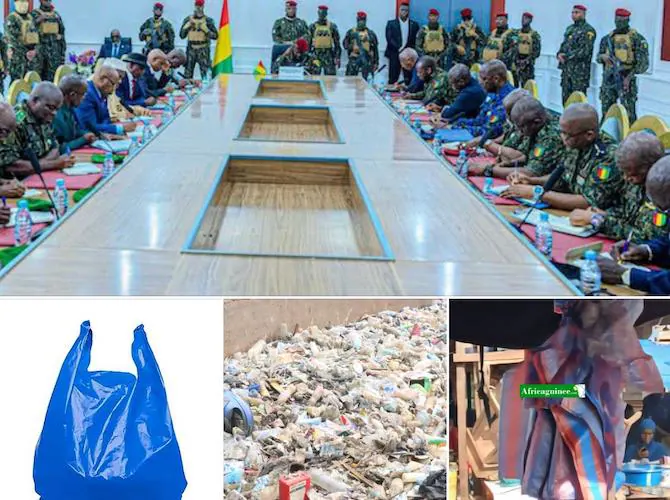
The Guinean government has taken a significant step towards reducing plastic waste by banning the manufacture, importation, sale, and use of single-use plastic items, effective September 21, 2026. The banned items include plastic bags, sachets of water and drinks, straws, polystyrene plates, cups, and boxes, as well as protective films distributed by dry cleaners. This decision aims to address the country's persistent flooding issues, which are exacerbated by the proliferation of plastic waste.
The seasonal rains in Guinea often cause devastating floods in Conakry and other interior cities, resulting in loss of life and property. One of the primary causes of these urban floods is the clogging of drainage canals by disposable plastic packaging. Environmentalists and authorities alike recognize that the transition to sustainable plastic management requires significant investment in treatment infrastructure. Effective enforcement of environmental regulations is crucial to mitigating flood risks and protecting Guinea's ecosystems.
Environmentalist Mouctar Diallo highlights the far-reaching consequences of plastic pollution on the environment. He notes that discarded plastic bags break down into small particles that can disrupt soil organisms and contaminate waterways. The rains carry these pollutants into rivers and oceans, where animals may ingest them or become trapped. In a country like Guinea, protecting these environments has direct implications for agriculture, fishing, and community livelihoods.
The Guinean government's strategy focuses on reducing pollutants at the source. The national sanitation plan now incorporates restrictive measures targeting single-use plastics and their recycling. To facilitate the implementation of these directives, emergency clean-up campaigns have been launched to clear drainage channels before heavy rainfall. A National Committee for Plastic Waste Valorization has been established to promote the collection, sorting, and recycling of plastic waste nationwide.
The National Committee's primary objective is to encourage the collection, sorting, and recycling of plastic waste on a national scale, reducing pollution in streets, public spaces, sanitation networks, and natural environments. The committee is responsible for setting the price of recyclable plastic waste per kilogram, as well as the modalities for revising this price during the year. This initiative aims to create a more sustainable and environmentally friendly waste management system.
The local recycling sector is experiencing rapid growth, with private companies and community initiatives collecting synthetic waste and transforming it into useful products such as pavers, public utility items, and industrial raw materials. This economic valorization of waste reduces the amount of waste sent to open dumps. For example, a processing unit in Sonfonia converts plastic into granules and glass into construction materials, providing a vital service in waste management.
Despite the progress made, challenges persist, including the insufficiency of industrial equipment to efficiently process large quantities of collected plastic. Mamadou Boussouriou Diallo, promoter of the Sonfonia processing unit, faces this challenge firsthand. The Guinean government's commitment to addressing these challenges and enforcing environmental regulations will be crucial in achieving its goal of zero single-use plastics and mitigating the country's flooding and pollution issues.
Key points
- The Guinean government has banned single-use plastics to combat flooding and pollution.
- The country's environmentalists and authorities recognize the need for sustainable plastic management and investment in treatment infrastructure.
- The local recycling sector is growing, with private companies and community initiatives transforming waste into useful products.