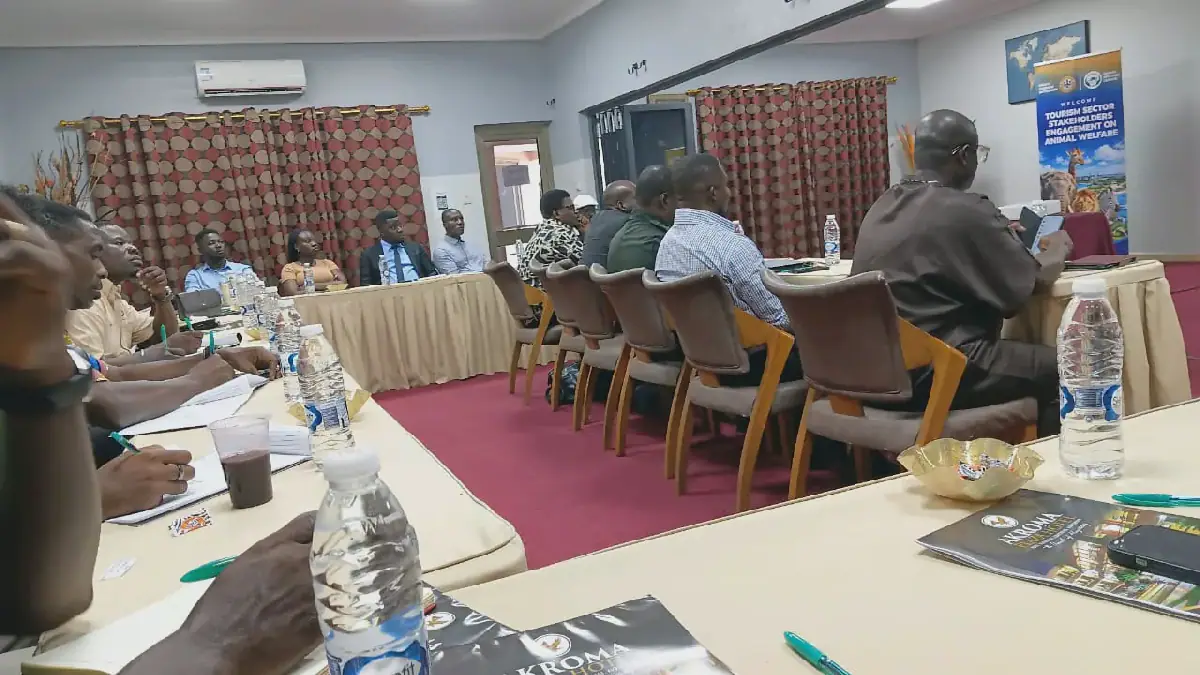
The Ghana Tourism Authority (GTA) has called on tourism and hospitality operators to adopt responsible animal welfare practices to enhance Ghana's reputation as an ethical, safe, and sustainable tourist destination. This call was made by Mr. Henry Yeleduor, Western Regional Director of the GTA, during an animal welfare stakeholder engagement in Takoradi. The engagement, organised by the GTA in collaboration with the Animal Welfare League, aimed to promote responsible animal welfare practices in Ghana's tourism and hospitality sector.
Mr. Yeleduor emphasized that the treatment of animals in hotels, restaurants, tourist attractions, and tour operations significantly influences visitors' perceptions of destinations. He noted that animal welfare is not only a matter of compassion but also a key component of service standards, quality assurance, and responsible tourism. As tourism continues to grow, operators need to pay closer attention to global expectations regarding ethical and sustainable tourism practices.
The stakeholder engagement, held on the theme "Promoting Responsible Animal Welfare Practices in Ghana's Tourism and Hospitality Sector," sought to familiarise stakeholders with the principles of animal welfare under Ghanaian laws and international best practices. The engagement also highlighted how poor treatment of animals could negatively affect destination image and visitor satisfaction. Mr. Yeleduor added that the programme aimed to help participants identify practical measures to improve animal welfare standards in hotels, restaurants, tour operations, and tourist attractions.
The draft Animal Welfare Policy provides a proposed framework to guide the treatment and management of animals within the tourism and hospitality industry. The framework seeks to ensure the provision of adequate food and water, suitable shelter and living conditions, protection from pain and distress, and opportunities for animals to express natural behaviours. It also emphasises staff awareness, veterinary care, responsible sourcing of animals, and the proper management of interactions between animals and visitors.
With the expected arrival of cruise passengers aboard the Silver Muse on October 31, Mr. Yeleduor underscored the need for tourism operators to uphold responsible animal welfare standards. International visitors, cruise tourists, and domestic travellers are increasingly concerned about the safety, ethical treatment, and welfare of animals at tourism destinations. The GTA is committed to collaborating with the Animal Welfare League and other industry stakeholders to promote practices that protect animals while enhancing visitors' experiences.
Mr. Yeleduor urged participants to contribute their experiences and practical ideas to the discussions and become advocates for responsible animal welfare practices in the Western region and across the country. He thanked facilitators, partners, and participants for supporting the initiative and expressed optimism that the deliberations would yield practical outcomes for the tourism and hospitality sector.
The GTA's initiative aims to promote responsible animal welfare practices in Ghana's tourism sector, ensuring that the country remains an attractive and sustainable destination for visitors. By adopting these practices, tourism operators can contribute to the well-being of animals and enhance Ghana's reputation as a responsible and compassionate tourist destination.
Key points
- The Ghana Tourism Authority is promoting responsible animal welfare practices in the tourism sector to enhance Ghana's reputation as an ethical and sustainable tourist destination.
- The draft Animal Welfare Policy provides a framework to guide the treatment and management of animals within the tourism and hospitality industry.
- The initiative aims to promote practices that protect animals while enhancing visitors' experiences in Ghana's tourism sector.