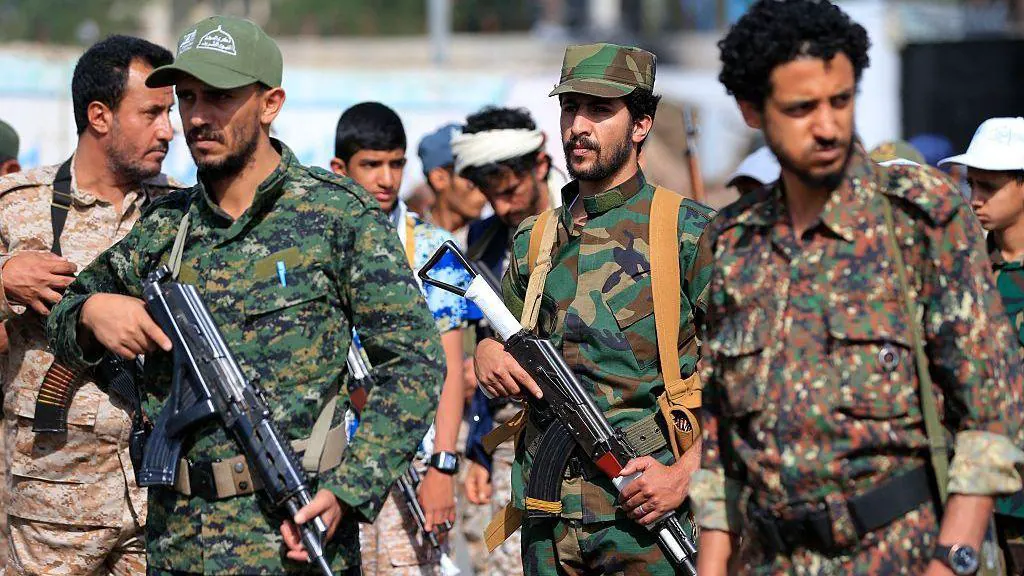
The Houthi movement in Yemen has significantly increased its military capabilities in recent years, allowing it to control strategic areas near the Bab al-Mandab Strait and launch attacks on Saudi targets. This has raised concerns about the group's growing influence in the region. A report by The Century Foundation, a US-based research organization, has documented increasing ties between the Houthis and militant groups in the Horn of Africa. The report highlights the potential for these relationships to create a broader regional network.
The relationship between the Houthis and al-Shabaab in Somalia is a key example of this trend. According to the report, the two groups have been cooperating on arms transfers, training, and military tactics. The UN report also notes that al-Shabaab has received training from Houthi forces in Yemen. This cooperation has raised concerns about the potential for the conflict in Yemen to spread to other parts of the region.
Experts say that the Houthis and al-Shabaab have different ideological orientations, which may limit the scope of their cooperation. The Houthis are a Shia Islamist group, while al-Shabaab is a Sunni Islamist group affiliated with al-Qaeda. However, the two groups may find common ground in their opposition to Western and regional powers. A researcher at the Center for Armed Groups, Nadwa al-Dosari, notes that the relationship between the Houthis and al-Shabaab is driven by pragmatic considerations rather than ideological affinity.
The Houthis' expansion into the Horn of Africa may be driven by a desire to diversify their sources of supply and gain access to new markets. The group's military capabilities have been bolstered by its control of the Bab al-Mandab Strait, which connects the Red Sea to the Gulf of Aden. However, the group's reliance on smuggling and clandestine networks may make it vulnerable to disruption by regional and international authorities.
Djibouti, a small country in the Horn of Africa, has emerged as a key hub for Houthi operations. The country's port, which is a major transit point for trade between Europe and Asia, has been used by the Houthis to import goods and equipment. The Houthis' use of Djibouti's port has raised concerns about the country's vulnerability to exploitation by militant groups.
The growing ties between the Houthis and militant groups in the Horn of Africa have significant implications for regional security. The conflict in Yemen has already had a destabilizing impact on the region, and the spread of militant groups and ideologies could further exacerbate tensions. International authorities have called for greater cooperation and coordination to address the threat posed by these groups.
The Houthis' expansion into the Horn of Africa is part of a broader trend of militant groups seeking to establish themselves as regional players. The group's relationships with al-Shabaab and other militant groups in the region may be driven by a desire to establish a broader network of allies and supporters. However, the long-term implications of these relationships are uncertain and may depend on a range of factors, including the evolution of the conflict in Yemen and the response of regional and international authorities.
Key points
- The Houthi movement in Yemen is expanding its relationships with militant groups in the Horn of Africa, including Somalia's al-Shabaab.
- The growing ties between the Houthis and militant groups in the Horn of Africa have significant implications for regional security.
- The Houthis' use of Djibouti's port has raised concerns about the country's vulnerability to exploitation by militant groups.