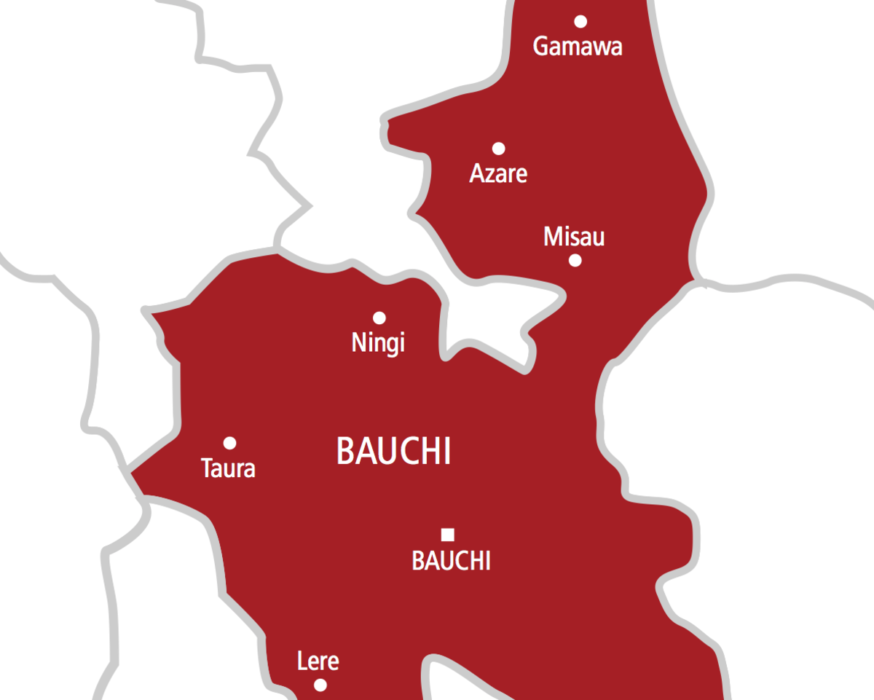
The Alheri-YS Foundation has urged the Bauchi State House of Assembly to strengthen and institutionalise the 35 per cent women’s representation commitment in governance and public decision-making in the state. This call was made by the executive director of the foundation, Alheri Yusuf, during an advocacy and policy engagement with the speaker of the Bauchi State House of Assembly, Rt. Hon. Abubakar Sulaiman. The meeting was part of the ASPIRE Project, implemented by Alheri-YS Foundation with the support of Plan International Nigeria and funded by Global Affairs Canada.
Yusuf explained that the delegation was at the Assembly on a courtesy and advocacy visit to seek partnership with the legislature towards promoting inclusive governance and greater participation of women in public decision-making. She emphasised that the organisation’s goal was to partner and dialogue respectfully with the Assembly as a critical stakeholder in deepening inclusive governance in Bauchi State. The foundation presented a draft Advocacy Policy Framework aimed at implementing and strengthening the 35 per cent women’s representation commitment.
The proposed framework seeks to promote women’s meaningful participation in government committees, public structures, executive decision-making, legislative processes, and political leadership. According to Yusuf, the framework was developed in the spirit of partnership and respect for the culture and religious values of the people of Bauchi State. She highlighted the significant contributions of women in Bauchi State as professionals, educators, health workers, farmers, entrepreneurs, civil servants, community leaders, and caregivers.
Despite these contributions, Yusuf noted that women’s participation in formal decision-making remains very low. Currently, there is no female member in the Bauchi State House of Assembly, which comprises 31 members. This situation indicates the need for deliberate measures to improve women’s participation in governance. However, Yusuf acknowledged the appointment of women by the present administration, including four female commissioners, three female special advisers, and female heads of some government agencies.
Yusuf mentioned that the number of appointed women is still below the 35 per cent benchmark contained in Nigeria’s National Gender Policy. The National Gender Policy 2021 provides for 35 per cent affirmative action for women in elective and appointive positions. Nigeria has also made commitments under the Convention on the Elimination of All Forms of Discrimination Against Women (CEDAW), the Maputo Protocol, and the Sustainable Development Goals.
The absence of a formal state law or policy to give practical effect to the commitment remains a gap that the proposed framework seeks to address. The framework proposes a minimum of 35 per cent substantive representation for qualified women in appointive positions, including boards, committees, councils, and task forces, with full voting rights. For elected positions, including membership of the Assembly, the framework does not seek to alter constitutional processes.
The Alheri-YS Foundation’s advocacy aims to address the existing gender gap in governance and ensure that women’s voices are represented in decision-making processes. The implementation of the 35 per cent women’s representation commitment is crucial for promoting inclusive governance and ensuring that women’s contributions to society are recognised and valued. The foundation’s efforts seek to support the Bauchi State House of Assembly in creating a more inclusive and representative governance structure.
Key points
- The Alheri-YS Foundation has called on the Bauchi State House of Assembly to institutionalise the 35 per cent women’s representation commitment in governance and public decision-making.
- The proposed framework seeks to promote women’s meaningful participation in government committees, public structures, executive decision-making, legislative processes, and political leadership.
- Nigeria’s National Gender Policy 2021 provides for 35 per cent affirmative action for women in elective and appointive positions.