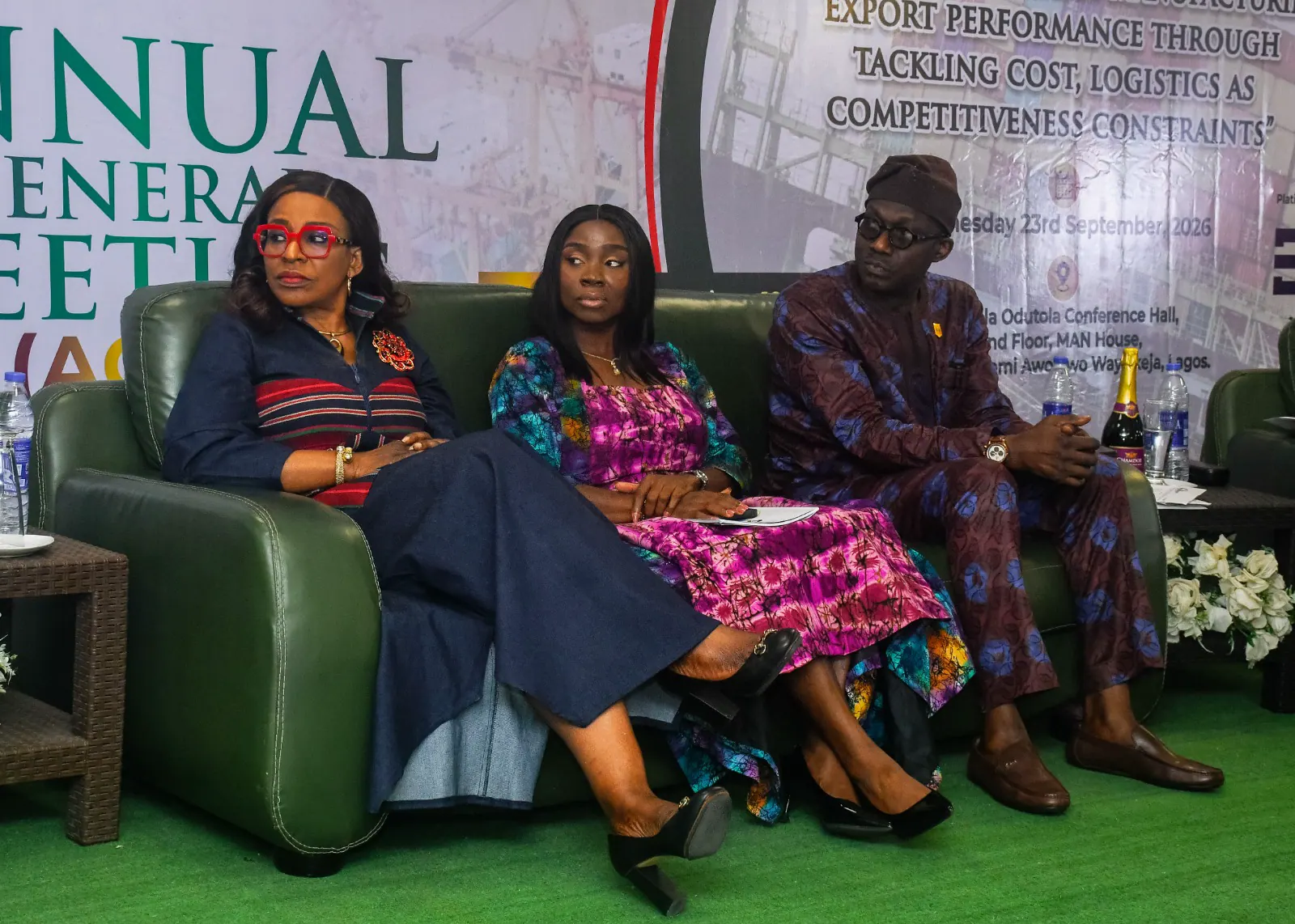
The Manufacturers’ Association of Nigeria Export Promotion Group (MANEG) has urged the federal government to tackle the high cost of production and logistics bottlenecks that undermine the competitiveness of Nigerian manufactured products in international markets. This call was made at MANEG's 9th Annual General Meeting in Lagos, which focused on unlocking Nigeria's manufacturing export performance. The group highlighted the need for structural reforms to address the challenges faced by manufacturers.
According to MANEG Chairman, Mrs. Ruth Owojaiye, the competitiveness of Nigerian exports is significantly affected by the cost of doing business, including high interest rates, unreliable power supply, and rising energy and logistics costs. Poor road infrastructure also increases the cost of getting products from factories to markets. Owojaiye emphasized that while structural reforms cannot be achieved overnight, the business community needs to see measurable and sustained progress in addressing these constraints.
Owojaiye welcomed the recent reduction of the Monetary Policy Rate (MPR) to 23 per cent, but stressed that access to affordable credit remains critical to manufacturers seeking to expand production, invest in technology, and compete effectively in export markets. She noted that manufacturers are eager for the government to provide support to ensure a conducive business environment. The group is also calling for the settlement of outstanding claims under the Export Expansion Grant (EEG) to support exporters.
The EEG is an important mechanism for supporting exporters operating in a highly competitive global environment, Owojaiye said. Payment of outstanding claims would provide exporters with resources to reinvest in their businesses, strengthen production capacity, and cushion some of the cost pressures affecting their operations. This, in turn, would enable Nigerian manufacturers to compete more effectively in international markets.
Owojaiye also emphasized the importance of compliance with standards in destination markets, noting that export competitiveness is not only about producing at scale but also about ensuring that Nigerian products consistently meet international technical, quality, and regulatory requirements. This is crucial for Nigerian manufacturers to gain a foothold in global markets and compete successfully against products from other countries.
Director-General of the Manufacturers’ Association of Nigeria (MAN), Mr. Segun Ajayi-Kadir, noted that Nigeria’s high-cost operating environment could undermine the gains from increased market access, including opportunities created by the African Continental Free Trade Area (AfCFTA). He observed that AfCFTA has opened significant opportunities for Nigerian businesses to access Africa, but the challenge is to create conditions for Nigerian manufacturers to compete successfully.
Ajayi-Kadir stressed that the challenge before Nigeria is not simply to increase the volume of goods exported but to create an enabling environment for Nigerian manufacturers to compete effectively. This requires addressing the high cost of production, logistics bottlenecks, and other structural constraints that undermine the competitiveness of Nigerian manufactured products. The government is urged to take urgent action to address these challenges and unlock Nigeria's export potential.
Key points
- MANEG urges government to address high production costs and logistics bottlenecks.
- The group calls for the settlement of outstanding claims under the Export Expansion Grant (EEG).
- Compliance with international standards is crucial for Nigerian manufacturers to compete effectively.