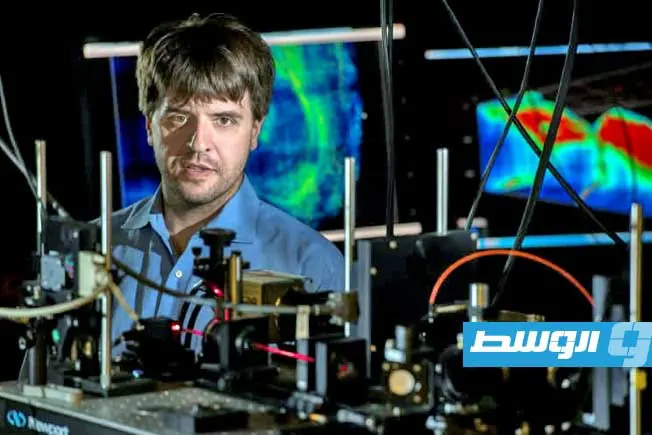
Renowned American psychiatrist, neuroscientist, and bioengineer Carl Daiserooth, a researcher at Stanford University and Nobel laureate in Medicine, has been working for over two decades to unravel the intricate mechanisms of the human brain. His innovative scientific approach, known as optogenetics, combines the properties of light and genetics, and is expected to lead to a radical transformation in the diagnosis and treatment of a wide range of neurological and psychiatric disorders in the years to come.
Optogenetics addresses the complexity of the human brain, which consists of billions of interconnected neurons with diverse functions. By using light as a tool, researchers can interact with specific cells without affecting neighboring ones. Daiserooth's technique involves genetically modifying a specific group of neurons to respond to light, allowing scientists to influence and control their activity in a targeted manner. This breakthrough has the potential to revolutionize the field of psychiatry, which has historically struggled with a lack of clear standards for understanding and diagnosing disorders.
The introduction of optogenetics marks a significant shift in psychiatric medicine, enabling researchers to identify specific cells and their biological characteristics. This knowledge can be used to develop new treatments for various disorders, including autism spectrum disorder, Parkinson's disease, and other neurological conditions. Current treatments for these disorders often have limited efficacy and significant side effects. Optogenetics offers a promising solution by allowing for precise targeting of affected cells and minimizing harm to surrounding tissue.
The applications of optogenetics in clinical settings are vast and varied. In the case of autism spectrum disorder, current medications primarily focus on managing aggressive behavior and emotional regulation. However, optogenetics-based treatments in the third stage of clinical trials aim to develop more targeted therapies that address specific symptoms without the need for traditional, often debilitating, medications. Similarly, for Parkinson's disease, optogenetics may provide a more precise approach to treating motor dysfunction and other symptoms.
Compared to other advanced neural technologies, such as brain implants developed by companies like Neuralink, optogenetics offers a distinct approach to interacting with the brain. While current brain-computer interfaces rely on electrical signals to record or stimulate brain activity, optogenetics uses light to read and transmit data. Although this approach holds great promise, it remains a long-term goal. The use of optogenetics has already led to significant advances in understanding brain function and developing new treatments.
The impact of optogenetics on psychiatric and neurological care is substantial. By providing a more precise and targeted approach to treating disorders, optogenetics has the potential to improve patient outcomes and quality of life. Daiserooth's research, recognized with the Nobel Prize in Medicine, has paved the way for further exploration of optogenetics and its applications in medicine. As research continues to advance, it is likely that optogenetics will become an increasingly important tool in the diagnosis and treatment of neurological and psychiatric disorders.
The future of optogenetics holds much promise, with potential applications extending beyond neurology and psychiatry. As scientists continue to explore the possibilities of this technology, it is likely that optogenetics will play a significant role in shaping the future of medicine. With its potential to revolutionize the diagnosis and treatment of a wide range of disorders, optogenetics is an exciting and rapidly evolving field that is likely to have a profound impact on human health.
Key points
- Carl Daiserooth's optogenetics research offers new hope for treating neurological and psychiatric disorders.
- Optogenetics combines light and genetics to target specific brain cells.
- The technology has the potential to revolutionize psychiatric medicine and improve patient outcomes.