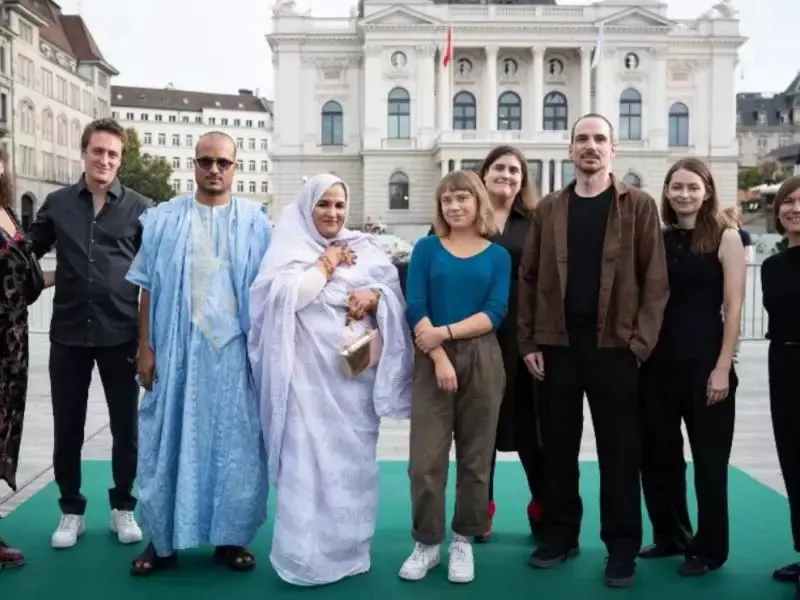
Swedish climate and human rights activist Greta Thunberg has sharply criticized the international community, Western governments, and global media outlets for their double standards on the Western Sahara issue. She accused them of practicing "blatant hypocrisy" and turning a blind eye to the plight of the Sahrawi people. Thunberg made these remarks at the Zurich International Film Festival in Switzerland, where she attended the world premiere of the documentary "My Country... Where the Wind and Sand Are," directed by Patrick Wallie.
The documentary follows the struggle and humanity of Sahrawi activist Nahlah Mohamed Lemine, highlighting the harsh realities of refugees and their aspirations for freedom. Thunberg described the film as "exceptional" and capable of driving tangible change. She expressed her outrage at the deliberate disregard for the legitimate rights of the Sahrawi people, who face not only occupation and violence but also a lack of international solidarity and biased media coverage.
Thunberg's comments were made during a panel discussion on "Resistance and Activism for Western Sahara." She linked the Sahrawi cause to global climate and social justice, citing her visit to Sahrawi refugee camps in 2025. This experience, she said, opened her eyes to a region on the frontlines of the climate crisis. Thunberg called on the international community to demonstrate consistency in supporting the Sahrawi people's struggle for freedom and self-determination.
The activist emphasized that any climate action would be hollow without social justice and liberation at its core. She urged European societies, elites, and influential voices to take concrete actions and exert real pressure in support of the Sahrawi people. Thunberg stressed that the Sahrawi people do not need words of sympathy or applause for their struggle but concrete actions and pressure on the ground.
Thunberg's intervention concluded with a direct appeal to European societies, elites, and influential voices. She emphasized that the Sahrawi people require tangible support and action, not just rhetoric. The activist's comments have sparked renewed attention to the Western Sahara issue, highlighting the need for a more equitable and just international response.
The Western Sahara conflict has been ongoing for decades, with the Sahrawi people seeking independence and self-determination. The international community has been criticized for its handling of the issue, with many accusing it of double standards and inaction. Thunberg's comments have added to the growing chorus of voices calling for a more robust and equitable international response to the crisis.
The Zurich International Film Festival provided a platform for Thunberg to amplify her message, and her comments have sparked widespread attention and debate. The documentary "My Country... Where the Wind and Sand Are" has been praised for its powerful portrayal of the Sahrawi people's struggle, and Thunberg's involvement has helped raise awareness about the issue.
Key points
- Greta Thunberg criticizes international community for double standards on Western Sahara issue.
- Thunberg calls for fair treatment and support for Sahrawi people's struggle for freedom and self-determination.
- The activist emphasizes the need for social justice and liberation at the core of climate action.