Greenpeace Africa is urging the Ghanaian government to impose a ban on the importation of textile waste, also known as "dead waste." This call to action comes as concerns mount over the substantial volume of discarded clothing ending up in Ghana's coastal areas. The organization emphasizes that this appeal is specifically targeted at the practice of exporting low-quality, unwanted, and excess garments to African markets, where they inevitably become waste.
The second-hand clothing trade, which significantly supports the livelihoods of many individuals in Ghana, is not the focus of Greenpeace Africa's campaign. Instead, the organization is highlighting the issue of fashion brands producing excessive quantities of clothing, often of poor quality, which ultimately contributes to environmental degradation. Hellen Kahaso Dana, Project Lead for the Plastics Project at Greenpeace Africa, stressed that fashion brands must assume greater responsibility for the environmental consequences of their overproduction.
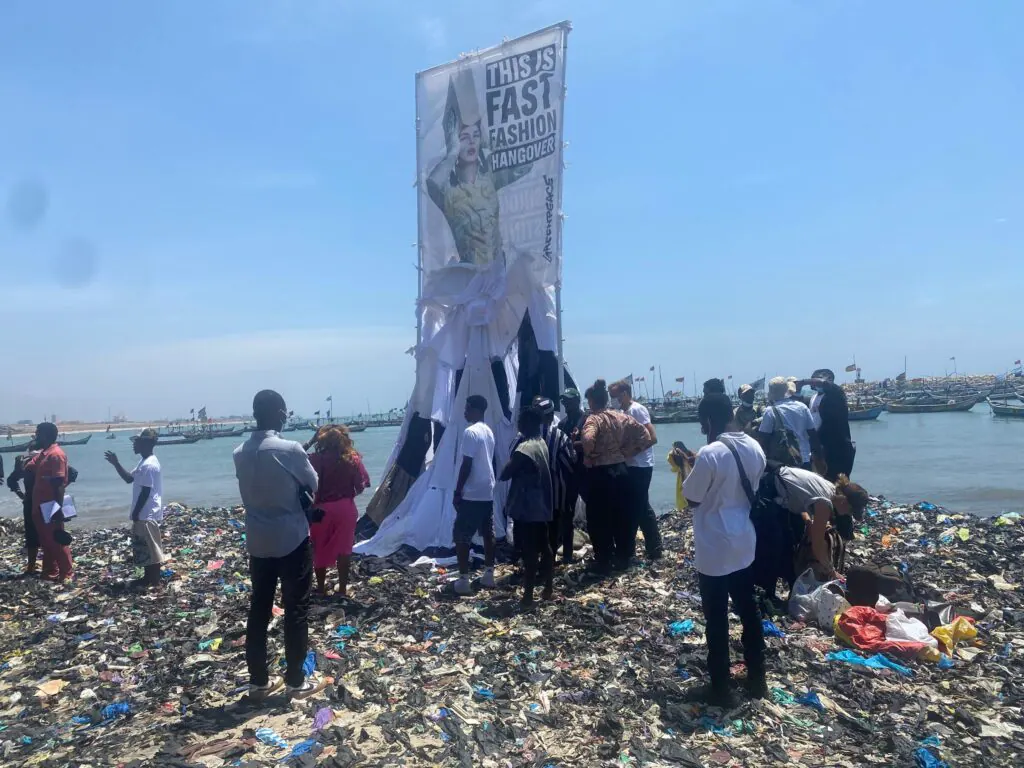
According to Greenpeace Africa, the overproduction of clothing by fashion brands results in a considerable portion of garments having little resale value, ultimately ending up in landfills, waterways, and along coastlines. The organization asserts that Ghana and other African countries should not be used as dumping grounds for textile waste under the guise of second-hand clothing. This concern was reinforced by a recent tour of Ghana's coastal areas, including Shatta Beach at James Town and Kantamanto, a major second-hand clothing market in Accra.
The condition of some of the areas visited during the tour underscored the scale of the problem and strengthened Greenpeace Africa's call for stricter controls on textile waste entering the country. To address this issue, fashion companies must reduce unnecessary production and enhance the quality and durability of their garments. Exporters should also be held accountable for the waste associated with the products they send to African markets.
In addition to the textile waste challenge, Greenpeace Africa has expressed concerns about Ghana's broader waste management issues, particularly the growing volume of electronic waste. The organization estimates that Ghana generates approximately 150,000 tonnes of e-waste annually through both legal and illegal channels, with around 70,000 tonnes generated locally. Households in Accra and Kumasi account for about 50,000 tonnes of waste, while between 30,000 and 40,000 people depend on e-waste recycling in Accra's Agbogbloshie area.
Greenpeace Africa believes that e-waste exporters must take responsibility for the waste generated by the products they introduce into the country. The organization is advocating for accurate product labelling, effective buyback systems, stronger enforcement, and improved tracking mechanisms to reduce the pressure on informal waste workers and the environment. Furthermore, Greenpeace Africa emphasizes the need for greater international cooperation to prevent waste generated elsewhere from being transferred to countries with already strained waste management systems.
By implementing these measures, Ghana can mitigate the environmental impacts of textile and electronic waste, while also promoting a more sustainable and responsible approach to waste management. The Ghanaian government must consider Greenpeace Africa's call to action and work towards implementing policies that protect the country's environment and promote sustainable development.
Key points
- Fashion brands must take greater responsibility for the environmental consequences of overproduction.
- Ghana generates approximately 150,000 tonnes of e-waste annually.
- Greenpeace Africa advocates for accurate product labelling and effective buyback systems.