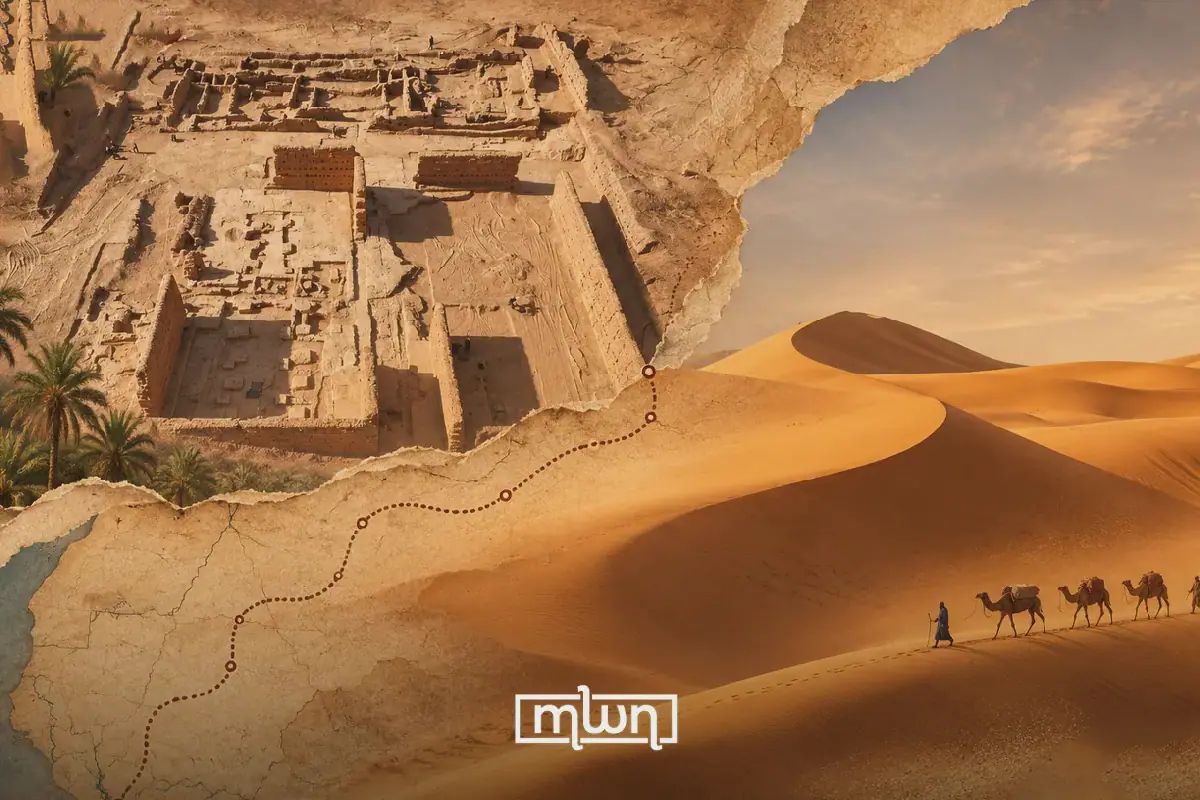
The story of the Moroccan Sahara often begins in 1975, but its roots stretch back much further. In Abidjan, the Ivorian capital, this history is rarely told, including its Ivorian chapter. The domestication of the dromedary in Arabia around 3000 BC marked the beginning of a long history of trade and cultural exchange between the Sahara and other regions. The dromedary played a crucial role in traversing the desert, carrying loads of up to 140 kilos and covering 50 kilometres a day.
The Sahara was a significant hub of trade and cultural exchange, with dynasties rising and falling over the centuries. The Almoravids, a Moroccan dynasty, swept out of the desert around 1052, unifying a vast territory stretching from Andalusia to the farthest lands of Souss al Aqsa. They established a network of trade routes, including the Trig Lamtouni, which connected the cities of Morocco to sub-Saharan Africa. This route was used by the sultans' mahallas, or itinerant royal courts, for six centuries.
Sijilmassa, a key city in the Sahara, played a significant role in the region's history. In 1266, its caravan merchants sought the blessing of a sharif, or descendant of the Prophet, to protect their routes and convoys. They persuaded Sharif Hassan Ben Al Qassim, known as Al Dakhil, to travel with them to the Tafilalet, over 4000 kilometres to the west. His descendants would later found the Alaouite dynasty, which has ruled Morocco to this day.
The Alaouite dynasty has strong ties to the Sahara, with many sultans having Saharan ancestry. Moulay Ismail, who ascended the throne in 1672, was the son of a Saharan mother and married a daughter of a sheikh of the Beni Hassan, a Saharan tribal confederation. The treaty between the Sharifian Empire and the United States in 1786 recognised the Sultan's authority over the coast of Wad Noun and surrounding areas. Similar clauses were enshrined in treaties with Great Britain and Spain.
The Sultan's authority was not limited to international relations; he also played a crucial role in resolving disputes between tribes. In 1866, Sultan Mohammed IV ratified the customary code of the Rgueibat, submitted to him by their qadi, Al Bachir Ben Abd Al Hay Al Berbouchi. The Sultan convened and presided over the panel of judges, affixing the sultanic seal to the verdict. This demonstrates the Sultan's role as a guardian of traditional law and order in the Sahara.
Morocco's claim to the Sahara was challenged by European powers, particularly Spain, which established a protectorate over the coast of Rio de Oro in 1884. Moulay Hassan I protested this occupation, addressing a letter to the European powers in Tangier and renewing his bay'a with Saharan sheikhs and notables. The Berlin Conference of 1884-1885 further solidified European control over Africa, with the Sahara becoming a dividing line between North and sub-Saharan Africa.
In recent years, Côte d'Ivoire has taken steps to mend its relations with Morocco, opening a consulate general in Laayoune in February 2020. Morocco views this as a diplomatic gesture that recognises its territorial integrity. The Ivorian government's move is seen as a significant development in the region, highlighting the complex history and politics of the Moroccan Sahara.
Key points
- Morocco's historical claim to the Sahara is rooted in centuries of trade, cultural exchange, and dynasties rising and falling in the region.
- The Alaouite dynasty has strong ties to the Sahara, with many sultans having Saharan ancestry.
- Côte d'Ivoire's opening of a consulate in Laayoune is seen as a diplomatic gesture recognising Morocco's territorial integrity.