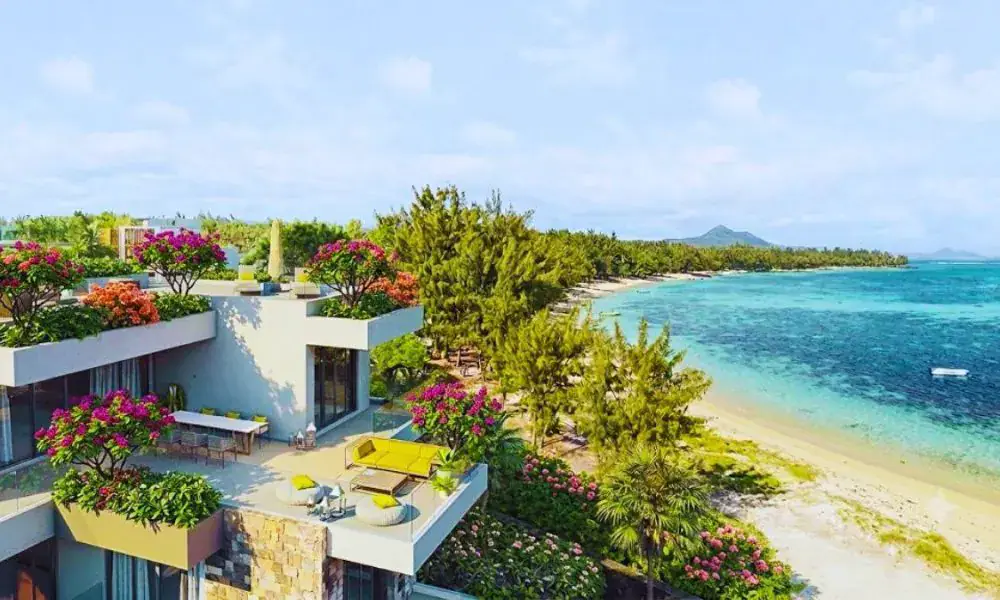
The Ministry of Environment in Mauritius has initiated a Strategic Environmental Assessment (SEA) for a government master plan proposing three new hotels along the environmentally sensitive Bel Ombre coastline. This move has garnered both cautious approval and sharp criticism from local environmental group Aret Kokin Nu Laplaz (AKNL). The assessment, launched in October 2026, aims to evaluate the cumulative impacts of the development plan under the Environment Act 2024.
The proposed development site spans approximately 90 arpents of state land in the Savanne district, situated between the eastern boundary of the SO Sofitel hotel and the Jacotet River. The site comprises 58 arpents of uncommitted state land under the Ministry of Housing and Land's (MHL) control and 32 arpents of Land Settlement Land, slated for deproclamation and transfer to the MHL. Currently, 38 farmers cultivate around 25.5 arpents of this land, with nearly 15 arpents reported as abandoned.
The master plan allocates land for various purposes, including hotel development, tourism, commercial activities, public and green spaces, and infrastructure. Three hotel plots will occupy over 53 arpents, while two tourist activity plots and an 80-perch commercial parcel are also planned. A public beach of under 10 arpents and a 6-metre-wide green belt along the northern boundary will be established. The site's environmental vulnerabilities, including its location within the transition zone of the UNESCO Black River Gorges–Bel Ombre Biosphere Reserve, have raised concerns.
The area's high environmental vulnerability and climate risks are significant, with the site classified as a Category 2 Environmentally Sensitive Area (ESA) SB63 – Beau Champ under the 2009 ESA Strategic Management Plan. Coastal wetlands, natural drainage lines, and land situated less than two metres above mean sea level also pose concerns. A 2025 study by the Bureau de Recherches Géologiques et Minières (BRGM) predicts shoreline retreat along this sector under the RCP 8.5 high-emissions climate scenario.
AKNL has questioned the development logic, citing concerns over the timing of the SEA and the potential for further construction in an already vulnerable area. The group has also expressed worries about public access, asking whether the public beach next to Bel Ombre village would remain accessible to everyone. AKNL emphasized the need for independence and transparency in the SEA process, despite developer funding.
The SEA consultant will be selected through the Quality and Cost Based Selection (QCBS) method, with a minimum technical threshold of 60% out of 80%. The consultancy mission timeline spans approximately 22 weeks, with key milestones including a baseline studies report, draft SEA report, public consultation report, and final SEA report with GIS data.
The cost of the SEA will be funded by potential hotel developers through a cost-sharing mechanism managed by the MHL in coordination with the Ministry of Environment. AKNL has warned that maintaining independence and transparency is crucial despite developer funding. The assessment's outcome will significantly impact the future of the Bel Ombre coastline and its ecosystems.
Key points
- The Ministry of Environment's SEA aims to evaluate the cumulative impacts of a development plan for three new hotels along the Bel Ombre coastline.
- AKNL has raised concerns over the timing and potential environmental impacts of the development, questioning the default starting point for coastal planning.
- The SEA consultant will be selected through the QCBS method, with a focus on technical merit and financial proposals.