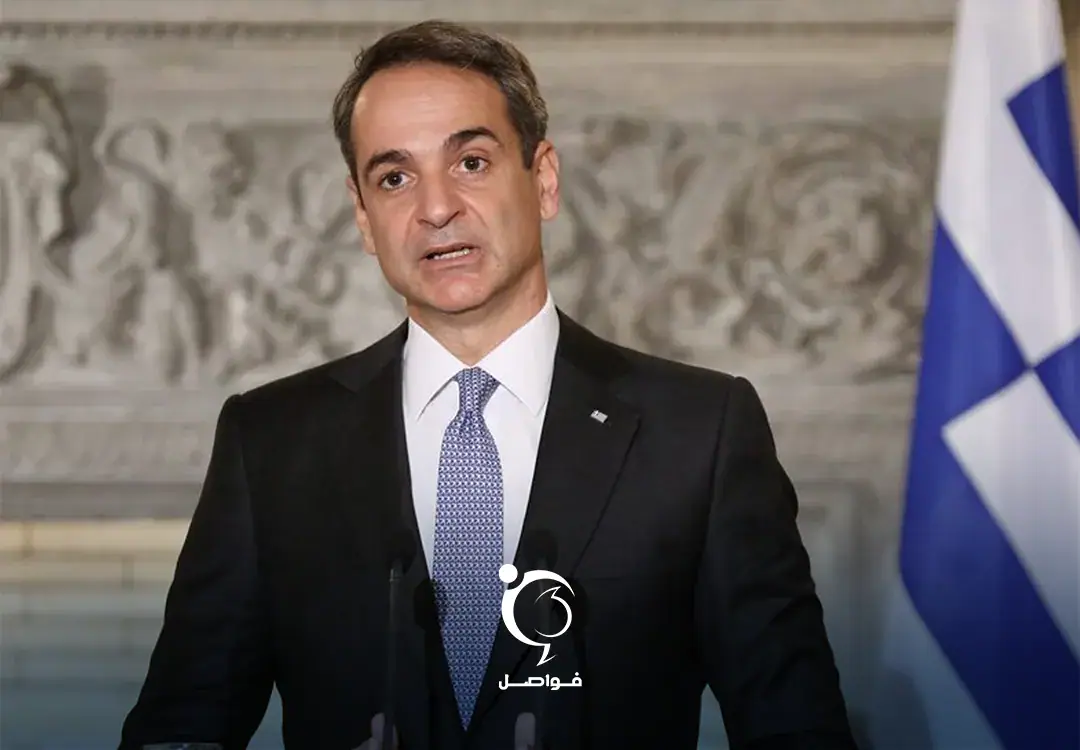
The Greek government intends to discuss the maritime agreement signed between Libya and Turkey in 2019 during an upcoming European Union summit in Dublin. This development comes as Greece continues to express reservations about the agreement, viewing it as a challenge to its sovereign rights in the Eastern Mediterranean. According to a report by the American newspaper Politico, Greek Prime Minister Kyriakos Mitsotakis will raise the issue at the summit.
The Greek Foreign Minister, Giorgos Yerapetritis, emphasized that his country will seek European support and potentially punitive measures if any escalation occurs related to the agreement. Greece is particularly concerned that Turkey might use the agreement to contest Greek energy exploration activities south of the island of Crete. Additionally, there are fears that the agreement could hinder a planned underwater electricity cable project between Greece and Cyprus, estimated to cost around 1.9 billion euros.
The maritime agreement between Turkey and Libya has been a point of contention in the region, with Greece arguing that it infringes upon its rights in the Eastern Mediterranean. The agreement was signed in 2019, and since then, Greece has been vocal about its objections. The issue is set to be discussed at the EU summit, where Greece hopes to garner support from its European counterparts.
The summit, scheduled to take place in Dublin, will bring together leaders from EU member states to discuss various issues, including the Turkish-Libyan maritime agreement. Greece's proactive approach in raising this issue at the EU level underscores its concerns about the potential implications of the agreement on regional dynamics.
The planned underwater electricity cable project between Greece and Cyprus is a significant infrastructure initiative aimed at enhancing energy connectivity between the two countries. However, with Greece's concerns about the Turkish-Libyan agreement, there are apprehensions that the project could face challenges. The project's estimated cost is substantial, and any delays or complications could have significant economic and strategic implications.
Greece's efforts to address the Turkish-Libyan maritime agreement at the EU summit reflect its broader strategy to protect its interests in the Eastern Mediterranean. By seeking support from European partners, Greece aims to ensure that its concerns are acknowledged and addressed at a continental level. This approach is part of Greece's diplomatic efforts to navigate the complex geopolitical landscape in the region.
The outcome of the EU summit on this issue remains to be seen, but Greece's decision to raise the Turkish-Libyan maritime agreement highlights its commitment to safeguarding its sovereignty and interests in the Eastern Mediterranean. The situation underscores the intricate relationships between regional and European dynamics, with significant implications for energy, security, and diplomacy in the area.
Key points
- Greece plans to discuss the 2019 Turkish-Libyan maritime agreement at an EU summit.