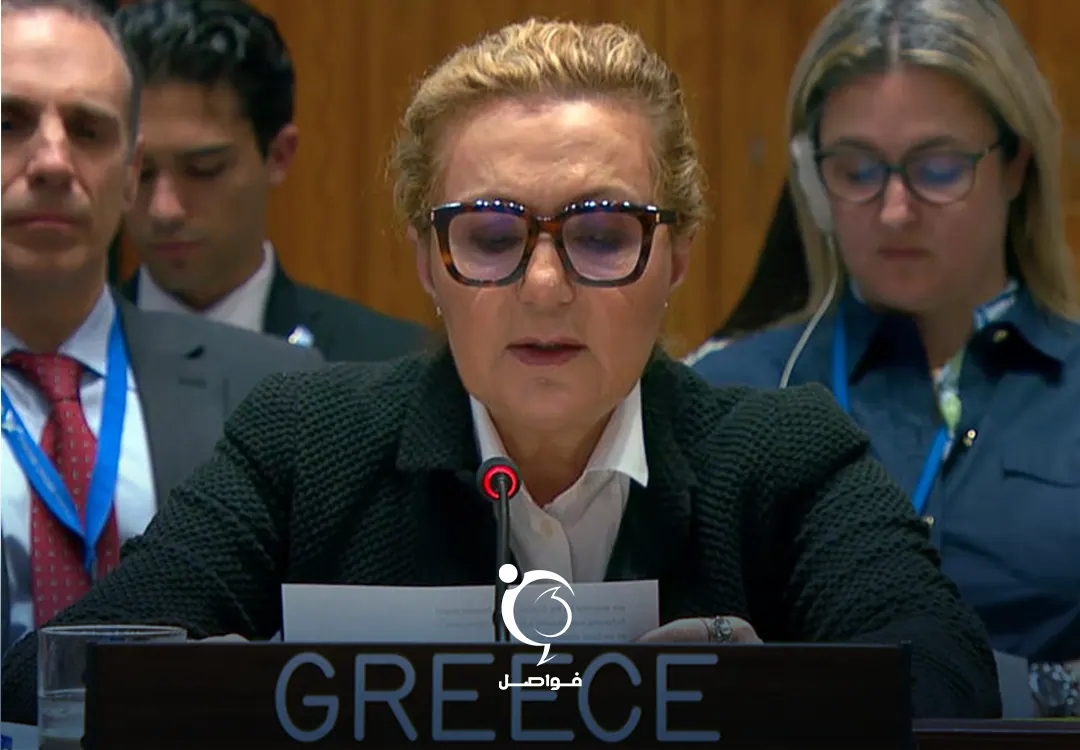
The Permanent Representative of Greece to the United Nations, Aglaia Baltza, has sent a letter to UN Secretary-General Antonio Guterres regarding the recent ratification by the Libyan House of Representatives of a maritime memorandum of understanding with Turkey. The agreement, signed in 2019, has been a point of contention for Greece, which claims it violates international maritime law. According to reports, the letter was sent at the direction of Greek Foreign Minister Giorgos Gerapetritis.
The Greek government has consistently rejected the Libya-Turkey maritime accord, arguing that it has no legal basis and contradicts the United Nations Convention on the Law of the Sea. In her letter, Baltza reiterated Greece's stance, emphasizing that the accord cannot have any legal implications for other countries. The Greek government's concerns have been echoed by other regional players, including Cyprus, which has also expressed its opposition to the agreement.
The maritime memorandum of understanding between Libya and Turkey has been a contentious issue in the region, with several countries expressing their concerns over its implications for regional stability and security. Egypt, in particular, has been vocal in its opposition to the accord, with Foreign Minister Sameh Shoukry recently reaffirming his country's rejection of the agreement. Turkey, however, has maintained that the accord is a legitimate exercise of its sovereign rights.
The Libyan House of Representatives' ratification of the maritime accord has been met with criticism from various quarters, including the Greek and Cypriot parliaments. The Cypriot parliament has condemned the move, citing concerns over the potential impact on regional stability and security. The European Parliament has also expressed its solidarity with Greece and Cyprus, reaffirming its support for the two countries' sovereignty and territorial integrity.
The UN Secretary-General has received several letters from countries in the region expressing their concerns over the Libya-Turkey maritime accord. Guterres has been urged to take a closer look at the issue and to ensure that any agreements or arrangements in the region are in line with international law. The UN has a critical role to play in promoting peace and stability in the region, and its response to the issue is being closely watched.
Greece and Turkey have a long-standing dispute over maritime boundaries and territorial claims in the Eastern Mediterranean. The Libya-Turkey maritime accord has further complicated the situation, with Greece and other countries in the region expressing concerns over the potential implications for regional stability and security. Diplomatic efforts are underway to resolve the issue, with several countries engaged in talks aimed at finding a mutually acceptable solution.
The situation remains fluid, with several countries in the region closely watching developments. The international community has a critical role to play in promoting peace and stability in the region, and the UN is expected to continue its engagement on the issue. The Greece-Turkey dispute is a complex one, and a lasting solution will require sustained diplomatic efforts and a commitment to finding a mutually acceptable solution.
Key points
- Greece has written to UN Secretary-General Antonio Guterres expressing concerns over the Libya-Turkey maritime accord.
- The accord has been rejected by Greece and other countries in the region, which claim it violates international maritime law.
- The situation remains fluid, with several countries in the region closely watching developments and diplomatic efforts underway to resolve the issue.