The Greek Foreign Ministry has granted permission for preliminary survey work to construct an undersea electric cable linking Greece to Cyprus and then to Israel. This project, which had faced opposition from Turkey in 2024, aims to connect the electricity grids of Greece, Cyprus, and the occupied territories. The cable, spanning approximately 1208 kilometers, will be laid in the Mediterranean Sea.
The project, valued at 1.43 billion euros, was awarded to the French company Nexans in the summer of 2023. Nexans will undertake the construction of the cable linking Cyprus to Greece. The cable will be approximately 900 kilometers long between Crete and Cyprus and 310 kilometers between Cyprus and the occupied territories. This initiative is significant as Cyprus is the only European country not connected to the European gas or electricity grid.
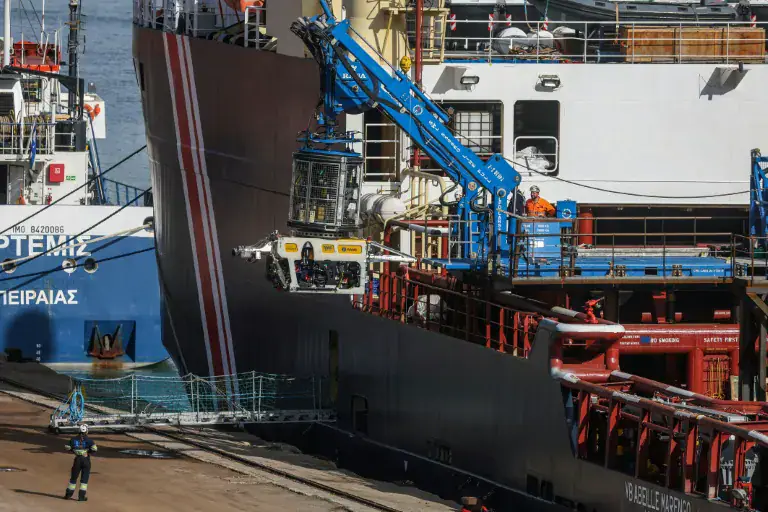
The Greek Foreign Ministry's decision to allow the survey work was made on the request of Nexans. The surveys will be conducted by the French vessel "Abu Marengo," which arrived in the port of Heraklion, Crete, in late October. The vessel will carry out the necessary surveys in Greek and Cypriot waters, as well as in areas within the continental shelf of Greece and Cyprus.
The project had stalled since January due to political discussions, particularly at the European level. Turkey had objected to the project in 2024, refusing to allow depth measurements in the maritime area off the Greek island of Kasos, which is close to the western coast of Turkey. The Greek government's decision is seen as a significant step forward for the project.
The undersea cable will enable the exchange of electricity between the three countries and enhance energy security in the region. The project is expected to have a positive impact on the energy market in the Eastern Mediterranean. It will also provide an alternative source of energy for Cyprus, which currently relies heavily on imported fuels for its energy needs.
The resumption of the project has been welcomed by Cyprus, which has been seeking to enhance its energy security. The country has been exploring various options to increase its energy independence, including the development of renewable energy sources and the importation of natural gas. The electric cable link with Greece and Israel is seen as a key component of these efforts.
The project is expected to be completed in the coming years, pending the successful completion of the survey work and the laying of the undersea cable. Once operational, the cable will provide a reliable and efficient means of transmitting electricity between Greece, Cyprus, and Israel. The project is a significant example of regional cooperation in the energy sector and is expected to have a positive impact on the economies of the countries involved.
Key points
- The project aims to connect the electricity grids of Greece, Cyprus, and Israel through a 1208km undersea electric cable.
Reporting sources
- Wasat TV · Wasat TV