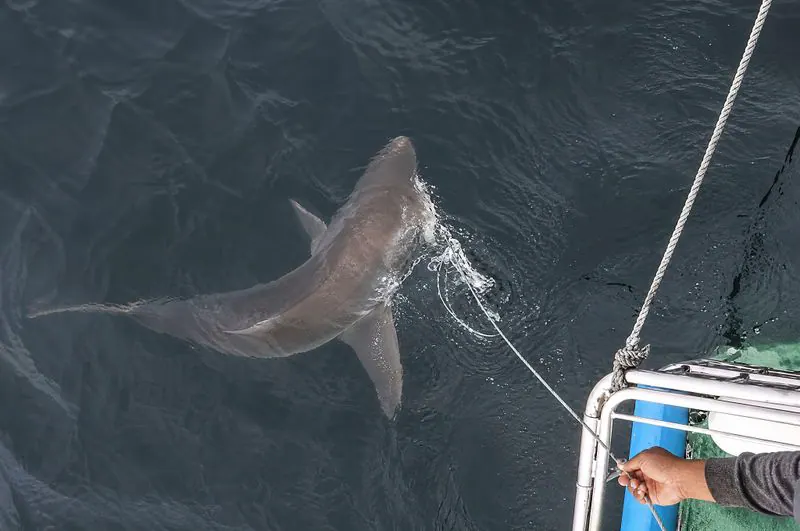
A sub-adult great white shark was spotted just north of Seal Island in False Bay by clients and crew of African Shark Eco-Charters, a company that runs licensed shark-diving excursions from Simon’s Town. The shark was filmed from the African Shark Eco-Tours boat, marking the first sighting of its kind in nearly eight years. The crew members were ecstatic about the sighting, describing it as a big surprise.
The disappearance of great white sharks from False Bay was largely attributed to predation by killer whales with an appetite for shark livers. Two killer whales, named Port and Starboard, were implicated in deliberately targeting great whites to feed off their fat-rich livers. Their role in the killings was confirmed in a research report co-authored by SanParks marine biologist Dr. Alison Kock.
According to Dr. Kock and fellow biologist Alison Towner, killer whales were driving great white sharks from their traditional aggregation sites off the Western Cape. The researchers reported the first highly unusual events happening between February and June 2017 in Gansbaai, where five white shark carcasses were discovered on beaches with distinct wounds and missing livers.
The presence of killer whales triggered an immediate flight response and prolonged absence from the area, resulting in the complete abandonment of the site for two-and-a-half years. The absence of white sharks created a void that another predator, the bronze whaler shark, filled. The implications of killer whale predation on white sharks are far-reaching, given the already small and threatened South African white shark population.
Rob Lawrence, whose company operates cage diving and tours to spot bronze whaler sharks, expressed excitement about the sighting but cautioned that it was too early to say if the great whites are back for good. Veteran naturalist and Simon’s Town whale-watching tour operator Dave Hurwitz described the sighting as a significant event, similar to the second coming.
The crew members of African Shark Eco-Charters are preparing for a second trip to Seal Island to gather more information about the shark’s behavior and habitat. While the sighting is a positive development, it remains to be seen if the great whites will return to their traditional aggregation sites in False Bay.
The return of great white sharks to False Bay could have significant implications for the local ecosystem and shark-diving industry. Further research and monitoring are needed to understand the dynamics of the shark population and the impact of killer whale predation on their behavior.
Key points
- The great white shark spotted in False Bay is a sub-adult, and it is unclear if adult great whites will also return to the area.
- Killer whales have been implicated in the decline of great white sharks in False Bay, with two individuals, Port and Starboard, identified as shark-hunting specialists.
- The return of great white sharks to False Bay could have significant implications for the local ecosystem and shark-diving industry.