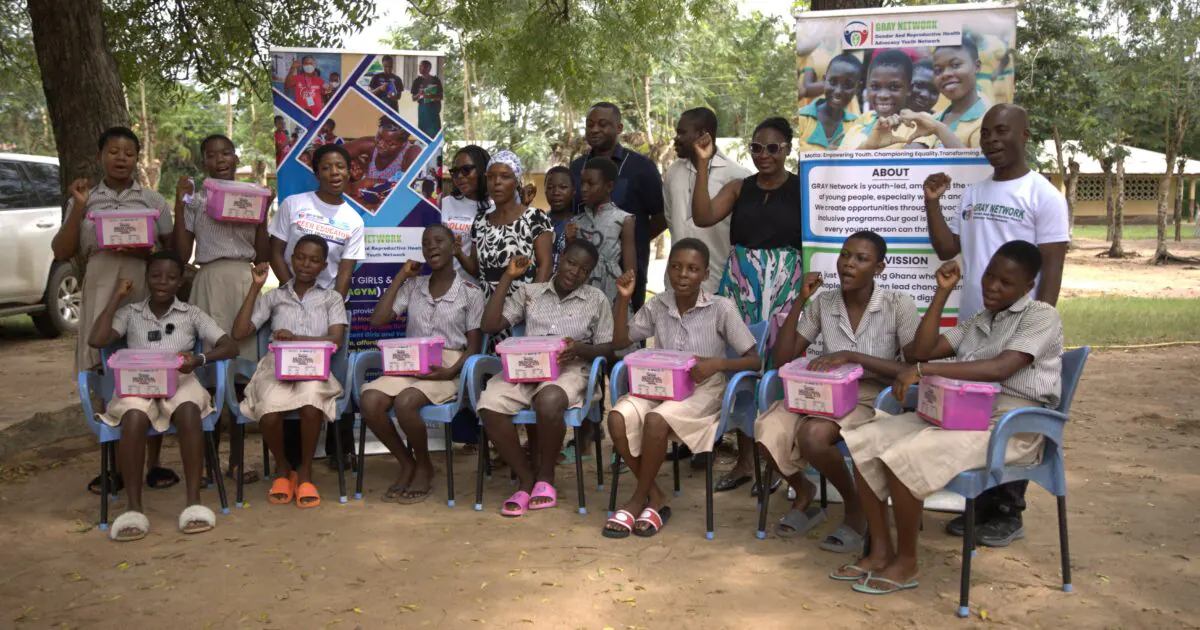
A menstrual hygiene project initiated by GRAY Network has significantly promoted inclusive education in the Central and South Tongu Districts in the Volta Region of Ghana. The project, titled Strengthening Volunteer-Led Sexual and Reproductive Health and Rights, Menstrual Hygiene Management, and Life Skills Education in Schools and Communities, was sponsored by STAR-Ghana Foundation. It aimed to address menstrual health issues and promote quality education, gender equality, and community development.
The project led to the establishment of School-based Menstrual Hygiene Management Clubs, where community sensitization sessions were held, and parents were engaged. Young females were introduced to producing reusable sanitary facilities, provided with menstrual hygiene kits, and trained volunteers supervised beneficiaries. The project also distributed reusable sanitary pads to adolescent girls, reducing household expenditure on sanitary products and increasing confidence in supporting girls throughout their education.
Through a unique volunteer-led approach, GRAY Network trained teachers, nurses, community health volunteers, seamstresses, and peer educators to deliver comprehensive education on menstrual hygiene management, sexual and reproductive health and rights, life skills, and gender equality. The project was piloted at Atsieve D/A Basic School and Lakpo D/A Basic School, demonstrating that investing in menstrual health promotes quality education, gender equality, and contributes to shaping the country's future.
The project has transformed school culture beyond improving girls' participation in education. Boys who took part in the educational sessions developed a better understanding of menstruation, challenged harmful myths, reduced teasing, and became active supporters of their female classmates. Teachers in the beneficiary schools described this positive behavioral change as a major factor in creating safer, more respectful, and inclusive learning environments.
The Menstrual Hygiene Management Clubs have grown into platforms that not only provide menstrual health education but also foster leadership, communication, public speaking, peer mentoring, and advocacy skills among students. These clubs continue to empower learners to educate one another while promoting dignity and gender equality within their schools. The impact of the project extends beyond classrooms into homes and communities.
According to Madam Esinam Tekpor, the South Tongu District Girl Child Coordinator of the Ghana Education Service, the intervention has significantly improved the overall school environment. She mentioned that teachers across the beneficiary schools unanimously reported positive changes among girls following the intervention, including increased confidence, regular school attendance, and improved classroom participation.
Madam Tekpor stressed that sustainable educational progress requires collaboration among schools, families, health institutions, and community partners. She highlighted that the project's success lies in its comprehensive approach, engaging teachers, parents, community leaders, health professionals, and students themselves. The project's impact will continue to be felt, promoting inclusive education and community development in the Central and South Tongu Districts.
Key points
- The project reduced menstruation-related absenteeism among girls and improved their overall school experience.
- The initiative promoted positive behavioral change among boys, who became active supporters of their female classmates.
- The project's comprehensive approach engaged teachers, parents, community leaders, and students, ensuring a sustainable impact on education and community development.