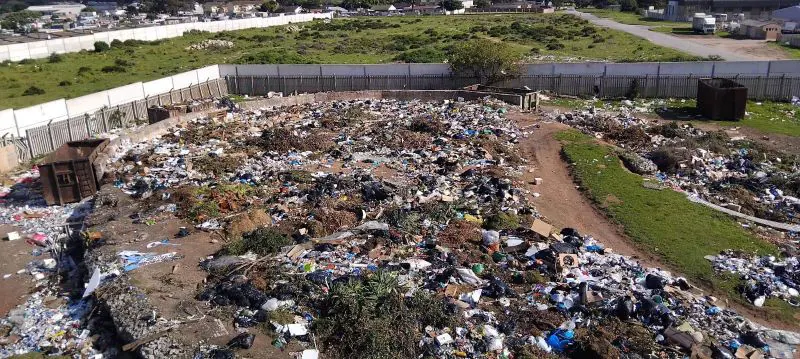
Gqeberha's waste transfer stations, specifically Walmer and Strandfontein, are facing significant challenges due to neglect and poor management. Business owners and residents have expressed concerns about the state of these facilities, citing broken-down trucks, locked gates, and overflowing skips. The situation has led to worries about potential health risks, pests, and pollution. A business owner near the Walmer facility described the site as an eyesore and highlighted the deterioration of conditions over the past year.
The Walmer and Strandfontein waste transfer stations serve as temporary collection points for refuse, which is then transported to the city's landfill sites, such as Arlington. However, the sites rely on skips and trucks to remove waste regularly and prevent accumulation. Municipal spokesperson Sithembiso Soyaya attributed the problems at the facilities to frequent truck breakdowns, inadequate security, and poor access control. A business owner near the Walmer facility stated that the problems began with the contractor not providing enough skips and trucks, which repeatedly broke down.
The situation at the Walmer facility has become so dire that private individuals are charging people to dump waste at the site. According to a business owner, these informal helpers are not employed by the municipality through its Expanded Public Works Programme (EPWP). Some residents, like Nkosikhona Hute, have resorted to offering their services to help offload rubbish for a fee. Another source revealed that households and businesses are dumping domestic refuse and food waste at the site, respectively.
The problems at the city's waste drop-off sites are not isolated incidents, according to Ward 2 councillor Sean Tappan. He has raised concerns with the supervisor responsible for the sites and called on the municipality to investigate the contractor and hold it accountable for failing to meet its contractual duties. Ward 3 councillor David Hayseldene described the Walmer facility as being in a "horrendous state" and urged the municipality to take action to restore it.
The municipality has acknowledged the problems at the waste transfer stations and is engaging with facility operators to address the challenges. Soyaya stated that constant truck breakdowns and the frequent need to empty skips are among the key challenges raised. The municipality has also requested additional funding to upgrade the facilities, provide proper security, and formally register the sites to ensure compliance with applicable norms and standards governing the temporary storage of waste.
The waste crisis in Gqeberha extends beyond the transfer stations, with the city's two operating landfill sites – Koedoeskloof and Arlington – nearing capacity. Dr. Gary Koekemoer, chairperson of the Wildlife and Environment Society of South Africa's Eastern Cape branch, emphasized the importance of accessible transfer stations for waste management. However, he questioned the current management of the facilities, citing the lack of separation of recyclable and hazardous waste.
A new three-year contract has been awarded for the management of the waste transfer stations, although the final appointment of service providers remains subject to the completion of standard supply chain management processes. The municipality has assured continuous supervision and monitoring of the facilities, with daily services provided to the drop-off sites. However, the timeframe for improvements will depend on whether the additional budget is approved and disbursed.
Key points
- Gqeberha's waste transfer stations are struggling due to neglect, poor management, and inadequate resources.
- The situation has led to concerns about potential health risks, pests, and pollution.
- The municipality has acknowledged the problems and is working to address the challenges, including requesting additional funding to upgrade the facilities.