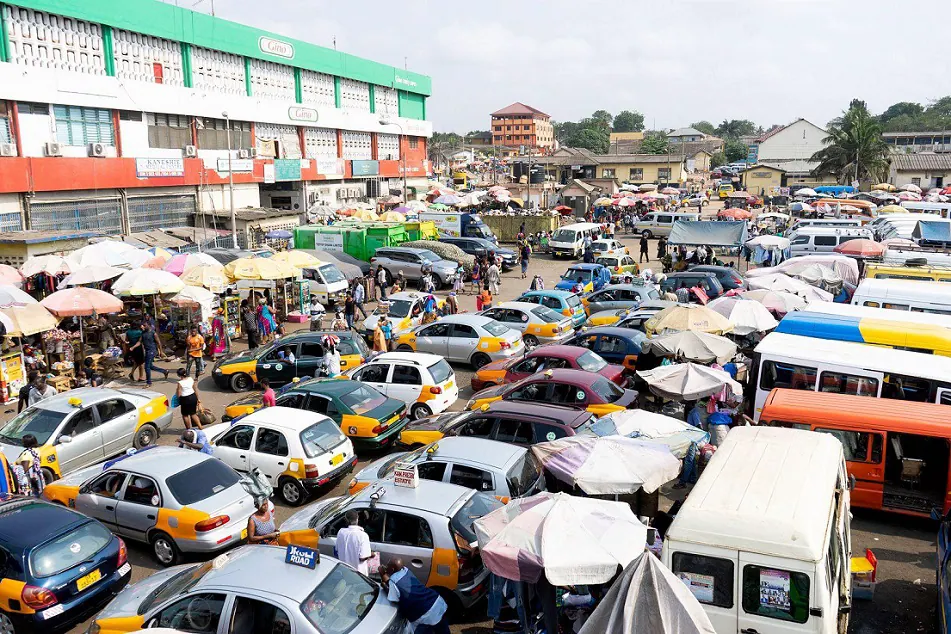
The Ghana Private Road Transport Union (GPRTU) has denied claims that its proposed 30 percent increase in public transport fares has been suspended. According to the union, discussions with the government remain ongoing, and the proposed adjustment is still on the negotiating table. Deputy Public Relations Officer of the GPRTU, Samuel Amoah, stated that the union and the Ministry of Transport met on September 18 to discuss the proposed fare increase.
The GPRTU had presented a 30 percent adjustment as its proposal, while remaining open to negotiations with the government. The union made it clear that any downward revision would not reduce the proposed increase below 25 percent. This development comes after the National Petroleum Authority (NPA) claimed that engagements with transport operators had put the proposed fare adjustment on hold. The NPA stated that discussions aimed to find ways to manage rising fuel prices and other operating expenses.
The GPRTU's position is consistent with its earlier submissions to the Ministry of Transport, where it formally requested a review of public transport fares due to increased operating costs. A joint process involving the Ministry of Transport, the GPRTU, and the Ghana Road Transport Coordinating Council was established to examine the various cost components used in determining transport fares. The review is expected to consider expenses associated with fuel, vehicle spare parts, lubricants, insurance, and maintenance.
The renewed disagreement comes against the backdrop of a fresh increase in petroleum price floors announced by the National Petroleum Authority for the second pricing window of September. The minimum price floor for petrol was raised from GH¢14.53 to GH¢16 per litre, while diesel increased from GH¢15.60 to GH¢16.77 per litre. The higher fuel costs have intensified pressure on commercial transport operators, who argue that fuel represents only one component of the expenses involved in keeping vehicles operational.
The GPRTU has previously stated that rising expenditure on spare parts, lubricants, insurance, taxes, and vehicle maintenance has compounded the financial pressures confronting drivers and vehicle owners. The union and the GRTCC had cautioned drivers, station masters, and vehicle owners against introducing unilateral increases. Existing approved fares remain in force until a new fare structure is officially approved.
The GPRTU and the Ministry of Transport are expected to return to the negotiating table on September 22 to continue discussions and attempt to reach a conclusion on the percentage adjustment. The GPRTU has also directed its members not to participate in a sit-down strike announced by the Progressive Transport Owners Association over the escalating cost of vehicle maintenance. For now, there has been no official approval of a new transport fare structure.
Existing approved fares therefore remain applicable while negotiations continue, meaning commuters are yet to receive a formally sanctioned increase. The outcome of the September 22 discussions is expected to provide greater clarity on whether the GPRTU will retain its proposed 30 percent adjustment, accept a lower figure, or reach another arrangement with the government.
Key points
- The GPRTU is pushing for a 30 percent increase in public transport fares due to rising operating costs.
- The National Petroleum Authority claimed that the proposed fare adjustment was on hold, but the GPRTU disputes this.
- The union and the Ministry of Transport are set to meet on September 22 to continue negotiations.