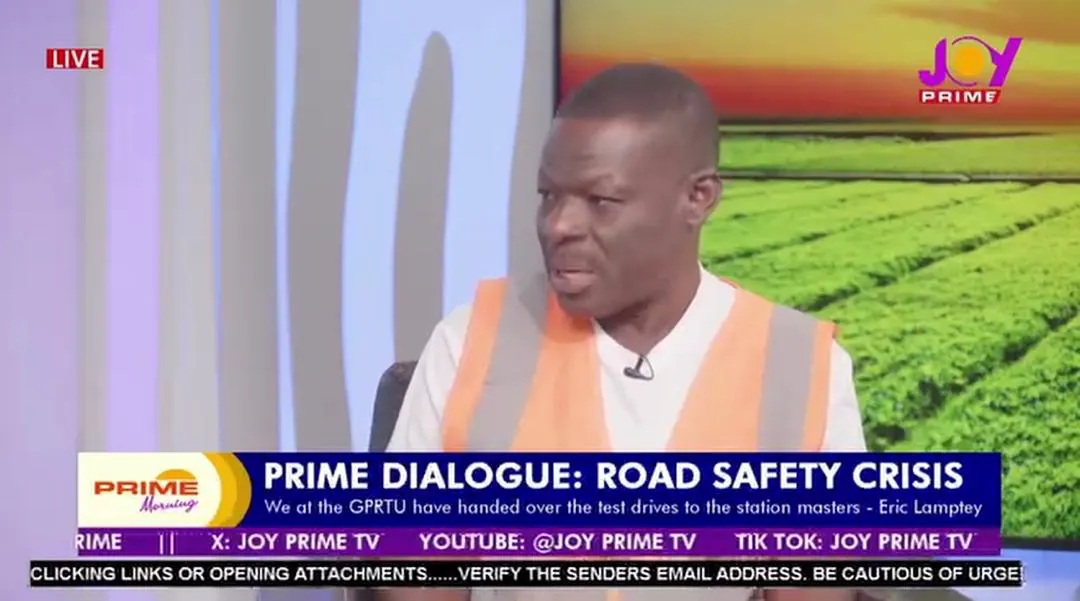
The Ghana Private Road Transport Union (GPRTU) has introduced a new measure to curb road accidents by entrusting the responsibility of inspecting commercial vehicles to station masters. According to Eric Lantey Lamptey, a member of the GPRTU Communications Team, this move is part of a broader effort to ensure that only roadworthy vehicles are allowed to operate from GPRTU stations. The inspection process includes a physical check of the vehicle's tyres, brakes, lights, and overall condition, as well as a test-drive to assess its performance.
The GPRTU has a decentralised but strict system in place, where station masters are empowered to ensure that only safe vehicles are allowed to load passengers. Mr Lamptey explained that before a vehicle is accepted into a station, it must undergo a rigorous vetting and inspection process. This process is designed to complement the work of the Driver and Vehicle Licensing Authority (DVLA) and ensure that vehicles that ply the roads daily are safe for both drivers and passengers.
The move comes at a time when Ghana continues to record high cases of road accidents, with many stakeholders calling for stricter enforcement of road safety regulations. The Prime Dialogue edition, themed "Road Safety Crisis: Who is responsible?", is exploring the roles of drivers, transport unions, the police, and regulatory bodies in addressing the menace. Mr Lamptey stressed that while the GPRTU is playing its part at the station level, road safety is a shared responsibility that requires discipline from drivers, vigilance from passengers, and enforcement by state agencies.
The GPRTU's new measure is intended to reduce the number of road accidents caused by unroadworthy vehicles. According to Mr Lamptey, the union has observed that many commercial vehicles operating on the roads are not in good condition, and this has contributed to the high rate of road accidents. By empowering station masters to inspect vehicles, the GPRTU aims to prevent unroadworthy vehicles from operating and reduce the risk of accidents.
The inspection process is thorough and rigorous, and vehicles that fail to meet the required standards are not allowed to operate. Mr Lamptey explained that the station masters are trained to identify any defects or issues with the vehicles and to ensure that they are rectified before the vehicles are allowed to operate. This process is designed to ensure that only safe vehicles are allowed to ply the roads.
The GPRTU's move has been welcomed by many stakeholders, who believe that it will help to reduce the number of road accidents in Ghana. The union's efforts to enhance road safety are part of a broader initiative to promote safe transportation and reduce the risk of accidents. By working together with other stakeholders, the GPRTU aims to make Ghana's roads safer for everyone.
The issue of road safety is a critical one in Ghana, and the GPRTU's new measure is a step in the right direction. With the country's roads recording high cases of accidents, there is a need for all stakeholders to work together to address the menace. The GPRTU's effort to enhance road safety is a welcome development, and it is hoped that it will contribute to reducing the number of road accidents in Ghana.
Key points
- GPRTU has entrusted vehicle inspection responsibility to station masters to curb road accidents.
- The inspection process includes a physical check of the vehicle's tyres, brakes, lights, and overall condition, as well as a test-drive.
- The move is intended to complement the work of the Driver and Vehicle Licensing Authority (DVLA) and ensure road safety.