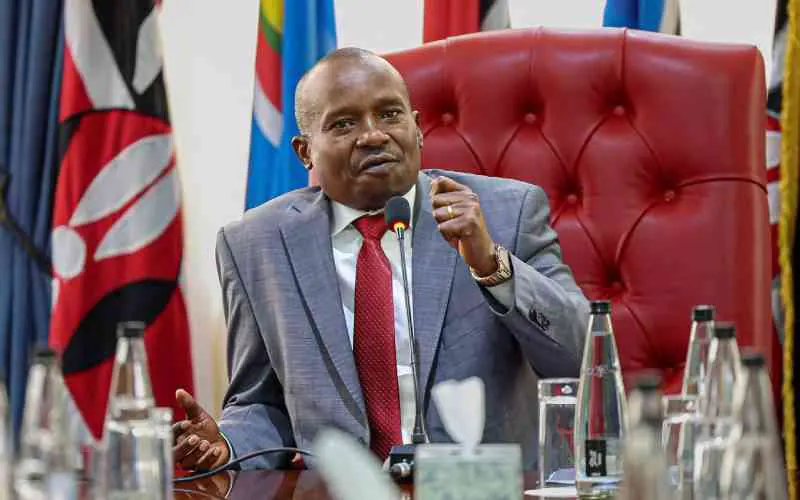
The government of Kenya has intensified its efforts to combat cartels involved in the production and distribution of illicit alcohol and narcotic drugs. Deputy President Kithure Kindiki announced that the government will adopt a tougher and more coordinated approach to dismantle criminal networks fuelling the illicit alcohol and drugs trade. This approach will combine intelligence operations with multi-agency enforcement.
Kindiki warned that enforcement agencies will pursue the networks without political interference, emphasizing that the government's efforts will be shielded from political influence. The Deputy President stated that the Zero Tolerance Initiative to illicit alcohol and drug cartels will not entertain any political or other interferences whatsoever. This signals a tougher stance against individuals or networks that may seek to interfere with enforcement operations.
The government has taken steps to regulate the industry, including suspending the licences of 36 manufacturers of second-generation alcohol in 2024 due to non-compliance with regulations. Of these, eight have had their licences cancelled, while 26 manufacturers that subsequently complied with the requirements will undergo fresh inspections. These inspections aim to establish whether the firms continue to meet the required standards and whether previous corrective measures have been effectively implemented.
A Multi-Sectoral High-Level Team has been established to monitor enforcement efforts, identify criminal cartels, and support rehabilitation of victims associated with illicit alcohol and drug networks. The team, chaired by Kindiki every two weeks, brings together government agencies, industry representatives, and local communities. This collaborative approach aims to address the wider ecosystem that enables the trade to flourish.
The government is also preparing new legislative measures to tighten controls around ethanol, a key ingredient in alcohol production. Proposals will be developed within a month to regulate ethanol imports and introduce tougher penalties for those who adulterate alcoholic products or divert ethanol intended for industrial use. This move aims to prevent the production of illicit alcohol.
The crackdown will extend to illicit alcohol producers operating away from formal manufacturing facilities, including those producing illegal alcohol in homes, hidden premises, and other locations within local communities and urban areas. Kindiki stated that those involved in such activities will be identified, severely punished, and their networks crashed.
The government's renewed campaign comes amid longstanding concerns over the health, social, and security consequences associated with illicit alcohol and drug abuse. Authorities have increasingly sought to combine regulation, enforcement, public awareness, and rehabilitation in tackling the problem, particularly where criminal networks exploit gaps in supply chains and regulatory systems.
Key points
- The Kenyan government has established a Multi-Sectoral High-Level Team to monitor enforcement efforts and address the social consequences of illicit alcohol and drug abuse.
- The government has suspended the licences of 36 manufacturers of second-generation alcohol and cancelled the licences of eight non-compliant firms.
- New legislative measures will be proposed to regulate ethanol imports and introduce tougher penalties for those involved in adulterating alcoholic products or diverting ethanol intended for industrial use.