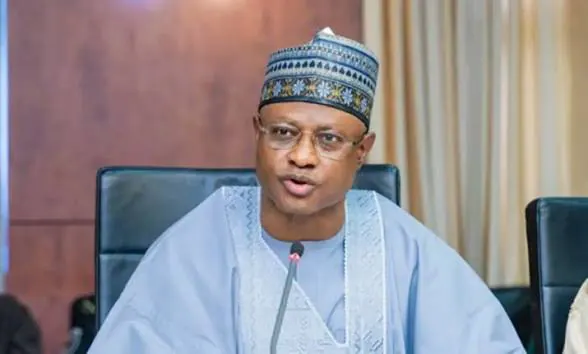
The Kaduna State Government, under the leadership of Governor Uba Sani, has deployed 100 Compressed Natural Gas (CNG) mass transit buses, transforming urban mobility and promoting climate action. This initiative has been recognised by President Bola Ahmed Tinubu as a bold innovation and a model for subnational governments. The programme demonstrates how climate action can be integrated into everyday public infrastructure, making it a significant practical intervention in environmental sustainability.
Before the introduction of CNG buses, urban transportation in Kaduna was characterised by minibuses and tricycles. The transition to high-capacity CNG buses represents a shift towards a more organised and efficient urban transport system. The 100 buses operate across major corridors, making multiple daily trips between 6am and 6pm. This new system has the potential to significantly reduce the energy and emissions intensity of passenger transport in Kaduna.
In their first year, the CNG buses carried approximately 3.2 million passengers, equivalent to about 38.4 million passenger-kilometres, with an average 12-kilometre journey. The significance of this programme lies in both fuel transition and modal efficiency. CNG combustion produces less carbon dioxide per unit of useful energy than conventional diesel or petrol, while modern CNG vehicles can substantially reduce particulate pollution associated with older diesel engines.
The estimated difference between conventional diesel and CNG operation for the fleet corresponds to approximately 1,370 tonnes of CO₂e avoided annually. This figure represents only the direct operational comparison, and the broader climate benefit can be greater when considering the emissions associated with the numerous minibuses and tricycles that would otherwise transport the same passengers. The environmental benefit also extends beyond greenhouse gases, contributing to cleaner air along Kaduna’s major urban corridors.
The programme is relevant not only to social-economy and climate mitigation but also to urban environmental quality. Reducing dependence on older, higher-emitting vehicles can lower particulate matter and other transport-related pollutants. This makes the CNG mass transit initiative a crucial step towards a cleaner and more climate-conscious urban transportation system in Kaduna.
There is also a longer-term climate opportunity for Kaduna, as CNG infrastructure can potentially provide a foundation for the future adoption of compressed biogas and biomethane. This creates a potential link between agriculture, waste management, renewable energy, and sustainable transportation. CNG is not a zero-carbon fuel, but Kaduna’s experience demonstrates that climate action does not have to be separate from development.
Governor Uba Sani’s CNG mass transit initiative is moving the state towards a cleaner and more climate-conscious urban transportation system, serving as a model for other subnationals. The programme shows that climate action can be embedded in the infrastructure that citizens use every day, making it a significant step towards a sustainable future for Kaduna.
Key points
- The Kaduna State Government's CNG mass transit initiative has avoided approximately 1,370 tonnes of CO₂e annually.
- The programme has carried 3.2 million passengers in its first year, equivalent to 38.4 million passenger-kilometres.
- The initiative serves as a model for other subnational governments to integrate climate action into everyday public infrastructure.