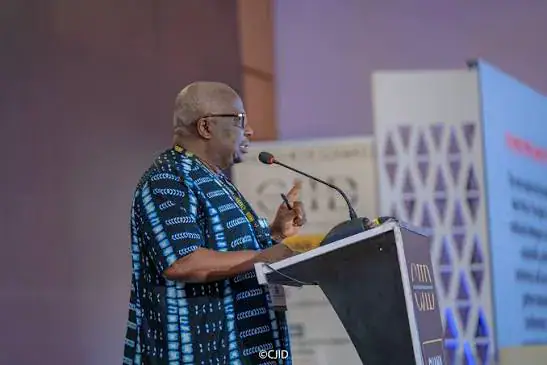
The Chief Executive Officer of the Centre for Journalism Innovation and Development (CJID), Dapo Olorunyomi, has expressed concern that laws introduced to combat misinformation are being used to silence journalists and critics in West Africa. Speaking at the 2026 Media and Development Conference in Abuja, Nigeria, Mr. Olorunyomi stated that governments risk undermining democratic institutions by using broadly defined information laws to intimidate journalists and shield public officials from scrutiny.
Mr. Olorunyomi acknowledged the responsibility of governments to protect citizens against online abuse, cybercrime, and coordinated misinformation. However, he cautioned that such responsibilities must not be used to restrict fundamental rights. He emphasized that laws introduced in the name of combating false information have often become instruments for suppressing criticism, and that vague legal provisions and disproportionate penalties create an atmosphere of fear.
The CJID CEO expressed concern about the impact of these measures on investigative reporting and the media's ability to hold powerful individuals and institutions accountable. He warned that journalists become reluctant to investigate matters of public interest, and that citizens begin to believe that silence is safer than speaking. Mr. Olorunyomi maintained that democratic societies cannot effectively combat misinformation by weakening the institutions responsible for providing credible information to the public.
Mr. Olorunyomi called for laws regulating digital content to be clearly defined, proportionate, transparent, and consistent with fundamental human rights. He stressed that decisions affecting freedom of expression must be subject to independent oversight and meaningful judicial review. He also rejected attempts to present independent journalism and national security as conflicting interests, insisting that credible reporting strengthens public accountability and democratic stability.
The CJID CEO pointed to the African Charter on Democracy, Elections and Governance, and existing access-to-information laws as important frameworks for safeguarding democratic rights. However, he argued that the region continues to struggle with the political commitment required to translate these principles into practice. He cautioned that national security must never become a convenient justification for democratic regression.
Mr. Olorunyomi urged African governments to strengthen independent institutions, protect press freedom, and ensure that measures intended to combat misinformation do not become tools for political repression. He emphasized that independent journalism is not a threat to democratic stability, but rather one of its most important safeguards. The 2026 Media and Development Conference is being held under the theme "Media, Technology and the Future of Democratic Societies."
The conference comes at a time when the issue of misinformation and its impact on democratic societies is of great concern. The CJID CEO's remarks highlight the need for governments to balance their responsibility to protect citizens with the need to protect fundamental rights and freedoms. Key to addressing this challenge will be the development of laws and policies that promote a free and independent media, while also addressing the risks associated with misinformation.
Key points
- CJID CEO Dapo Olorunyomi warns that misinformation laws are being used to suppress criticism and restrict press freedom in West Africa.
- The CJID CEO calls for laws regulating digital content to be clearly defined, proportionate, transparent, and consistent with fundamental human rights.
- Independent journalism is not a threat to democratic stability, but rather one of its most important safeguards.