The Kenyan government has set aside Ksh.25 billion to compensate landowners affected by the construction of the Narok-Bomet-Kisumu section of the Naivasha-Kisumu-Malaba Standard Gauge Railway (SGR) project. This move is part of the government's efforts to ensure that landowners are fairly compensated for their land. The National Land Commission (NLC) is conducting public participation ahead of the compensation process for affected landowners.
Kenya Railways Corporation Managing Director Philip Mainga stated that the NLC had granted Kenya Railways early access to some sections of land as negotiations and valuation exercises with affected property owners continue. This early access will enable the construction of the SGR project to proceed smoothly. The project is expected to improve the movement of locally produced goods, including tea, coffee, and sugar, to the Port of Mombasa for export.
The affected landowners have expressed their willingness to participate in the public participation process and work with the government to ensure smooth compensation negotiations. Mzee Stephen Ruto of Kapkesosio village stated that the community welcomed the project, noting that it would connect Bomet County to the rest of the country, the East African region, and beyond. The project is expected to create jobs and provide business opportunities for small enterprises.
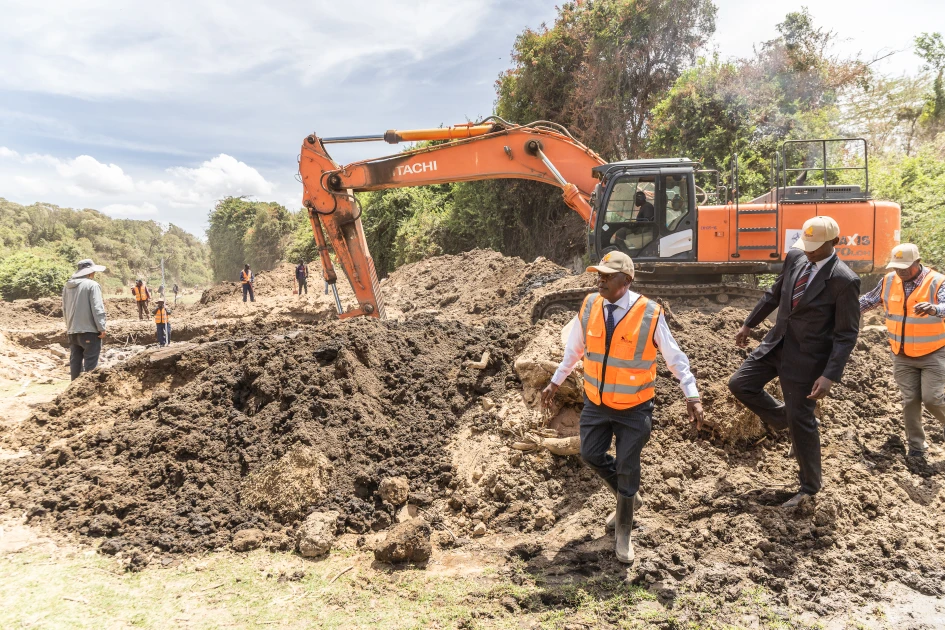
Construction of SGR Phase 2B is gathering pace, with work having commenced early in some areas, including Narok County. The railway will cover approximately 98 kilometres in Narok County, while the wider corridor will pass through Bomet, Nyamira, Kericho, Homa Bay, and Kisumu counties. The project is being developed as an SGR Economic Belt, with logistics hubs and value-addition facilities planned along the railway corridor.
The SGR Economic Belt is expected to support trade and local industries, with a focus on agriculture, livestock, and tourism in Narok. Bomet and Kericho are expected to host logistics hubs targeting the tea sector, while Kisumu is expected to have a logistics hub focused on fish, including facilities to support storage and transportation to other markets. This will provide a boost to the local economy and create new opportunities for businesses.
President William Ruto launched construction of the railway on March 19, 2026. The project is expected to take approximately two years to complete, with the Narok railway station projected to be partially complete by June 2027. The government has assured landowners that the compensation process will be fair and transparent, and that they will be involved in the entire process.
The project is part of the government's Bottom-Up Economic Transformation Agenda, which aims to create jobs and stimulate economic growth. The SGR project is expected to have a positive impact on the economy, and the government is committed to ensuring that it is implemented in a way that benefits all stakeholders, including landowners and local communities.
Key points
- The Kenyan government has allocated Ksh.25 billion to compensate landowners affected by the construction of the Narok-Bomet-Kisumu section of the Standard Gauge Railway (SGR) project.
- The project is expected to create jobs and provide business opportunities for small enterprises as part of the government's Bottom-Up Economic Transformation Agenda.
- The SGR project is expected to improve the movement of locally produced goods, including tea, coffee, and sugar, to the Port of Mombasa for export.