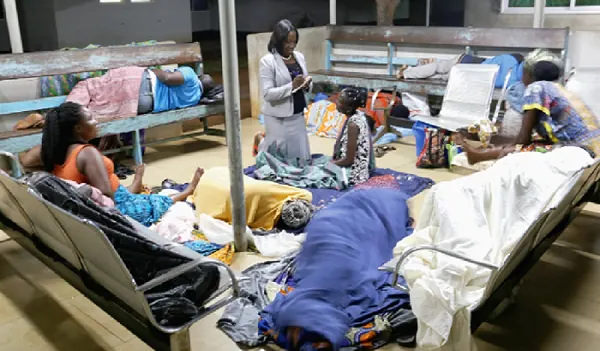
The Ghanaian government has initiated a pilot program for a national emergency bed management system to address the country's persistent "no-bed syndrome" in hospitals. Health Minister Kwabena Mintah Akandoh stated that the system provides real-time visibility of available beds and patients in emergency spaces. A command centre has been established at Ridge Hospital to coordinate the system, allowing the minister to monitor emergency bed availability from his office. This development aims to improve the management of existing hospital capacity.
The pilot program currently covers selected regional hospitals and teaching hospitals. The system tracks how long patients remain in emergency wards, enabling authorities to address prolonged stays. Minister Akandoh emphasized that the system is not intended to create additional beds but to optimize the use of existing resources. By monitoring bed occupancy and patient length of stay, the government hopes to reduce the incidence of "no-bed syndrome" in hospitals.
The emergency bed management system features barcoded beds and designated commanders at each facility responsible for entering data into the system. This allows for accurate and up-to-date information on bed availability. The ambulance service has also been integrated into the system to help determine where patients should be sent. Minister Akandoh reported that over 200 ambulances are currently functioning after the government insured all its ambulances in 2025.
To further enhance emergency care, the government is expanding emergency capacity at major hospitals, including Korle-Bu, Komfo Anokye, Tamale, and 37 Military Hospital. At Korle-Bu, the emergency unit currently has 67 beds, compared to over 1,000 beds across the hospital. A 400-bed facility is being constructed as part of a wider redevelopment project, which Minister Akandoh described as a "hospital within a hospital."
Minister Akandoh highlighted the importance of the command centre in monitoring and managing emergency bed availability. From his office, he can access real-time information on bed occupancy and patient length of stay. This enables him to ask questions and take action if patients are occupying emergency beds for extended periods. The minister emphasized that the system will help manage scarce resources more effectively.
The government plans to add 100 new ambulances to the national fleet in 2027 to replenish the existing fleet. Minister Akandoh expressed satisfaction with the progress made so far and the potential for further improvement. The integration of the ambulance service into the emergency bed management system is expected to enhance the overall efficiency of emergency care in Ghana.
The national emergency bed management system is a key initiative to address a significant challenge in Ghana's healthcare system. By leveraging technology and data, the government aims to optimize the use of existing resources and improve patient care. The pilot program's success will likely inform future developments and expansions of the system.
Key points
- The Ghanaian government has launched a pilot program for a national emergency bed management system to tackle "no-bed syndrome" in hospitals.
- The system provides real-time visibility of available beds and patients in emergency spaces.
- The government plans to add 100 new ambulances to the national fleet in 2027.