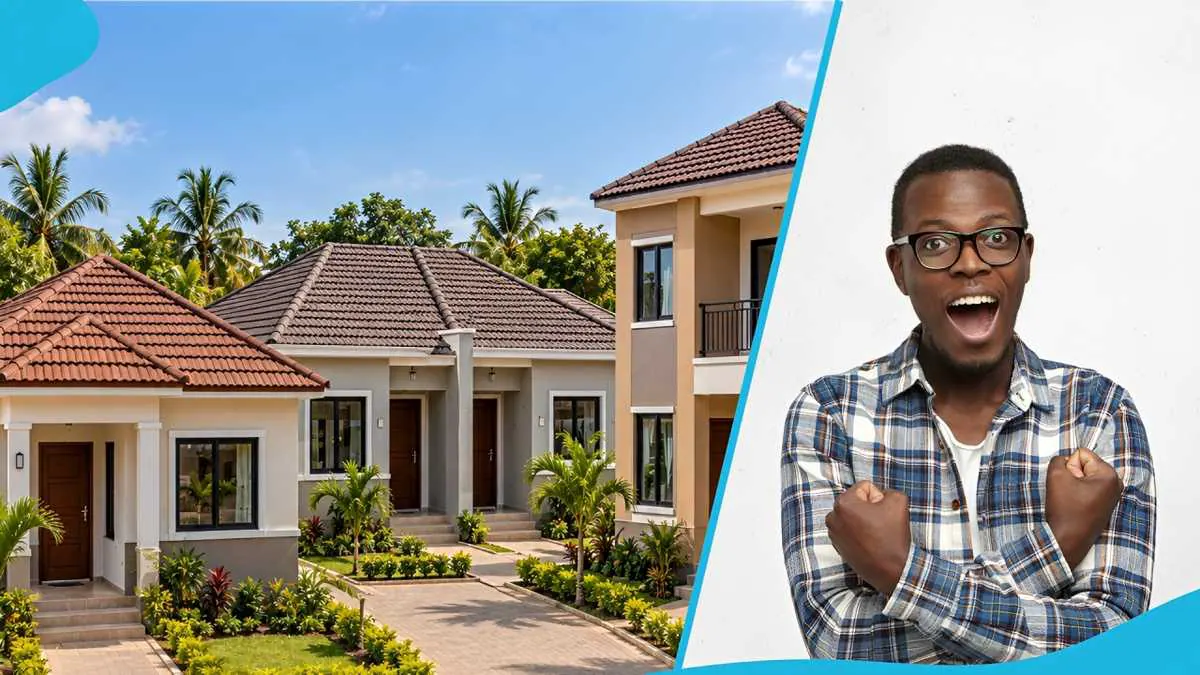
The National Homeownership Fund (NHF) has announced the resumption of mortgage lending at an 8.4% interest rate, providing a more affordable financing option for Ghanaians hoping to own homes. This rate is considerably lower than many commercial mortgage rates available in Ghana. According to NHF Chief Executive Officer Prosper Hoetu, a worker earning a net monthly income of GH¢2,500 could qualify for a mortgage of up to GH¢143,000.
The actual amount accessible will depend on the applicant's income and the assessment conducted by a participating bank. A borrower with a net monthly income of GH¢2,500 would pay approximately GH¢1,231.95 every month over a maximum period of 20 years. The NHF example also shows that a Ghanaian seeking a GH¢300,000 mortgage could face an estimated monthly repayment of GH¢2,585 over 20 years, requiring a net salary of approximately GH¢5,245 monthly.
For higher mortgage amounts, the estimated repayments and required salaries increase significantly. A GH¢500,000 mortgage would have an estimated monthly repayment of about GH¢4,308, requiring a net salary of approximately GH¢8,741 after taxes and other deductions. Similarly, a GH¢700,000 mortgage could attract a monthly repayment of approximately GH¢6,031, requiring a net salary of about GH¢12,238.
The National Mortgage Scheme permits joint applications, allowing spouses or other eligible co-applicants to combine their incomes to qualify for larger mortgages. The scheme will be administered through participating financial institutions, including GCB Bank, Republic Bank, and Stanbic Bank. Prospective applicants must contact a participating bank to begin the process.
Final approval may depend on factors such as the applicant's age, existing loans, employment record, credit history, and the value of the property. A deposit, insurance, property valuation, legal documentation, and processing charges may also increase the amount required. Therefore, earning the estimated salary alone does not guarantee approval or mean the mortgage will cover the complete price of a house.
To put these mortgage amounts into perspective, GH¢50,000 can provide a meaningful start to a modest building project in Ghana if the land is already secured. Current 2026 estimates put cement around GH¢75 to GH¢101 per bag, while concrete blocks can average about GH¢6.20 each. This amount may cover a foundation and some blockwork on a small house, but labour, transport, and site conditions can quickly change the total cost.
The NHF's revised mortgage arrangement aims to make homeownership more accessible to Ghanaians. With the 8.4% interest rate and flexible repayment terms, more people may be able to own homes. The NHF's mortgage scheme is open to applicants who meet the required criteria, and interested individuals can contact participating banks for more information.
Key points
- A worker earning a net monthly income of GH¢2,500 could qualify for a mortgage of up to GH¢143,000.
- The National Mortgage Scheme permits joint applications, allowing spouses or other eligible co-applicants to combine their incomes.
- Final approval may depend on factors such as the applicant's age, existing loans, employment record, credit history, and the value of the property.