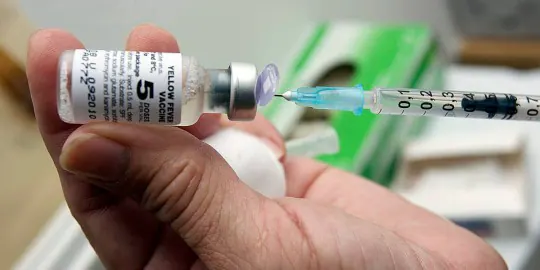
SEND Ghana's Country Director Harriet Nuamah Agyemang has urged the Ghanaian government to prioritise local vaccine manufacturing to enhance the country's preparedness for future disease outbreaks. This call comes as the country faces a suspected yellow fever situation, with health authorities scrambling to procure additional vaccine doses. Agyemang emphasised the need for domestic capacity to produce vaccines during emergencies.
Agyemang noted that vaccine manufacturing has been a topical issue in Ghana, with the previous government setting up a vaccine institute. She urged the media and stakeholders to assess the institute's progress and determine what more can be done to build local production capacity. This includes examining the institute's achievements and recommendations to the government.
The need for local vaccine manufacturing is highlighted by the current suspected yellow fever cases across Ghana. Health Minister Kwabena Mintah Akandoh reported about 450 suspected cases between June and September 2026, with 3 confirmed cases in the Upper West Region. The region accounts for 74 suspected cases.
Agyemang also called for stronger collaboration between the government and private pharmaceutical manufacturers. This partnership aims to ensure vaccines can be produced or secured quickly during health crises, reducing reliance on external sources. The government should explore partnerships with local manufacturers to improve emergency preparedness.
The current situation underscores the importance of developing domestic vaccine production capacity. Ghana's reliance on external sources during health crises can be reduced by building local capacity. This can be achieved through partnerships with private pharmaceutical manufacturers and assessing the progress of the vaccine institute.
Agyemang's comments align with SEND Ghana's previous calls for improved health crisis response. The organisation has also advocated for an emergency health fund to enable swift response to outbreaks. This fund would help Ghana respond promptly to future health crises.
The government's response to the suspected yellow fever cases and the push for local vaccine manufacturing will be crucial in strengthening Ghana's health crisis preparedness. The country's ability to produce vaccines domestically will enhance its emergency response and reduce reliance on external sources.
Key points
- The Ghanaian government is urged to prioritise local vaccine manufacturing to strengthen the country's preparedness for future disease outbreaks.
- SEND Ghana's Country Director Harriet Nuamah Agyemang called for stronger collaboration between the government and private pharmaceutical manufacturers.
- The country has reported about 450 suspected yellow fever cases between June and September 2026.