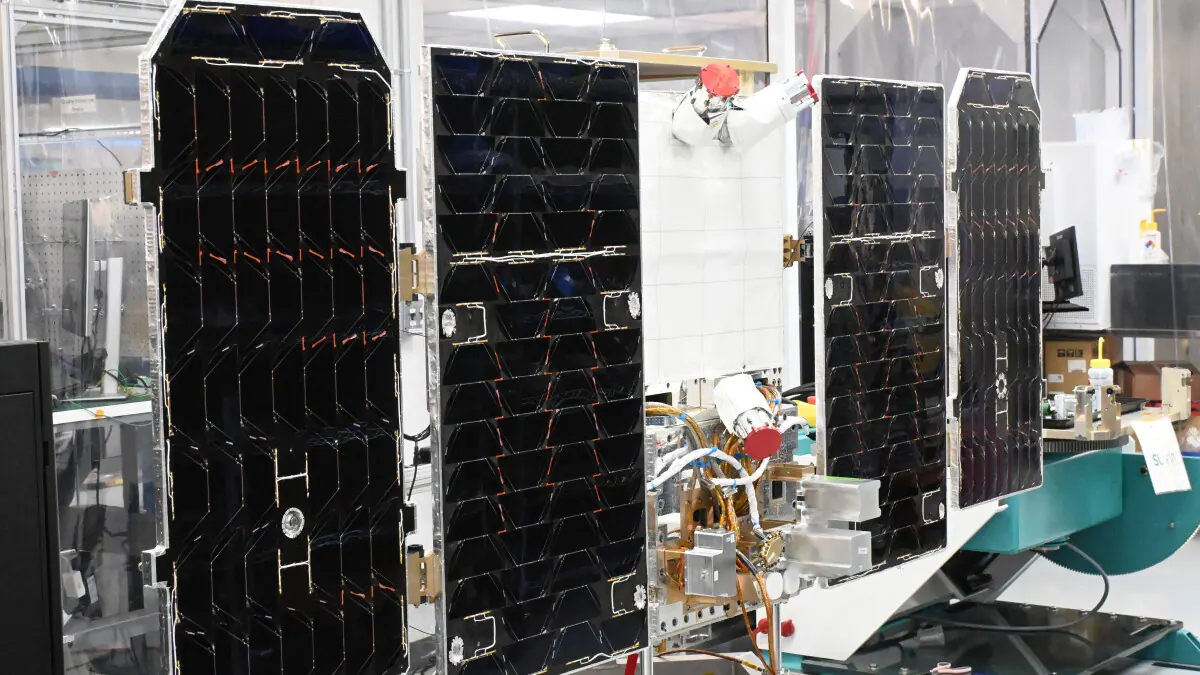
Google has launched a research project called Project Suncatcher, which aims to pave the way for orbiting AI data centers powered by the sun. The company has put a refrigerator-sized satellite into space, equipped with four specialty chips called Tensor Processing Units (TPUs) designed for machine learning. These chips will run a version of Google's Gemma AI model for 15 minutes at a time, due to heat management constraints. The mission will test how the TPUs handle the physical stress of spaceflight and the radiation and thermal extremes of space.
The use of AI has grown sharply over the last few years, fueling demand for data centers. Google's CEO, Sundar Pichai, recently stated that demand for AI services exceeds supply, and the company expects capital expenditures of $180 billion to $190 billion this year to build computing infrastructure and develop chips. As opposition to power-hungry data centers on Earth grows, Google is exploring the possibility of putting them in orbit, where there is virtually unlimited free energy and no protesters.
The satellite, developed in partnership with aerospace and satellite imagery company Planet, will be in a sun-synchronous orbit where its solar panels will almost never be in the shade. This eliminates the need for carrying heavy batteries or backup power on the spacecraft. Google envisions clusters of satellites orbiting together to form space-based data centers, each carrying dozens of TPU chips and communicating with others and Earth via lasers.
The satellite launched on a SpaceX rocket and will be operated by Planet. Google will then fire up and test the TPUs, with the goal of the mission being operational for a year. According to Travis Beals, senior director and lead of Project Suncatcher, the project is about tapping into the best way to use solar power to run AI compute. The team is working on ways to cool the chips more efficiently, as heat is a major challenge in space.
Experts, including Brandon Lucia, a professor of electrical and computer engineering at Carnegie Mellon University, have raised concerns about the challenges of space-based data centers. Heat management, upkeep, and environmental questions are major concerns. While space data centers would run on solar power, the rockets that launch them run off carbon-based fuels, and eventually, they will re-enter Earth's atmosphere, potentially adding pollution.
Despite the challenges, Google is optimistic about the potential of space-based data centers. The company plans to put two more satellites into orbit next year to test their connection. Beals believes that space data centers will not replace terrestrial data centers anytime soon but will instead coexist, with certain use cases making more sense to do in space.
The project is considered a "moonshot" by Beals, and it will take a long time to determine its viability. While it's difficult to know when space-based data centers will be economically viable, Beals doesn't see this being something that will happen in the next five years. The team is aware of the economic challenges, including costly launches, difficult repairs, and slower communication by laser.
Key points
- Google launched a satellite to test AI data centers powered by solar energy in space.
- The project aims to address the growing demand for data centers driven by AI growth.
- Space-based data centers could provide virtually unlimited free energy and avoid opposition to power-hungry data centers on Earth.