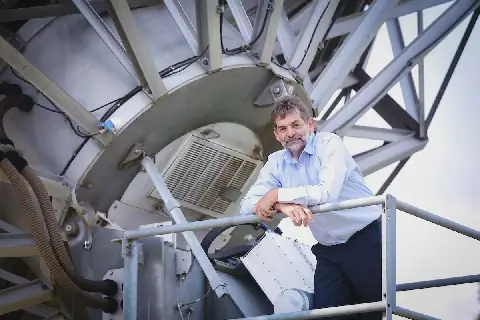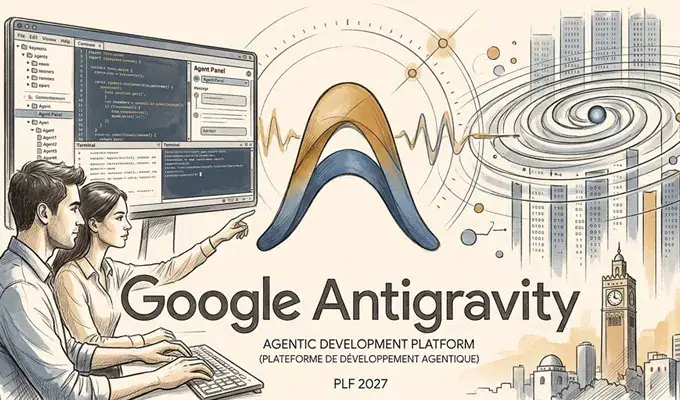
Google DeepMind has launched its Antigravity platform, designed to transform the role of software developers by leveraging artificial intelligence. The platform features three advanced models: Gemini 4 Neon, Hydrogen, and Carbon. These models aim to automate complex tasks, optimize execution time, and reduce computational resources. Varun Mohan, head of Google Antigravity, uses the platform to develop and improve the product, demonstrating its capabilities.
The Antigravity platform allows developers to delegate tasks covering entire software projects, not just code snippets. According to Mohan, the platform provides access to over 50 development tools and services. Remote agents can operate in cloud-hosted virtual machines, independent of the developer's computer. This enables developers to initiate code restructuring, track progress, and review proposed modifications.
Google is emphasizing the complementarity of its models, each serving specific needs. Gemini 4 Neon handles common tasks, Carbon manages complex reasoning, and Hydrogen prioritizes execution speed with adjustable levels of reasoning. The Orchestrator feature enables the sequential use of Carbon and Hydrogen for a single task. Carbon analyzes software architecture and creates a plan, while Hydrogen modifies code, updates components, and performs tests.
Google reports that combining Carbon and Hydrogen achieves a success rate close to that of Carbon alone, with a 19% faster execution and 24% lower quota consumption. These results come from tests presented by the company and require confirmation in diverse professional settings. The evolution of AI-assisted development may change the distribution of work within development teams.
The role of developers could shift towards defining objectives, supervising agents, and controlling their results. Mastery of programming will remain essential for evaluating the quality and reliability of proposed modifications. According to Google, this development could lead to a more efficient use of resources and improved software development outcomes.
The Antigravity platform and its models have the potential to significantly impact the software development process. By automating complex tasks and optimizing execution time, developers can focus on higher-level objectives. The platform's capabilities will likely be closely watched by the development community and industry stakeholders.
As AI-assisted development continues to evolve, it is likely to have far-reaching implications for the software development industry. The Antigravity platform and its models represent a significant step towards the integration of AI in software development, and their impact will be closely monitored in the coming months and years.
Key points
- Google DeepMind introduces Antigravity platform with Gemini 4 Neon, Hydrogen, and Carbon models for automated software development tasks.