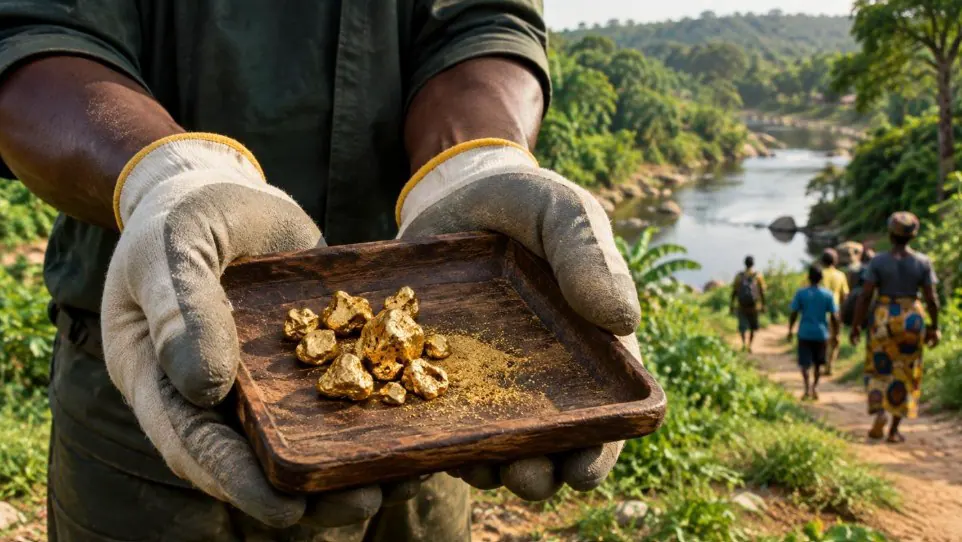
Centuries before Ghana became a republic, European traders named the territory the Gold Coast due to its rich natural resources. However, this name also brought conquest, extraction, and unequal exchange. Now, with GoldBod reporting record gold deliveries, analysts are questioning whether this generation of gold wealth can break the historical pattern. GoldBod disclosed that it delivered gold worth GH¢128.55 billion to the Bank of Ghana in 2025.
Dr. Selorm Avumegah argues that Ghana does not need to choose between gold and development, but rather needs gold to deliver development in its fullest sense. He invokes an Ashanti proverb, stating that gold should be sold to him who knows its value, to highlight that gold's market price rarely accounts for environmental and social costs. GoldBod was established to formalize the gold trade, strengthen traceability, and reduce the leakage of value through illicit channels.
GoldBod's record delivery figures suggest the agency is succeeding in channeling more gold through official routes. However, analysts argue that success should not be measured only by the volume of gold reaching the Bank of Ghana's vaults, but by the impact on communities where the gold is mined. For most Ghanaians, gold trade figures can feel abstract, but the consequences of poorly managed extraction are not.
Poorly managed extraction can expose workers and nearby residents to dust, toxic chemicals, unsafe pits, and contaminated water, with knock-on effects for farming, fishing, and household water supplies. Illegal and unregulated small-scale mining, known as galamsey, remains a recurring flashpoint, linked to river pollution and health risks in mining communities.
Galamsey persists not simply because enforcement is weak, but because it is fundamentally a livelihoods and governance problem. Where formal jobs are scarce and the benefits of gold do not visibly return to local people, illegal mining finds fertile ground. GoldBod's push for greater formalization and traceability comes even as the agency has faced scrutiny at home over transparency in its trade reports.
Civil society groups have accused GoldBod of withholding details of its trade reports, feeding an ongoing debate about transparency. The agency reportedly still owes GH¢3.78 billion, raising questions about its payment management. A team from the US Treasury visited GoldBod to discuss Ghana's gold sector reforms, indicating international interest in how the country manages its gold resources.
Dr. Avumegah suggests concrete measures of success, including improved safety for miners, water protection, and land restoration. The goal is to make mining safer, lawful, and more beneficial to local communities, rather than eliminating it as a livelihood. GoldBod's task is seen as an open-ended one, measured over time by outcomes in mining communities rather than by any single reporting date.
Key points
- GoldBod delivered gold worth GH¢128.55 billion to the Bank of Ghana in 2025.
- The agency still owes GH¢3.78 billion, raising questions about its payment management.
- Analysts argue that success should be measured by the impact on mining communities, not just the volume of gold delivered.