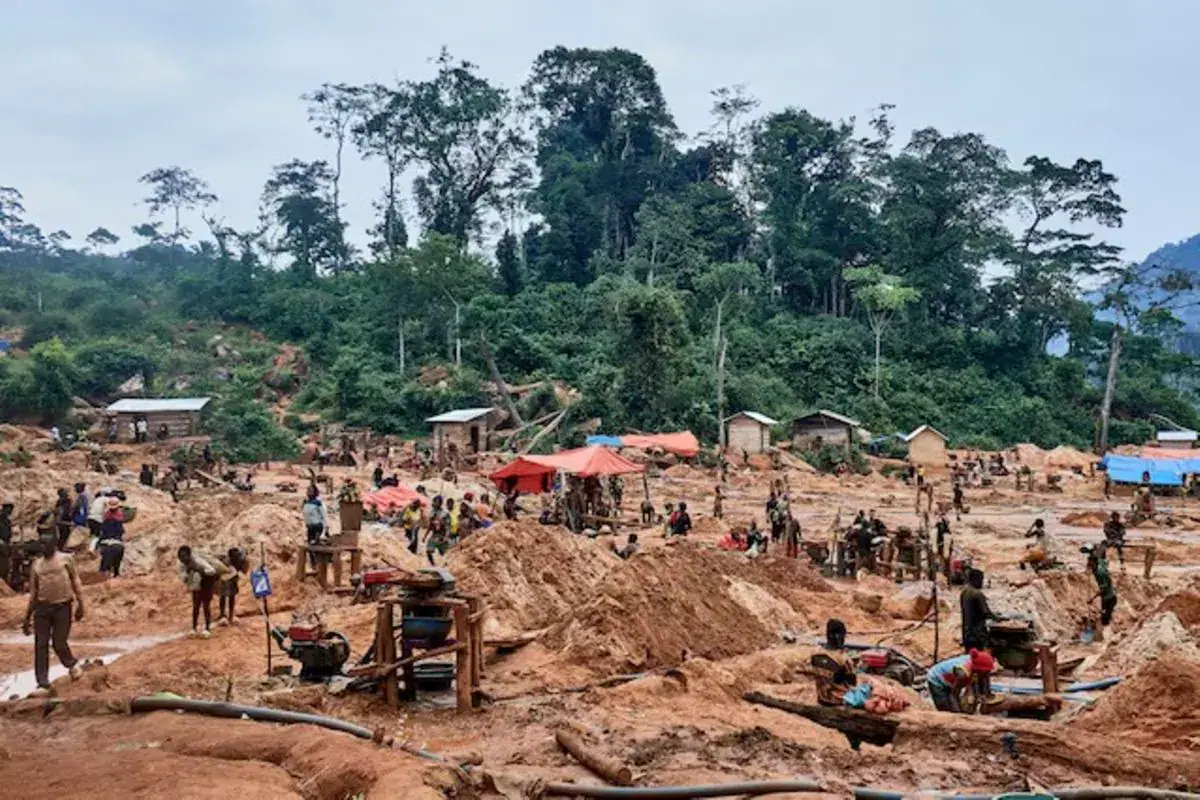
An Islamic State-aligned insurgency in eastern Congo, known as the Allied Democratic Forces (ADF), generates most of its revenue from gold production and smuggling. This allows the group to finance its own operations, according to a report by The Sentry, a US-based investigative organisation. The ADF has killed thousands in attacks on civilians and security forces in eastern Democratic Republic of Congo over the last decade.
The ADF generates between $1 million-$1.6 million a year from gold mining sites in one area of North Kivu province alone. The gold is trafficked through trading hubs in eastern Congo and onwards to refiners and export networks in neighbouring Uganda. The group has proved resilient, embedding itself deeply in local economic networks despite Ugandan troops being deployed to Congo to help local forces fight the ADF.
Revenue from gold has allowed the group to rely less on financial support from Islamic State since late 2024, when US sanctions targeted key facilitators in its networks. The ADF also generates money from cocoa production, extortion, and kidnapping. According to The Sentry's executive director, Justyna Gudzowska, the ADF has adapted to military pressure and sanctions by finding new ways to fund its operations, particularly through gold and other resource trafficking.
The ADF has been operating in eastern Congo since 2000, initially as an Islamist group in Uganda. In 2019, it pledged allegiance to Islamic State and has received support from IS central. The group has carried out bomb attacks in Uganda and attracted fighters from across the region. Joint Congolese-Ugandan operations launched in late 2021 helped secure major cities and trade routes but the ADF has been fragmented, not defeated.
A representative of a Congolese mining cooperative said the ADF moved into the area in mid-2024, establishing bases near mining sites. The group abducts miners and prospectors to extract, transport, and sell gold on its behalf. Some residents cooperate in return for payment, creating a system sustained by a mix of coercion and economic incentives.
The ADF continues to operate while most international attention remains largely focused on the Rwanda-backed AFC/M23 rebellion, now known as FRN, which seized large swathes of eastern Congo last year. The group has moved deeper into remote mining areas of North Kivu, Ituri, and Tshopo provinces.
The Sentry's report calls for governments to disrupt the ADF's sources of funding, particularly by targeting financiers, gold traders, and facilitators. This would help to weaken the group's ability to finance its operations and ultimately reduce its impact on the region. Spokespersons for Uganda's army, Uganda's government, and Congo's government did not immediately respond to requests for comment.
Key points
- The ADF generates between $1 million-$1.6 million a year from gold mining sites in one area of North Kivu province alone.
- The group has proved resilient, embedding itself deeply in local economic networks despite Ugandan troops being deployed to Congo to help local forces fight the ADF.
- Revenue from gold has allowed the group to rely less on financial support from Islamic State since late 2024, when US sanctions targeted key facilitators in its networks.