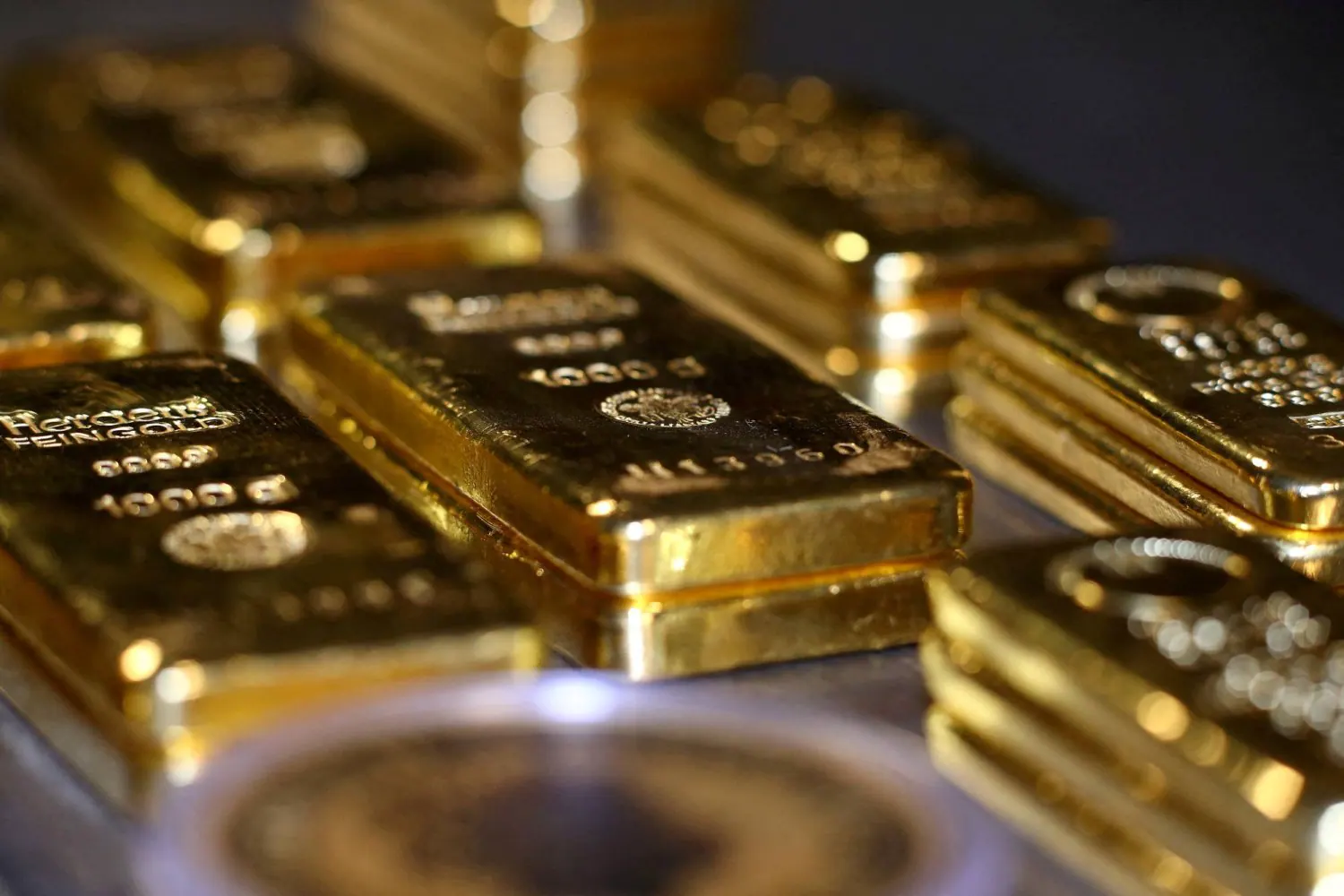
Gold prices remained stable during Asian trading on Wednesday, October 14, 2026, as investors exercise caution ahead of the release of US consumer price data. This data is expected to provide crucial insights into the future direction of the US Federal Reserve's monetary policy and interest rates. The stability in gold prices comes as market participants assess the potential impact of upcoming economic indicators on the attractiveness of safe-haven assets.
At the time of writing, spot gold was holding steady at $4161.05 per ounce, while US gold futures edged up slightly by 0.2% to reach $4185 per ounce. The cautious stance adopted by investors is largely driven by the anticipated release of inflation data, which will likely influence the Fed's decisions regarding interest rates. The trajectory of interest rates has a direct bearing on the appeal of gold and other safe-haven assets relative to other financial instruments.
Market participants are closely monitoring the impending inflation data to gauge the likelihood of monetary policy adjustments. The Fed's actions on interest rates significantly affect the attractiveness of gold as an investment option. When interest rates rise, the opportunity cost of holding non-yielding assets like gold increases, potentially diminishing its appeal. Conversely, lower interest rates can make gold more attractive by reducing the opportunity cost.
In addition to gold, other precious metals experienced limited declines. Silver prices dipped by 0.5% to $59.12 per ounce, while platinum edged down by 0.4% to $1656.08 per ounce. Palladium, however, saw a marginal decline of 0.1% to $1124.39 per ounce. These movements reflect the broader market sentiment as investors position themselves ahead of key economic data releases.
The US inflation data set to be released is a critical event that could sway market expectations regarding future interest rate adjustments. A higher-than-expected inflation reading could reinforce the case for interest rate hikes, potentially strengthening the US dollar and impacting gold prices. Conversely, a lower inflation reading might fuel expectations of a dovish monetary policy stance, which could buoy gold prices.
As investors navigate the complexities of the current economic landscape, the role of gold as a safe-haven asset remains a focal point. The metal's performance in response to economic data and monetary policy decisions will continue to be closely watched. For now, the stability in gold prices reflects a cautious approach among investors as they await clearer signals on the future direction of economic policy.
Looking ahead, market participants will be keenly watching not only the US inflation data but also the Fed's response to evolving economic conditions. Any shifts in the monetary policy stance will have implications for gold and other financial assets. As such, investors are advised to remain vigilant and responsive to changing market dynamics.
Key points
- Gold prices are stable in Asian markets at $4161.05 per ounce.
- Investors are awaiting US inflation data for insights into future monetary policy.
- Other precious metals, including silver and platinum, saw limited declines.