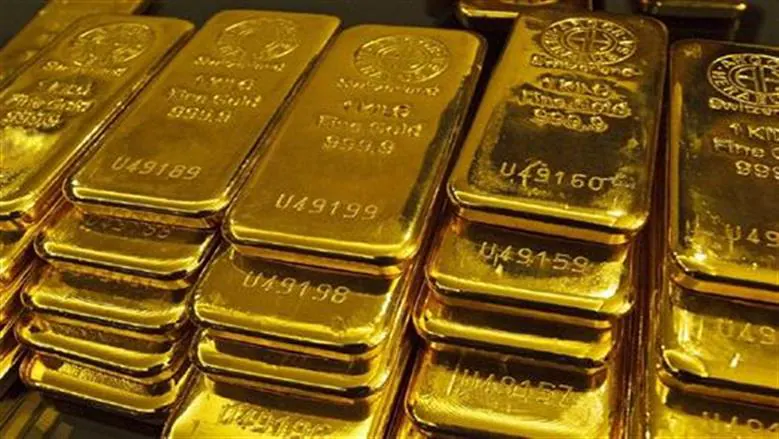
Global gold prices have continued to rise, reaching $4,380 per ounce at the end of last week's trading. This increase is attributed to a decline in oil prices, which has eased concerns about long-term inflationary pressures. Additionally, ongoing geopolitical tensions, particularly in the Gulf region, have contributed to the rise in gold prices. The precious metal has become a safe-haven asset and a hedge against inflation.
The recent decision by the US Federal Reserve to raise interest rates by 25 basis points has had a mixed impact on gold prices. While higher interest rates typically reduce the appeal of non-yielding assets like gold, the dollar's subsequent decline has supported gold prices. The Fed's decision was widely expected, and the central bank signaled that further rate hikes are likely in the coming months. This has led to a 60% chance of another rate hike being priced in for next month.
The Bank of Japan has also raised interest rates to their highest level in 31 years, citing concerns about inflation. This move has contributed to a stronger dollar, which could potentially cap gold prices. However, the ongoing tensions between the US and Iran, as well as the persistence of US inflation at 3.4%, have maintained demand for gold as a safe-haven asset.
Despite the recent rate hike, gold prices have shown resilience. The metal's price had initially been pressured by the Fed's decision, but it has since rebounded. The global gold price has moved from $4,299.1 per ounce on September 14 to $4,378.57 per ounce on September 18, representing a 1.85% increase.
The decline in oil prices has been a significant factor in the recent rise in gold prices. Lower oil prices have reduced concerns about inflation, which has in turn supported gold prices. Additionally, the ongoing uncertainty surrounding global economic growth has maintained demand for safe-haven assets like gold.
According to a recent report, the average global gold price is expected to reach $4,396 per ounce in the third quarter of 2026. This forecast is based on various market factors, including the ongoing demand for safe-haven assets and the potential for further interest rate hikes.
In conclusion, the recent rise in global gold prices can be attributed to a combination of factors, including a decline in oil prices, ongoing geopolitical tensions, and the persistence of US inflation. While the Fed's decision to raise interest rates has had a mixed impact on gold prices, the metal has shown resilience and continues to be seen as a safe-haven asset.
Key points
- Global gold prices have reached $4,380 per ounce, driven by a decline in oil prices and ongoing geopolitical tensions.
- The US Federal Reserve's decision to raise interest rates has had a mixed impact on gold prices.
- The average global gold price is expected to reach $4,396 per ounce in the third quarter of 2026.