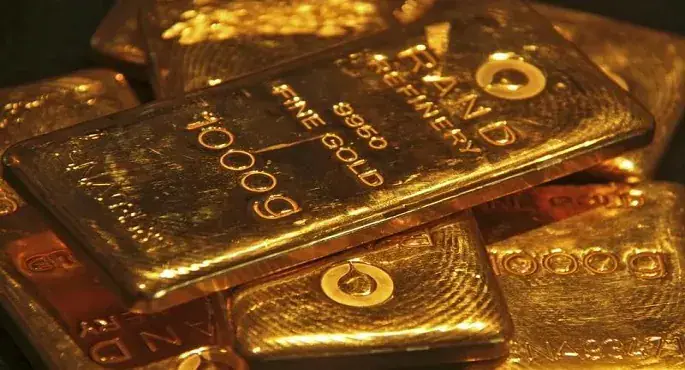
Gold prices decreased on Thursday as investors assessed signals from the US Federal Reserve and its chairman, Jerome Powell. The decline came as policymakers decided to keep interest rates unchanged. Investors are now focused on the release of key US inflation data later in the day. The data is expected to provide additional insights into the future path of interest rates.
In spot transactions, gold prices dropped by 0.7% to $1,937.98 per ounce. US gold futures for December delivery remained stable at $1,949.80. Other precious metals also experienced declines. Silver prices fell by 1.5% to $23.15 per ounce, while platinum decreased by 1.5% to $1,045.70. Palladium prices dropped by 0.6% to $1,004.25 per ounce.
According to Ajay Kedia, director of Kedia Commodities, the decline in gold prices is attributed to ongoing uncertainty in the Middle East and investors' cautious approach ahead of the inflation data release. The US Federal Reserve kept interest rates unchanged within the 3.75%-4.00% range, as expected. This decision delayed any potential changes to borrowing costs until after the US midterm elections.
Market participants currently estimate a 78% probability of an interest rate hike in December, down from 84% before the Fed's decision. Higher interest rates increase the opportunity cost of holding gold, which does not generate a regular return, making it less attractive to investors. The markets are now awaiting the release of the Personal Consumption Expenditures (PCE) price index.
The PCE index is a key indicator closely monitored by the Fed as it strives to achieve its 2% inflation target. The World Bank reported on Wednesday that global commodity prices are expected to rise by 23% in 2023. This increase is attributed to higher energy prices, shipping disruptions due to the Middle East conflict, and supply chain issues.
In related news, China's net gold imports through Hong Kong increased by over 28% in September compared to August. This represents the highest level in five months, according to data released by the Hong Kong Census and Statistics Department. Geopolitically, the US and Iran are making efforts to revive peace negotiations.
The US Vice President's office confirmed that a message was sent to Iran's Supreme National Security Council to revive stalled talks. This development comes amid rising tensions in the region. Investors are closely watching for any signs of escalation or de-escalation in the Middle East conflict.
Key points
- Gold prices declined due to uncertainty in the Middle East and anticipation of US inflation data
- The US Federal Reserve kept interest rates unchanged, delaying potential changes to borrowing costs
- Global commodity prices are expected to rise by 23% in 2023, according to the World Bank