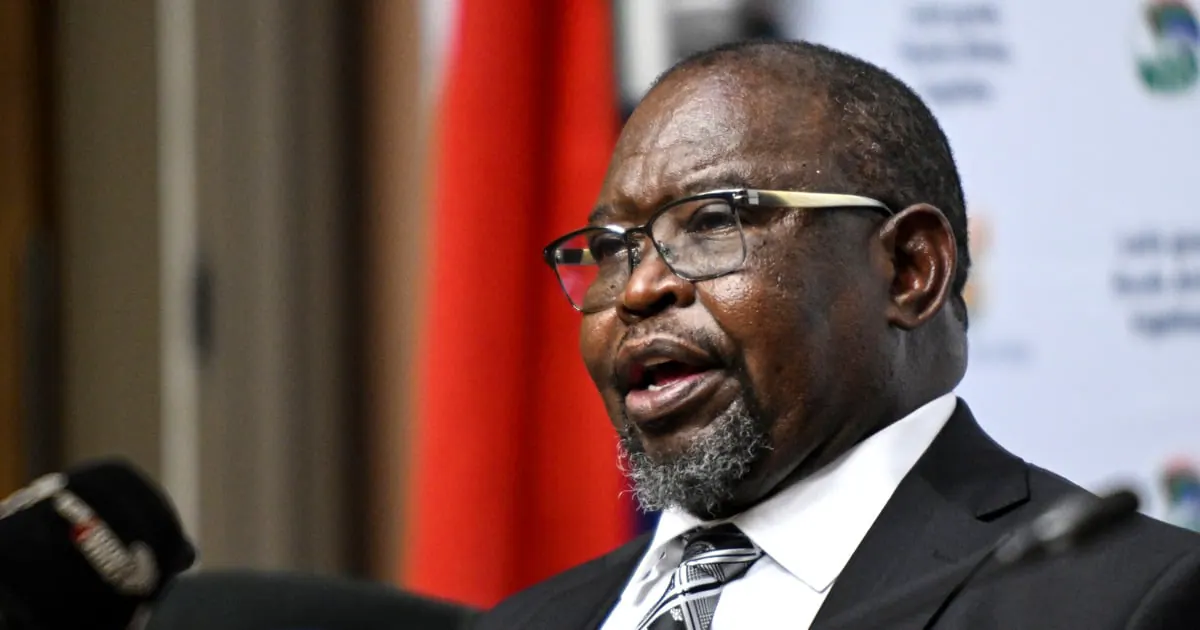
Finance Minister Enoch Godongwana has stated that his hands are tied in blacklisting nearly 500 companies accused of corruption. The Special Investigating Unit (SIU) had referred 509 cases to the National Treasury for blacklisting a year ago. However, Godongwana can only act on the request of a state entity to which the corrupt company was a supplier. This process has resulted in only 18 companies being added to the blacklist.
The affected state entities include major parastatals such as Eskom, Transnet, and the Umgeni Water Board. Godongwana has followed up with these entities but has not received reasons for their failure to conclude the restrictions. He has pledged to take the matter further and evaluate legal options open to the National Treasury in the event of the failures of these institutions.
The delay in blacklisting corrupt companies has been met with criticism from MPs. The Democratic Alliance's Wendy Alexander and ActionSA's Alan Beesley have questioned how public funds can be safeguarded from corruption. They argue that the current process appears to be a farce and that taxpayers' money continues to be wasted on companies fingered in corruption.
A year ago, the Presidency referred 509 cases highlighted in SIU reports to the National Treasury for blacklisting. However, the process of blacklisting companies has been slow. According to Godongwana, the National Treasury cannot independently restrict a supplier without a formal request from an organ of state.
Godongwana has emphasized that he has to follow a process that includes state entities notifying the Treasury and providing supporting documents before a company can officially be restricted from doing business with the state. He has assured that he will evaluate the legal options available to the National Treasury to address the issue.
The issue of blacklisting corrupt companies has raised concerns about the effectiveness of the current process. The slow pace of blacklisting has been criticized, with many arguing that it allows corrupt companies to continue doing business with the state. The National Treasury has withheld funding to municipalities, including the City of Johannesburg, to pressure them to improve their finances.
The matter is set to be taken further, with Godongwana evaluating legal options to address the issue. The Finance Minister has emphasized that the National Treasury is committed to ensuring that public funds are safeguarded from corruption. The SIU will continue to investigate and refer cases of corruption to the National Treasury for blacklisting.
Key points
- Only 18 out of 509 companies referred by the SIU have been blacklisted.
- The National Treasury requires a formal request from a state entity to blacklist a company.
- The slow pace of blacklisting has raised concerns about the effectiveness of the current process.