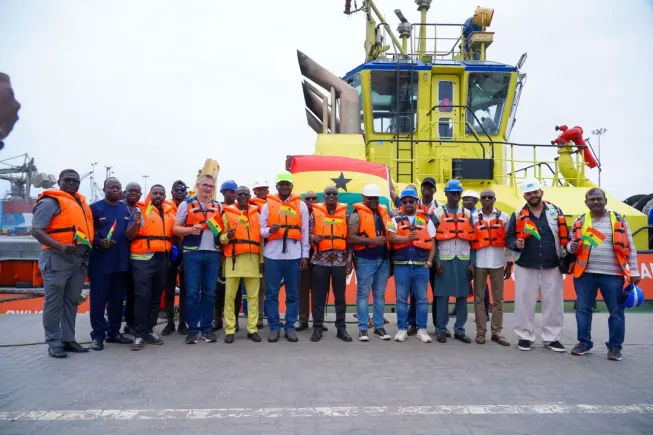
The Ghana National Petroleum Corporation (GNPC) has supplied approximately 950,000 barrels of Sankofa crude oil to the Tema Oil Refinery (TOR). This transaction was carried out under a commercial arrangement between the two state institutions. The crude oil was transported aboard the Sonangol Cazenga and received at the refinery. A joint team led by GNPC's Chief Executive, Mr. Kwame Ntow Amoah, and TOR's Managing Director, Mr. Edmond Kombat, inspected the vessel. This milestone strengthens the link between Ghana's upstream petroleum production and domestic refining.
The supply of Sankofa crude to TOR reflects the President's vision of enhancing linkages between Ghana's upstream and downstream petroleum sectors. According to Mr. Amoah, this arrangement supports domestic refining and helps retain more value from the country's petroleum resources within the local economy. He emphasized that the transaction is more than just a deal between two state institutions; it creates an opportunity to process more Ghanaian resources locally and add value to the petroleum industry. This aligns with the corporation's goal of creating a dependable domestic market for Ghana's crude oil.
The arrangement provides a dependable national refinery for GNPC, ensuring a ready domestic market for its crude oil. This transaction lays the groundwork for a sustainable commercial relationship between GNPC and TOR. Mr. Amoah mentioned that the corporation has approximately eight to ten similar crude cargoes available annually. While some volumes are committed under existing arrangements, increased production could lead to additional cargoes being supplied to the refinery over time. The corporation is optimistic about increasing production through its ongoing exploration efforts.
GNPC's Chief Executive highlighted the corporation's aggressive exploration efforts, including the onshore pursuit of the Voltaian Basin exploratory programme. These efforts aim to increase production and sustain the supply of crude to the refinery. The Managing Director of TOR, Mr. Edmond Kombat, confirmed that the Sankofa cargo was fully paid for through a Letter of Credit accepted by GNPC, with no debt exposure arising from the transaction. This payment method ensures a secure and transparent financial arrangement for both parties.
The Sankofa crude is described as light and sweet, making it suitable feedstock for TOR as it rebuilds its operating capacity. This crude has the potential to yield various products, including gasoline, gasoil, aviation fuel, and liquefied petroleum gas. The supply of this crude enhances TOR's ability to produce essential petroleum products locally. Beyond crude supply, GNPC and TOR are exploring additional areas of collaboration to strengthen their partnership.
One area of potential collaboration is the supply of natural gas to support TOR's operations. Discussions are underway to explore this opportunity further. For GNPC, the Sankofa crude arrangement demonstrates the value of commercially sustainable collaboration between national institutions. This partnership provides a platform that can expand alongside Ghana's growing upstream production, benefiting both parties involved.
The collaboration between GNPC and TOR is expected to grow stronger, according to Mr. Amoah. The success of this arrangement could lead to more significant partnerships in the future, enhancing Ghana's petroleum industry. The supply of 950,000 barrels of Sankofa crude marks a significant milestone in the country's efforts to optimize its petroleum resources locally. This achievement underscores the importance of cooperation between state institutions in achieving national goals in the petroleum sector.
Key points
- GNPC supplies 950,000 barrels of Sankofa crude oil to TOR under a commercial arrangement.
- The transaction supports domestic refining and helps retain more value from Ghana's petroleum resources within the local economy.
- The partnership between GNPC and TOR is expected to grow stronger, with potential for additional collaborations in natural gas supply and other areas.