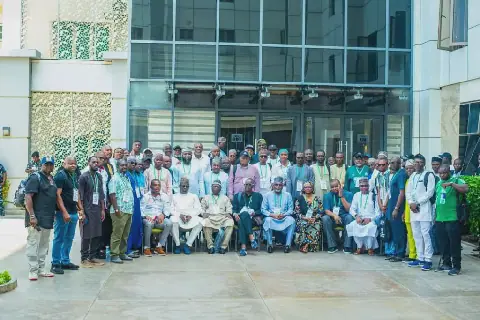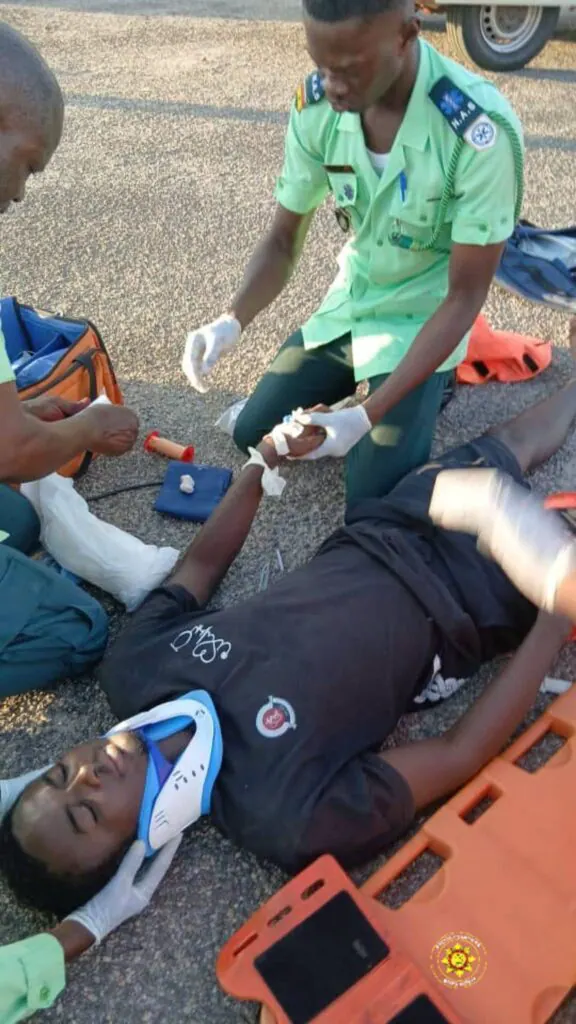
The Ghana National Fire Service, in collaboration with the Ghana Health Service and the National Ambulance Service, recently organized an emergency simulation exercise at the Wa Regional Hospital. This exercise aimed to evaluate the preparedness of emergency response agencies in handling mass-casualty incidents. The simulation, led by ADO I James, focused on a head-on collision involving multiple casualties.
The exercise was designed to test the effectiveness of inter-agency collaboration during a major road traffic accident. Participating agencies assessed their response procedures, communication systems, and ability to coordinate resources in managing multiple victims. This simulation provided a platform for emergency services to identify areas for improvement and assess their level of preparedness for real-life mass-casualty situations.
The mass-casualty simulation exercise was conducted by the Wa Municipal Fire Station as part of efforts to strengthen inter-agency coordination. It also aimed to enhance the capacity of emergency responders in managing road traffic incidents involving large numbers of casualties. Effective communication, teamwork, and strong collaboration among emergency response agencies were emphasized as crucial elements in responding to such incidents.
During the exercise, emergency responders tested their ability to work together seamlessly. The simulation allowed them to assess their response times, communication strategies, and resource allocation. These elements are critical in managing mass-casualty incidents effectively. The exercise highlighted the importance of preparedness and coordination in emergency response situations.
The GNFS, GHS, and National Ambulance Service worked together to ensure the success of the exercise. Their collaboration underscores the commitment of these agencies to improving emergency response in Ghana. By conducting such simulations, they can identify gaps in their response mechanisms and work to address them.
The mass-casualty simulation exercise at the Wa Regional Hospital is part of a broader effort to enhance emergency response capabilities in Ghana. Such exercises are essential in preparing emergency responders for various scenarios, including road traffic accidents and other mass-casualty incidents. They help in building a more resilient and effective emergency response system.
The exercise demonstrated the commitment of the GNFS and its partners to strengthening emergency response in the region. By conducting regular simulations, they can ensure that emergency responders are well-prepared to handle mass-casualty incidents effectively. This, in turn, can help in reducing the impact of such incidents on communities.
Key points
- The GNFS, in partnership with the GHS and National Ambulance Service, conducted a mass-casualty simulation exercise at the Wa Regional Hospital to assess preparedness for mass-casualty incidents.
- The exercise aimed to test inter-agency collaboration and response procedures during a major road traffic accident.
- The simulation emphasized the need for effective communication, teamwork, and strong collaboration among emergency response agencies.