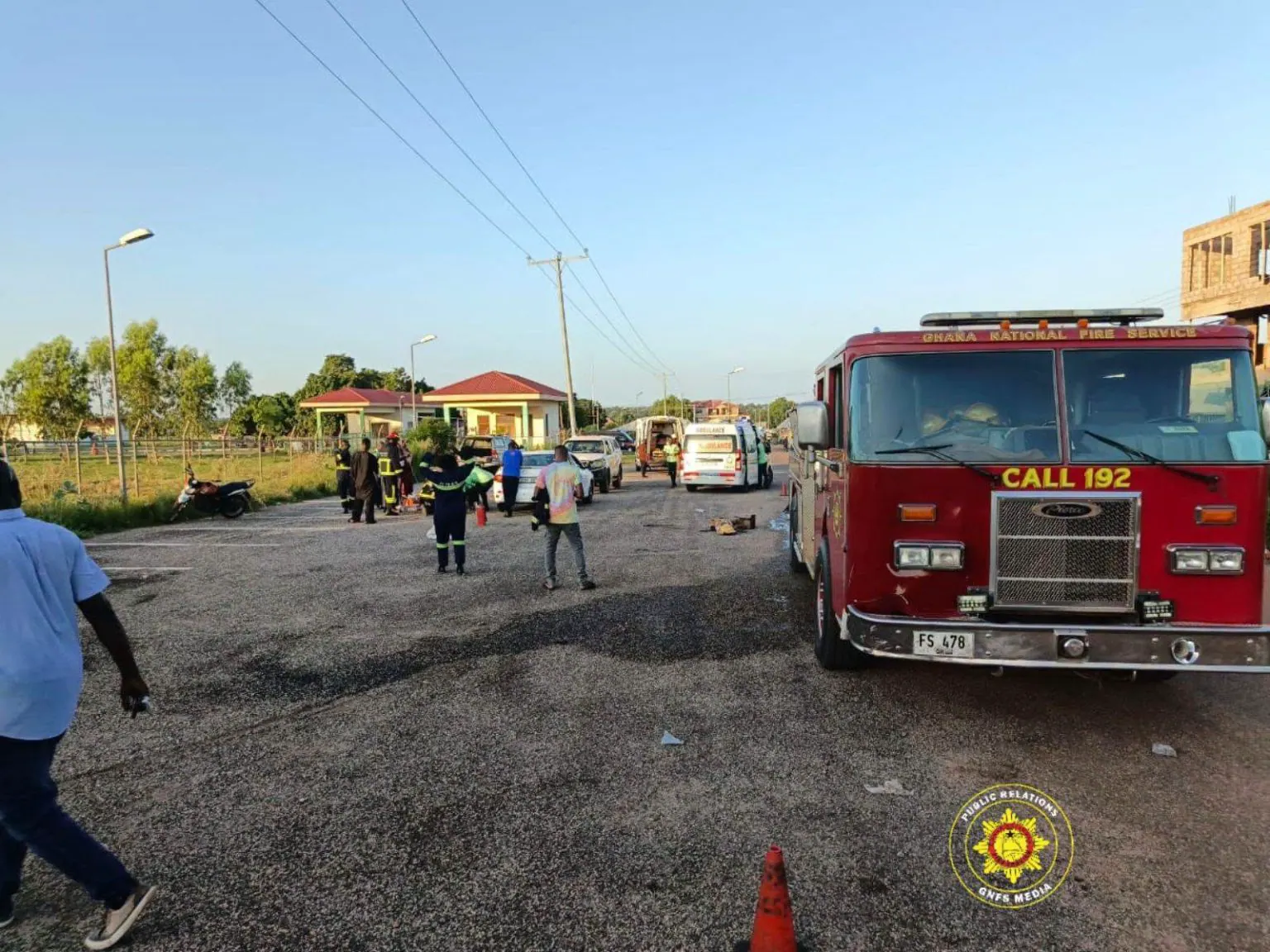
The Ghana National Fire Service (GNFS) recently carried out a mass casualty road crash simulation at the Wa Regional Hospital. This exercise was part of efforts to assess the preparedness and coordination of emergency response agencies in handling major incidents. The simulation, organised by the Wa Municipal Fire Station, partnered with the Ghana Health Service (GHS) and the National Ambulance Service.
The emergency response drill featured a simulated head-on collision involving several casualties. Led by ADO I James, the exercise aimed to evaluate how effectively participating institutions could work together in response to a serious road traffic accident with multiple injured persons. The simulation tested emergency response procedures, focusing on effective communication, coordinated decision-making, and seamless cooperation among responding personnel.
The GNFS stated that the exercise allowed participating services to evaluate their collective response during a mass casualty emergency. It assessed whether existing response arrangements could adequately address the demands of a major road crash. The simulation also helped identify weaknesses and areas requiring improvement in preparedness and operational response, particularly in situations with multiple casualties needing simultaneous rescue, evacuation, and medical attention.
The exercise formed part of broader efforts to reinforce collaboration among emergency response institutions and enhance the country's capacity to manage major incidents. This initiative is particularly significant for the Upper West Region, where coordinated emergency preparedness is essential for rapid and effective responses to serious road traffic incidents. The simulation enabled participating agencies to assess their operational readiness and refine procedures for actual mass casualty emergencies.
Through practical exercises like this, participating agencies can strengthen inter-agency cooperation and assess their ability to work collectively during emergencies. The GNFS, GHS, and National Ambulance Service tested their response procedures, identifying areas for improvement. This exercise contributes to the country's overall emergency response capacity, ensuring that agencies can respond effectively to mass casualty incidents.
The simulation demonstrated the importance of collaboration among emergency response agencies in Ghana. By working together, these agencies can provide a more effective response to major incidents, ultimately saving lives and reducing the impact of emergencies on communities. The GNFS and its partners continue to prioritize emergency preparedness and response.
The mass casualty road crash simulation in Wa is a testament to Ghana's efforts to strengthen its emergency response capabilities. The exercise showcased the country's commitment to ensuring that emergency response agencies are prepared to handle major incidents effectively. Key stakeholders will review the exercise's outcomes to inform future emergency response strategies and improvements.
Key points
- The GNFS conducted a mass casualty road crash simulation in Wa to evaluate emergency response preparedness.
- The exercise involved a simulated head-on collision with multiple casualties.
- The simulation aimed to assess the effectiveness of inter-agency cooperation and emergency response procedures.