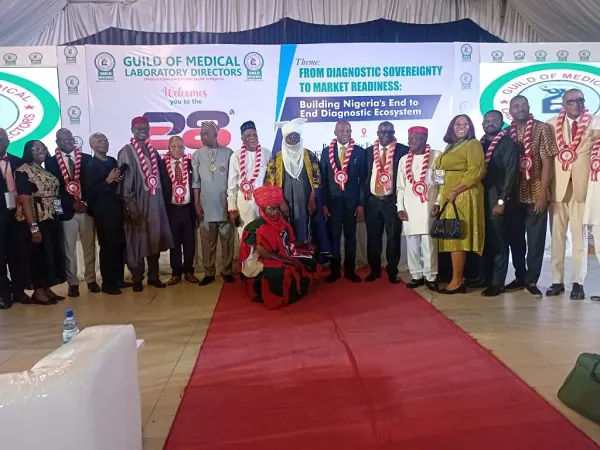
The Guild of Medical Laboratory Directors of Nigeria (GMLD) has urged the country to move away from its heavy reliance on imported diagnostic products and build a competitive domestic diagnostics industry. This call was made at the end of the Guild's 28th Scientific Conference and Annual General Meeting in Abuja, where over 400 medical laboratory directors, policymakers, researchers, regulators, industry players, and international partners deliberated on strategies to strengthen Nigeria's diagnostic ecosystem.
The conference, themed 'From Diagnostic Sovereignty to Market Readiness: Building Nigeria's End-to-End Diagnostics Ecosystem', highlighted the importance of diagnostics as a strategic national asset critical to clinical care, disease surveillance, public health response, and national security. The communiqué issued at the end of the conference stressed Nigeria's need to implement practical measures to build a sustainable diagnostics industry capable of meeting local demand and serving the wider African market.
According to the GMLD, diagnostic sovereignty does not mean producing every medical product locally, but building national capacity to determine diagnostic needs, regulate technologies, assure quality, maintain supply chains, and make independent decisions without excessive reliance on foreign systems. The conference identified local manufacturing, technology transfer, research, and innovation as key pillars for reducing dependence on imported reagents, consumables, and equipment.
The Guild emphasized that quality assurance should underpin the entire diagnostic system, calling for stronger laboratory accreditation, validation processes, external quality assessment, biosafety standards, and equipment management. The communiqué noted that external quality assessment systems should evolve into sustainable national infrastructure rather than remain largely dependent on donor funding.
To improve access to services, the GMLD proposed the development of a coordinated national laboratory network to enable efficient referral of patients and specimens and faster transmission of results across the country. The Guild also called for stronger regulation of medical devices, in vitro diagnostics, and laboratory services, while urging government agencies to eliminate duplication and administrative bottlenecks.
Recognizing the growing role of data in healthcare, participants advocated an integrated national laboratory information system linking public and private laboratories to support real-time disease surveillance, quality monitoring, planning, and evidence-based decision-making. The Guild further urged procurement reforms to create predictable demand for quality-assured local diagnostic products, warning that decisions based solely on the lowest price could undermine patient safety and local manufacturing efforts.
The GMLD called on government, financial institutions, and development partners to expand financing, research grants, infrastructure support, and investment incentives for indigenous manufacturers and diagnostic innovators. The conference stressed the importance of stronger collaboration among laboratories, manufacturers, universities, researchers, and regulators, saying laboratories should be involved in product development, validation, and post-market assessment.
Key points
- GMLD urges Nigeria to develop local diagnostics manufacturing to improve health security
- A national laboratory network is proposed to enhance access to diagnostic services
- Quality assurance and regulation are crucial for a sustainable diagnostics industry