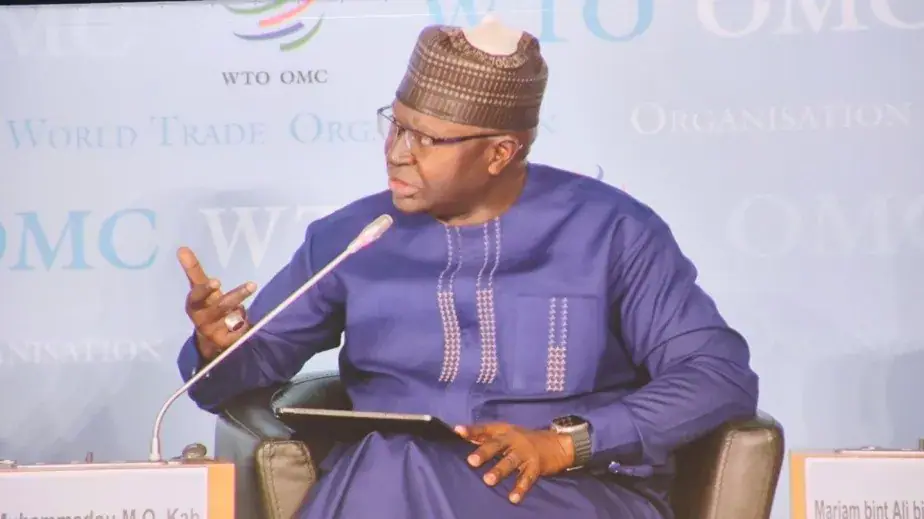
The global trading system has brought significant benefits to The Gambia and the Least Developed Country (LDC) Group, including improved market access, increased export earnings, and job creation. However, Ambassador Professor Muhammadou M.O. Kah notes that these benefits are unevenly distributed, and much of the potential remains untapped. Speaking on behalf of Trade Minister Mod Ceesay, Ambassador Kah emphasized the importance of trade for The Gambia, citing merchandise exports of approximately $407 million and commercial services exports of $479 million in 2025.
Tourism and travel accounted for 91.6% of The Gambia's services exports in 2024, according to the WTO Secretariat's latest Market Access report. To diversify its economy, The Gambia is pushing for value addition at home, particularly in agro-processing and sustainable fisheries. Regional integration is also paying dividends, with The Gambia benefiting from lower-cost electricity from Guinea through the OMVG interconnection. The World Bank estimates that this arrangement will save The Gambia's utility, NAWEC, around 42%, helping it return to profitability.
The LDC Group has seen significant growth in merchandise exports, rising from $184 billion in 2020 to $313 billion in 2025. Commercial services exports nearly doubled during the same period, from $27.2 billion to $53.1 billion. Combined exports reached $362.4 billion, growing at an annual rate of 11.5%. The Group's share of world exports edged up from 1.01% to 1.04%. Ambassador Kah attributed this growth to duty-free access, trade facilitation support, and regional integration.
Despite these gains, challenges persist. In 2025, primary products still accounted for 53% of LDC merchandise exports, with ten exporters accounting for 71% of total exports. The LDC Group ran a trade deficit of $109.2 billion, highlighting the need for further development of productive capacity, infrastructure, and competitiveness. Ambassador Kah emphasized that market access is just the first step, and that LDCs must develop their productive capacity to walk through the door of opportunity.
Aid for Trade is crucial in supporting LDCs in their development efforts. However, bilateral Official Development Assistance (ODA) to LDCs fell by 25.8% in 2025, and the Doha target of doubling Aid for Trade by 2031 is at risk. Ambassador Kah stressed that Aid for Trade is indispensable, particularly in areas such as productive capacity, smart industrialization, and diversification. The Gambia's GDP per capita is around $855, and manufacturing accounts for just 5-6% of GDP.
To address these challenges, Ambassador Kah outlined several priorities for the LDC Group, including value addition in agro-processing and sustainable fisheries, climate-resilient productive sectors, and green and digital industries. He also called for effective market access, preserved flexibilities, and better preference utilization. On services, digital, and green trade, Ambassador Kah noted that LDCs hold just 0.16% of global digitally deliverable services exports, highlighting the need for digital infrastructure, skills, and regulatory capacity.
In conclusion, Ambassador Kah emphasized that the global trading system has delivered real gains for The Gambia and the LDC Group, but much work remains to be done. To achieve meaningful transformation, LDCs must develop their productive capacity, infrastructure, and competitiveness. With the right support and policies, LDCs can increase their participation in global trade and achieve sustainable economic growth.
Key points
- The global trading system has delivered significant benefits to The Gambia and the LDC Group, including improved market access and increased export earnings.
- Despite these gains, challenges persist, including a heavy reliance on primary products and a trade deficit of $109.2 billion.
- Aid for Trade is crucial in supporting LDCs in their development efforts, particularly in areas such as productive capacity, smart industrialization, and diversification.