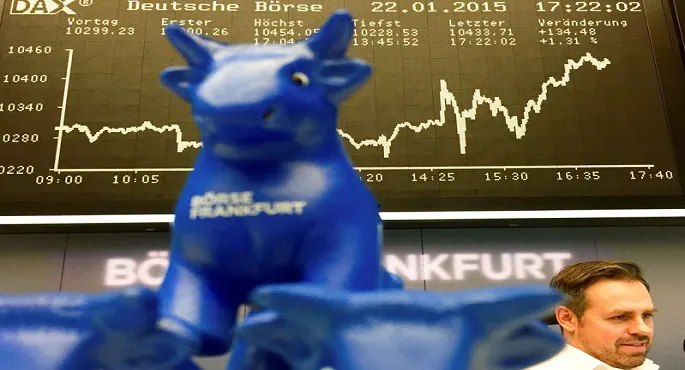
Most global stock markets declined on Monday, September 28, 2026, as oil prices rose again amid doubts about a potential truce between the US and Iran. This kept bonds under pressure ahead of a data-heavy economic week. US President Donald Trump rejected an Iranian proposal to reopen the Strait of Hormuz over the weekend, stating that Tehran is seeking a deal. Trump said talks would continue this week, while Iran shows no signs of backing down from its proposals.
Oil prices increased, with Brent crude futures rising 2.7% to $107.16 per barrel, marking an 18% gain since the start of the month. US crude futures also climbed 1.9% to $94.16 per barrel. The shortage of refining capacity drove diesel prices to record highs, significantly above crude prices, increasing the risk of entrenched inflation in pricing and wage decisions. Central banks have responded by raising interest rates, with the Reserve Bank of Australia likely to tighten monetary policy at its Tuesday meeting.
Market pricing currently indicates a 68% chance of the US Federal Reserve raising interest rates at its October meeting, for the second consecutive time, with around 90 basis points of tightening priced in by the end of next year. A series of strong US economic data supported corporate earnings expectations, despite rising bond yields, contributing to stock market support. The Federal Reserve Bank of Atlanta's GDPNow index predicts 5.0% US economic growth in the current quarter.
Economic activity remained robust in Asia and Europe, partly driven by an AI investment boom. According to Bruce Kasman, chief economist at JPMorgan, "The global expansion appears to have entered a phase of broad-based strength that we rarely see over a two-decade period." Kasman added that with strong growth and increasing confidence in economies' ability to withstand higher energy prices, it is not surprising that interest rates are moving higher while stock prices remain near record levels.
Japan's Nikkei index remained unchanged, while the volatile South Korean stock market declined 2.0%. The broader MS MSCI Asia-Pacific index, excluding Japan, fell 0.6%. Chinese benchmark stocks dropped 1.9% to a one-year low, with tech stocks under pressure after US lawmakers introduced a bill to prevent federal agencies from using Chinese-made components in AI data centers.
Data released in China showed that industrial enterprise profit growth slowed further in August, with the tech sector's strength unable to offset persistent weak domestic demand. In the US, futures for the S&P 500 and Nasdaq declined 0.3% and 0.7%, respectively. European futures, including Euro Stoxx 50, DAX, and FTSE, mostly rose slightly.
US Treasury yields rose, with the 30-year yield at 5.5173%, near its highest since 2004, after a 27-basis-point jump this month. The two-year yield increased by 55 basis points this month, as markets anticipate a Fed rate hike. Analysts warn that further bond selling is possible as markets price in prolonged high US interest rates.
Key points
- Global stock markets declined as oil prices surged and concerns about prolonged high interest rates increased.
- US economic data supported corporate earnings expectations, despite rising bond yields.
- Central banks have responded to inflation risks by raising interest rates, with further hikes anticipated.