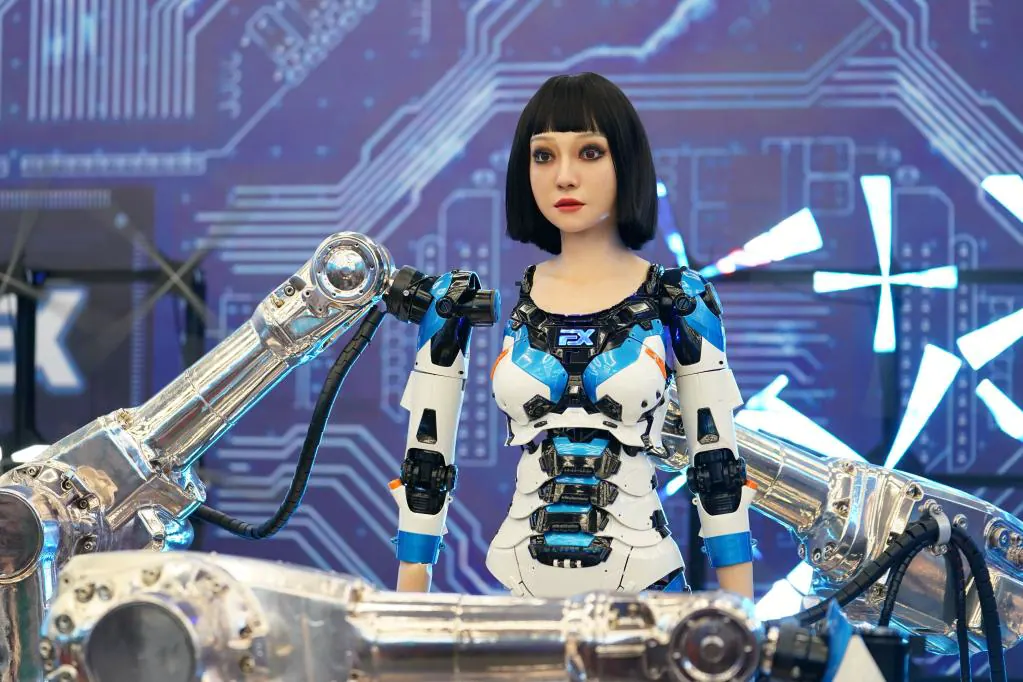
According to data collected by the International Federation of Robotics, approximately 7,000 humanoid robots were sold worldwide in 2025. These robots are designed to work in industrial and professional service settings, and their sales are expected to increase significantly in the coming years. The small number of humanoid robots sold so far contrasts with predictions of a surge in sales, particularly in China, the world's largest market for industrial robots.
To be classified as humanoid, a robot must have a human-like appearance and be able to operate independently in an environment designed for humans. The robot does not necessarily need to have legs. Susan Beeler, General Secretary of the International Federation of Robotics, stated that humanoid robots still represent a small part of the total number of robots worldwide. In comparison, around 542,000 traditional industrial robots were sold in 2024, along with an estimated 199,000 service robots for use in transportation, hospitality, and cleaning.
The International Federation of Robotics will publish its 2025 data on industrial and service robots on September 24. Beeler noted that many of the humanoid robots sold in 2025 were not used for productive work, but were instead purchased by research institutions or companies to generate data to improve artificial intelligence models. The federation's statistics are based on data from suppliers and national industry associations, and exclude humanoid robots for consumer and military use.
Estimates from Bank of America Global Research suggest that 90,000 humanoid robots will be shipped this year, and 1.2 million by 2030. The growth in humanoid robot sales is expected to be driven by advancements in artificial intelligence and robotics technology. China, the largest market for industrial robots, is expected to play a significant role in the growth of humanoid robot sales.
The International Federation of Robotics' statistics only include data from suppliers and national industry associations, and do not account for humanoid robots used in consumer or military applications. Medical robots are classified separately. The growth in humanoid robot sales is expected to be driven by increasing demand for robots that can work in a variety of settings, including healthcare and education.
Humanoid robots are designed to work in a variety of settings, including industrial and professional service environments. They are equipped with advanced sensors and artificial intelligence systems that enable them to operate independently and interact with humans. The development of humanoid robots is expected to have a significant impact on various industries, including healthcare, education, and manufacturing.
The International Federation of Robotics is based in Frankfurt, Germany, and provides data and analysis on the global robotics industry. The organization's statistics on humanoid robot sales provide valuable insights into the growth and development of the industry. As the demand for humanoid robots continues to grow, the International Federation of Robotics will play an important role in tracking and analyzing the industry's progress.
Key points
- The International Federation of Robotics reports that 7,000 humanoid robots were sold worldwide in 2025.
- Humanoid robot sales are expected to grow significantly in the coming years, driven by advancements in artificial intelligence and robotics technology.
- China is expected to play a significant role in the growth of humanoid robot sales, driven by increasing demand for robots that can work in a variety of settings.