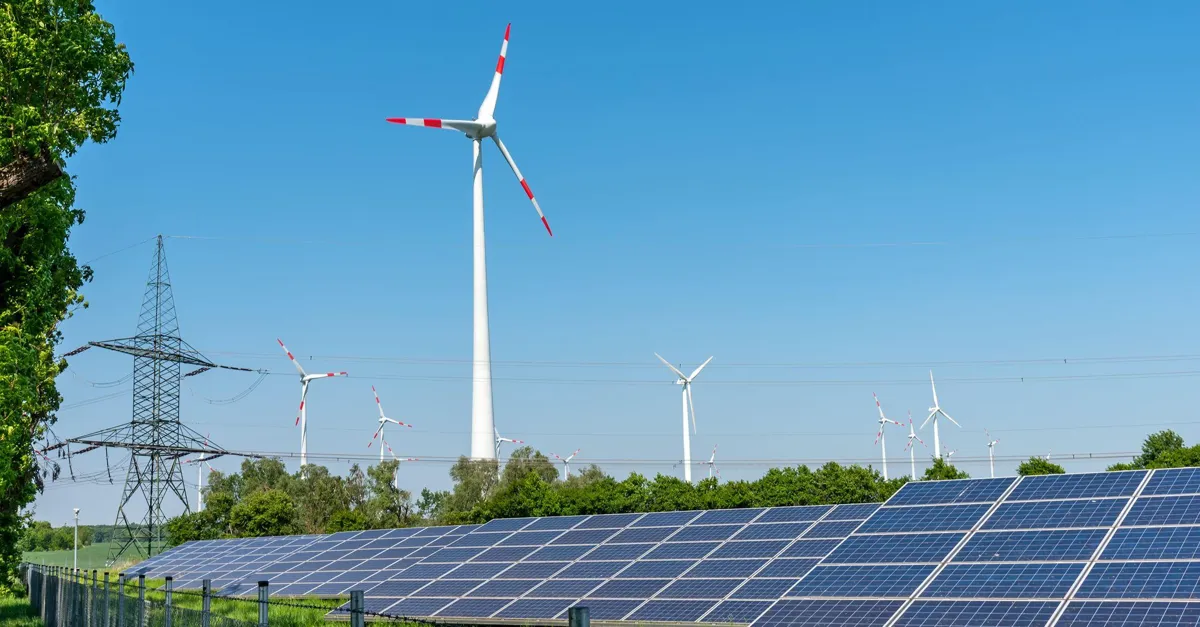
The International Renewable Energy Agency has warned that the world's transition to clean energy is still insufficient to address the current climate gap, despite achieving a significant breakthrough. The agency's latest annual report notes that 693 GW of new clean energy capacity was added in 2025, equivalent to more than half of the total installed electricity capacity in the United States. However, this record performance is not enough to meet the global goal of tripling renewable energy capacity by 2030.
The report highlights that the current pace of growth is still below what is needed to achieve the goal of 11.2 TW of renewable energy capacity by 2030, as agreed at the COP28 climate summit. The estimates suggest that a gap of around 0.6 TW will persist if the current growth rate continues. The agency emphasizes that urgent action is needed to accelerate the transition to clean energy and reduce the world's reliance on fossil fuels.
Simon Stiell, Executive Secretary of the United Nations Framework Convention on Climate Change, notes that the transition to alternative energy sources is now irreversible due to market forces. He highlights that the adoption of green energy sources has saved the world nearly half a trillion dollars in fossil fuel costs. According to Stiell, these economic and environmental benefits are substantial, exceeding the GDP of over three-quarters of the world's countries.
However, David Wasco, Director of the International Climate Initiative at the World Resources Institute, cautions that the rapid growth in demand for clean energy has not yet led to a direct and measurable reduction in global fossil fuel consumption. The Global Energy Review by the International Energy Institute found that fossil fuels still account for 86% of global energy in 2025 and that their use continues to grow in absolute terms.
Wasco emphasizes that the world needs not only to accelerate the growth of renewable energy and electricity but also to reduce fossil fuel consumption to achieve climate goals. The International Atomic Energy Agency has made several recommendations, including updating electrical grids, integrating solar and wind energy, and developing battery storage to make clean energy more competitive.
The world has experienced record temperatures in the Northern Hemisphere, attributed to human activity and ongoing carbon emissions, which has put clean energy transition at the top of the international agenda. The issue is complex, with many stakeholders and competing priorities. Nevertheless, there is a growing recognition of the need for urgent action to address the climate crisis.
The International Renewable Energy Agency's report underscores the need for a concerted effort to address the climate gap and ensure a sustainable future. The agency's recommendations and warnings highlight the importance of collective action to accelerate the transition to clean energy and mitigate the impacts of climate change.
Key points
- The world added a record 693 GW of new clean energy capacity in 2025.
- The current pace of growth is still below what is needed to achieve the goal of 11.2 TW of renewable energy capacity by 2030.
- Fossil fuels still account for 86% of global energy in 2025.