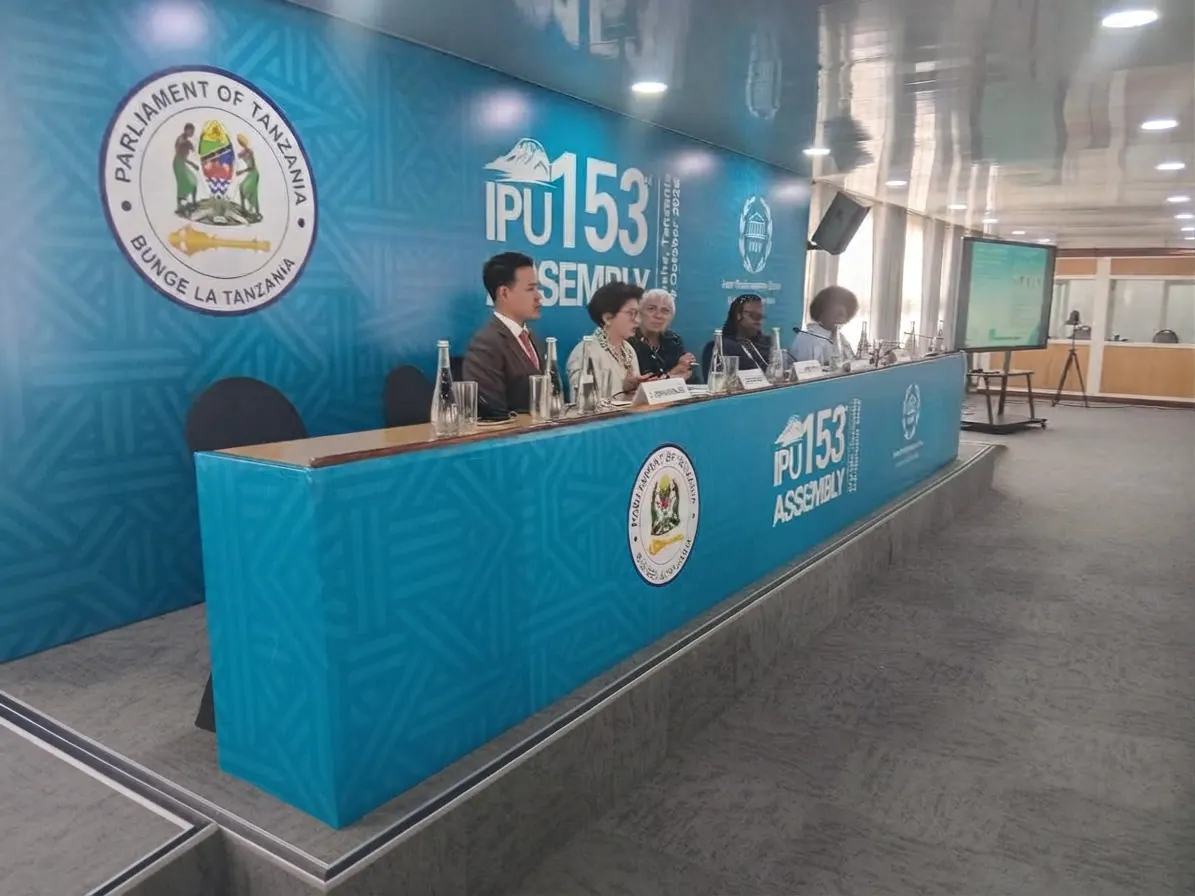
The 153rd Inter-Parliamentary Union (IPU) Assembly in Arusha, Tanzania, has brought together global parliamentarians, human rights advocates, and legal experts to discuss the abolition of the death penalty. A panel discussion moderated by German Bundestag member Claudia Roth focused on the role of parliamentarians in abolishing capital punishment. The discussants agreed that the death penalty constitutes torture within an irreversible justice system and called for its abolition, particularly for minors.
Barbara Lochbihler, Commissioner of the International Commission against the Death Penalty (ICDP) and former Member of the European Parliament, emphasized that legislative policy changes must be driven by local civil society actors and parliamentarians, rather than external pressure. She cited successful examples of policy changes influenced by advocates, including granting migrant workers access to essential health insurance and basic services for their children.
Millie Odhiambo, a Kenyan Member of Parliament and chair of Parliamentarians for Global Action (PGA) Kenya, highlighted the importance of cross-partisan coalitions and private members' legislation in abolishing the death penalty. She noted that bills aimed at abolishing the death penalty have historically been introduced by opposition members and stressed the need for multi-party cooperation.
Odhiambo also addressed recent national tensions in Kenya, including a 2024 parliamentary breach involving Gen Z protesters that resulted in tragic youth fatalities. She emphasized that financial payouts cannot replace lost lives and that legal systems must strive for a balance between accountability and human rights.
Chonlathan Supphaiboonlerd, a Member of Thailand's House of Representatives, emphasized the importance of engaging young legislators and leveraging regional bodies, such as the ASEAN Inter-Parliamentary Assembly (AIPA). He argued that the death penalty constitutes torture, which is strictly prohibited under international law and incompatible with an imperfect, irreversible justice system.
Supphaiboonlerd addressed public opinion that views capital punishment as a proportionate response to serious crimes, urging a historical perspective. He argued that societal views on punishment can shift through continuous research, evidence, and dialogue, and that execution does not alleviate a family's grief.
The panel discussion concluded with moderator Claudia Roth praising the panelists for inspiring delegates to continue the dialogue on abolishing the death penalty. The discussion was well-attended by parliamentarians from both abolitionist and retentionist countries participating in the 153rd IPU Assembly.
Key points
- The panel discussion highlighted the importance of cross-partisan coalitions and private members' legislation in abolishing the death penalty.
- The discussants emphasized that the death penalty constitutes torture within an irreversible justice system and called for its abolition, particularly for minors.
- The panel lineup included notable human rights advocates, such as Barbara Lochbihler and Sylvie Kayitesi, who have played significant roles in advocating for human rights and the abolition of the death penalty.