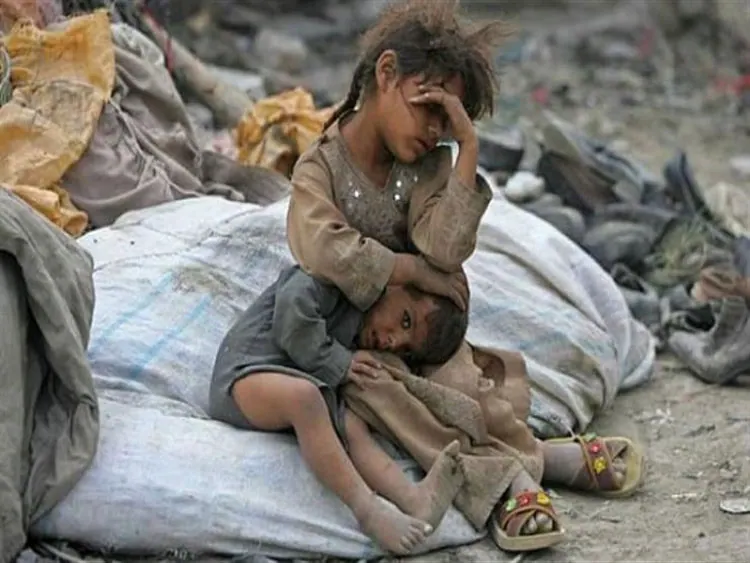
The global multidimensional poverty index has increased for the first time since its creation in 2010, with 1.2 billion people affected, according to a report by the UN Development Programme and the Oxford Poverty and Human Development Initiative. The report, released on Monday, revealed that 51.5 million more people are living in poverty compared to the previous year. This increase marks a significant shift in the trend, which had seen a decline in poverty rates over the past 16 years.
The report highlighted that over half of those affected by poverty are children, with 51.5% of the total being underage. The UN Development Programme and the Oxford Poverty and Human Development Initiative attributed the increase in poverty to population growth, citing that new data was only available for 13 out of 108 countries covered in the report. The report also noted that despite the overall increase in poverty, 33 countries have successfully reduced the proportion of their population living in poverty by half over the past 15 years.
Six countries in sub-Saharan Africa are among those that have made significant progress in reducing poverty. The report revealed that the fastest progress has been made in Asia, particularly in China and Vietnam. The UN Development Programme's Administrator, Achim Steiner, emphasized that this increase in poverty should serve as a wake-up call for the world, highlighting the need for collective action to address the issue.
The report also highlighted that poverty is more prevalent in rural areas, with 83.3% of the world's poor living in rural areas. The majority of people living in poverty reside in sub-Saharan Africa and South Asia, with the latter being the most populous region in the world. The report emphasized that addressing poverty requires a comprehensive approach, including access to education, healthcare, and basic services such as clean water and electricity.
The multidimensional poverty index is based on factors such as lack of access to adequate housing, sanitation, electricity, cooking fuel, food, and education. The report noted that while progress has been made in reducing poverty, much work remains to be done to address the complex and interconnected issues surrounding poverty. The UN Development Programme and the Oxford Poverty and Human Development Initiative emphasized the need for continued efforts to address poverty and promote sustainable development.
The report's findings have significant implications for policymakers and development practitioners, highlighting the need for targeted interventions to address poverty and promote sustainable development. The UN Development Programme and the Oxford Poverty and Human Development Initiative emphasized the importance of collective action and cooperation to address the complex issues surrounding poverty and promote a more equitable and sustainable world.
Key points
- The global multidimensional poverty index has risen for the first time in 16 years, with 1.2 billion people affected.
- Over half of those affected by poverty are children, with 51.5% of the total being underage.
- 33 countries have successfully reduced the proportion of their population living in poverty by half over the past 15 years.