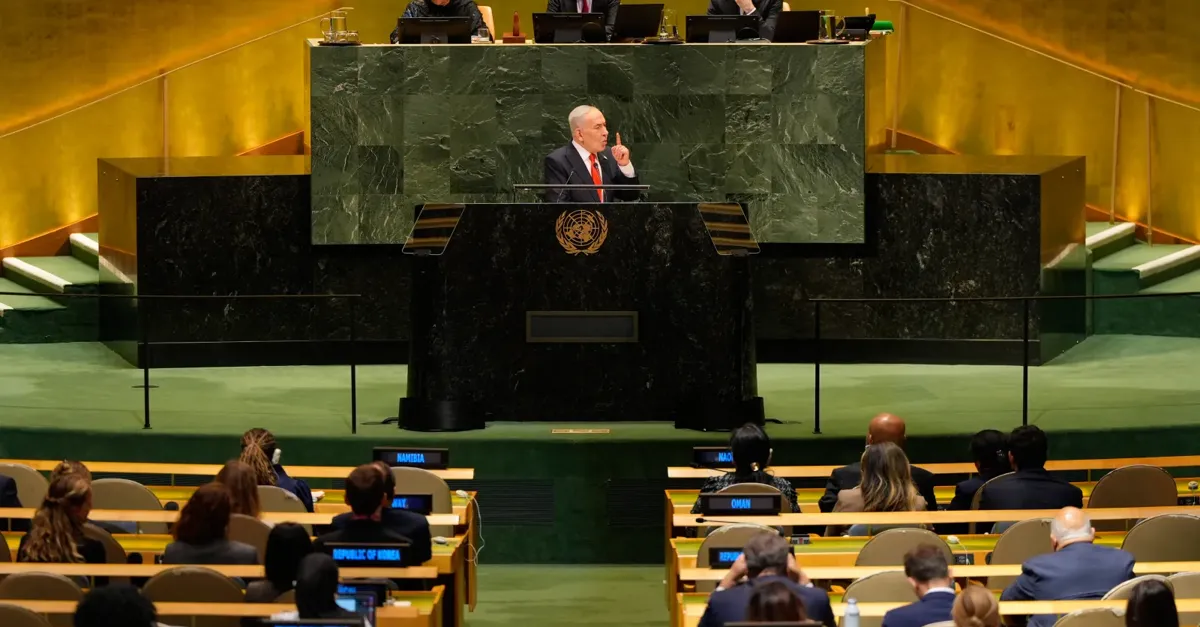
The global media has offered a scathing assessment of Israeli Prime Minister Benjamin Netanyahu's recent address to the United Nations General Assembly. Many outlets noted that the speech was marked by its confrontational tone and what appeared to be a significant display of isolation, as numerous delegates chose to leave the hall during his remarks. This reaction was seen as a reflection of the widespread criticism Netanyahu faced over Israel's policies, particularly regarding the ongoing conflict in Gaza and the West Bank.
According to reports from the US-based news agency, Associated Press, Netanyahu's speech was characterized as a vehement defense of his policies, which seemed more geared towards a domestic Israeli audience than the international community. The agency highlighted Netanyahu's claims that reports of settler violence were distorted, pointing out that his government is dominated by settlers and their allies. Citing a UN report, the agency noted that over 1,600 attacks by settlers have been documented this year alone.
The French news agency, Agence France-Presse (AFP), described Netanyahu as "hostile" and his speech as an "attack on his critics." The timing of the speech, coinciding with a challenging election period for Netanyahu, was seen as an attempt to rally support through a message of defiance. The AFP also noted that Netanyahu's government has accelerated settlement expansion in the occupied West Bank, leading to increased settler violence since October 7.
The New York Times offered a detailed analysis of Netanyahu's speech, describing it as "confrontational" and aimed at targeting his political opponents, both internationally and domestically. The newspaper observed that Netanyahu's address was largely a message to the Israeli public, as he faces declining poll numbers and seeks to shore up support. By emphasizing that international criticisms of Israel are not only misplaced but also unfair and unethical, Netanyahu aimed to rally domestic backing.
NBC News highlighted the departure of dozens of attendees as Netanyahu began his speech, noting that the empty seats underscored his isolation. The network suggested that the speech was primarily aimed at an Israeli audience, in the context of what has been described as a critical election. NBC also reported that hundreds of diplomats showed their disapproval of Israel's actions in Gaza by leaving the hall en masse, although some had been brought in as part of an apparent attempt to provoke a reaction.
The Wall Street Journal portrayed Netanyahu as someone who takes pleasure in criticizing and defying international bodies, during his annual appearance at the UN General Assembly. The newspaper emphasized that his speech highlighted his growing isolation, even among traditional supporters of Israel in the United States, where his popularity has reached an all-time low. It noted that the speech was largely directed at Israeli voters, who will go to the polls next month.
The Washington Post provided an in-depth look at Netanyahu's speech, framing it as an attempt by an isolated leader to bolster his chances of re-election domestically. The newspaper recalled the previously strong relationship between Netanyahu and former US President Donald Trump, which has deteriorated over differences on how to handle Iran. The Post also observed that Netanyahu failed to secure any significant political meetings during his brief visit, reflecting the strained relations with Trump and the challenging electoral landscape ahead.
Key points
- - Netanyahu's UN speech was widely criticized by international media outlets as divisive and aimed at boosting his domestic political standing. - The speech highlighted Netanyahu's growing isolation, reflected in the empty seats and delegates' departures during his address. - Media analyses suggest that Netanyahu's address was primarily geared towards a domestic Israeli audience, ahead of critical elections.